This text was written in 2020 and is now being published for the first time.
In the age of the virus, the Covid-19, the films which were meant for our theaters disappeared. Instead they found their way online via desperate measures – anything to recoup investment. Films as disparate as Emma, or Bloodshot, or Trolls World Tour made their way to streaming platforms and VOD. Planned theatrical releases gave way to scattershot partnerships with a few theaters in order to provide some movies (you could rent Pedro Costa’s Vitalina Varela and split the proceeds with the distributor and the theater). Everyone is trying, in their own way, to meet this disaster, and to somehow overcome. These were some of the films released during the quarantine.
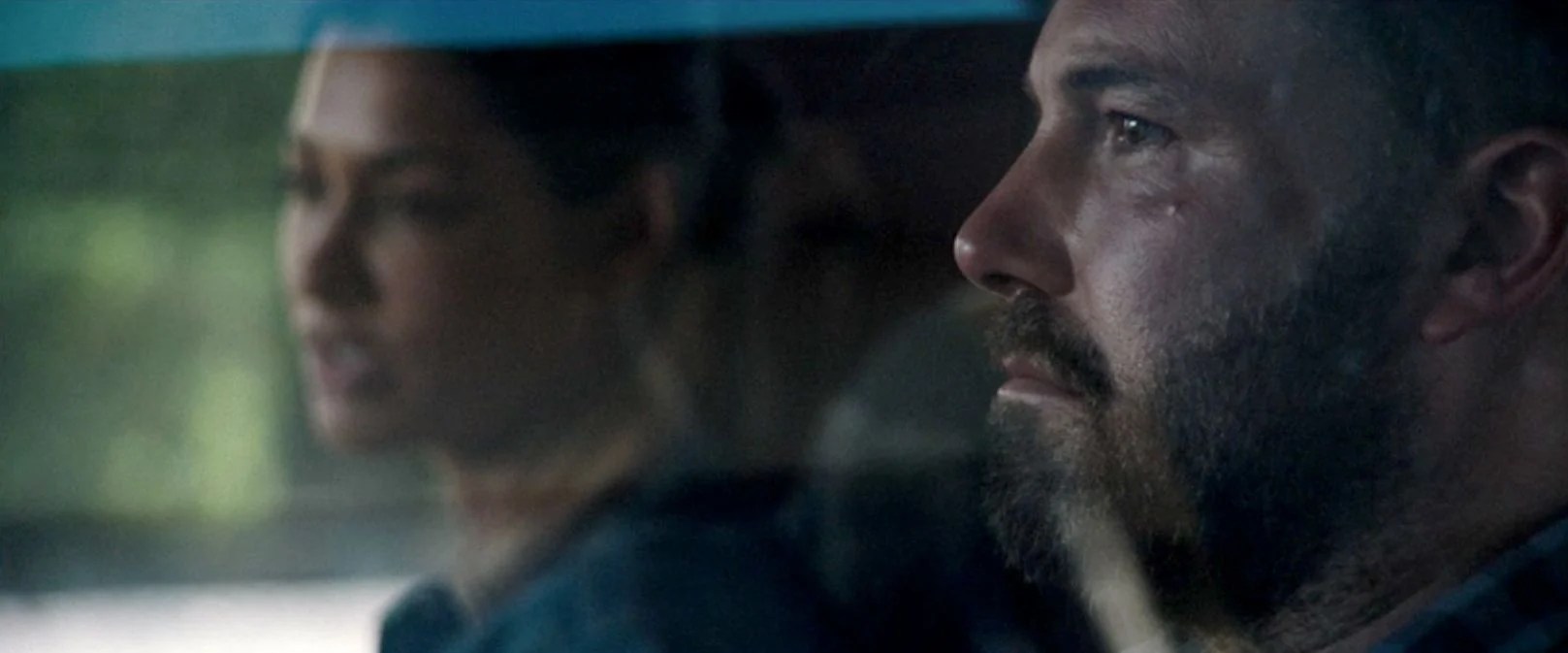
Following Ben Affleck’s media tour during The Way Back is a painful exercise. Here is Affleck talking about how much of his own private demons are being exorcised on screen, and there is Affleck renewing his commitment to sobriety. And yet it remains unmistakable that there is a shared connection between actor and character, that the film is at pains to document. It has to do with the face, the actor’s face.
There are school of directors who, in search for authenticity and truth, push their cameras, really shove them, in their actor’s faces. They do this in the hope that by capturing the minute changes in expression they will be closer to the eternal verities of humanity, or something. But this inquiry is reduced to simple technique – observe an actor up close for long enough and some sort of breakthrough will occur, an epiphany. But these are not true revelations, but rather the results of a tried and proven method. Here are filmmakers searching for effects, something preordained – there is no mystery anymore.
I say this because so much of The Way Back relies on Affleck’s face. There is a tired narrative in the film, a moving redemption arc tied to the success of the basketball team that Affleck coaches, but ultimately what O’Connor stakes his film on is Affleck’s face – what it shows, the pain, the past. When he films Affleck downing back beers, the flush in his face when he’s laughing at the bar, the bloated morning after look, O’Connor goes past the character to film the actor. This truly is Affleck’s face, and there is no escaping this.
To his credit, Affleck hides nothing. There is no vanity or pretense – he does not protect himself. If The Way Back is interesting it is as a documentation of his face and body. But even at its best, when standing graveside revealing the reason for the last few years of his self-destruction, or acknowledging his anger in a heart-to-heart with his ex-wife, he is let down. What does it mean to betray a face? It means to not be up to the challenge, meeting head-on the truth that it wants to say. In The Way Back, we glimpse Affleck’s oblivion, always in finely judged montage with a soundtrack that underscores the levity of the proceedings, but seems far too tasteful and timid. My favorite scene remains the interlude where Affleck picks up a woman at a bar and crashes his car against a boat, stills tries to continue with the hookup, but goes into the wrong house. The scene’s humor goes hand-in-hand with the degradation of the character.
This type of approach is missing from most of the film, however. We are in the realm of the addiction drama, with its attendant pain, and road to recovery. The basketball is more window dressing to this private trauma and overwhelming narrative – indeed, the destructive alcoholic path pulls everything into its orbit, becoming one note and dull. Affleck’s face suggests more, more pain, more good times, more of everything. But O’Connor limits the emotional scope, the tenor, of the film, to focus solely on tragedy, on death (children with cancer are used as props in Affleck’s journey). Even the bits of good humor, such as the interactions with the players, feel weighed down by suffering.
To film people with grace and subtlety, that is not O’Connor’s strength. Even in films where he succeeds, such as Warrior, the gaze is heavy, tired. His forte is melodramatic, which is fine, but it requires a balance between the elements. Here he finds no such balance, something to counteract, or better yet, to support his subject. As such, O’Connor depends on it because there is nothing else; the grim, ashen look of his frames lacks the imagination to put something else at stake.
As such, the film’s final moments, the team dedicating their game to the coach, Affleck alone shooting a basketball against the sea, resolve the rather mundane and pedestrian narrative strands that the film put in place, but do nothing to conclude the investigation of its true subject. Affleck’s face remains the star of the film, where the true emotion resides, but it’s abandoned, left adrift, in favor of the prosaic. What The Way Back forgets is Affleck’s face tells a much more interesting story by itself than any of the narrative accouterments surrounding it. O’Connor settles for making associations between the actor and the character, letting the physical reality of Affleck’s body act as a shorthand for the past behavior for his character.
The face creates its own world, its own context. To move beyond it and to saddle it with boring prosaic meaning means to betray it. The Way Back doesn’t have anything up its sleeve, any sense of mystery or private myth to be conjured. It remains entirely on the surface.
Affleck is a movie star with his own low points and mini-comeback narratives, and therefore his face has a meaning. And seeing his face 25 years later, faced with our memories of his younger self, and knowing how he got to this point (The Way Back‘s promotional tour, again), gives it a strange pathos.
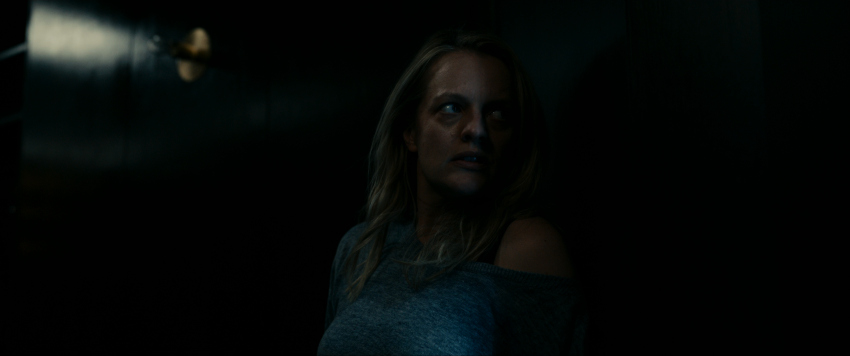
What do we know about Elizabeth Moss, however? The difference between her and Ben Affleck is one of stature. She rose up through the ranks from child actor to Peak Prestige TV stalwart (Mad Men, The Handmaid’s Tale). In between seasons of these projects, she has become a reliable figure in indie films, collaborating with Alex Ross Perry, showing up in Ruben Ostlund’s The Square, and more. Does her face have a context?
The Invisible Man is a Blumhouse salvage job, an offshoot of the Dark Universe reboot. Instead of the blockbuster treatment, we get an upcoming genre director, Leigh Wannell (co-creator of the Saw franchise with James Wan), getting free reign to take the material to its limits. Here is another film where the face of its actor takes center stage.
But we’ve been here before. Moss has already weaponized her face. It’s what of Queen of Earth and Her Smell are about. And let us not forget the extended sequence in Us with Moss gazing at herself in the mirror. In The Invisible Man, Moss is terrorized, stricken with fear, nervousness. Her fiancée, thought for dead, comes back to ruin her life – and nobody believes her. The vision here is ferocious and violent. When I speak of taking the material to its limits, it is because of my surprise at the grimness, the cruelty, of its scenario.
Moss is put to the wringer. And Whanell’s frames contain real violence, with devastating consequences. There is a true threat too, not only to Moss’ life, but also to the stability of the world. The argument is implicit. The entitled white male seeks to infiltrate those spaces denied to him: first, a woman’s heart, her innermost space; and second, an African-American family’s house. And once he is in there he causes real destruction. In the film’s final passages, because we have seen the places where the film is willing to go (the harshness of the sister’s death is remarkable), we understand that these characters truly are in jeopardy.
But I return to Moss’ face and its meaning. Perhaps it is becoming a motif, a recurring option for filmmakers – witness Moss’ deteriorating psychological state in a series of close-ups! But what matters is the overall program and its purpose. In The Invisible Man, the psychological damage is not self-inflicted (it is not a woman making herself mad), but rather the product of a long and consistent pattern of abuse by the villain. Without the fantastic elements, the film would be an effective depiction of an abuse survivor being haunted by her abuser. With the fantastic elements, however, the film is able to go further. It’s able to examine how patterns of abuse are upheld by those in power (witness the scenes with the villain’s brother). How this abuse is about domination, not only of self, but of space. The villain not only wants to possess her, but wants to possess the space she inhabits, wherever she goes he must be allowed. And, ultimately, the suit itself makes everything explicit – it acts as a shield protecting the predator (like being white, like being male, like being rich) because when it’s working there’s no ‘there’ there, the underlying menace is unseen, and thus it has to be destroyed to reveal the corruption inside. This insidious violence, treating everything as collateral damage, is best expressed through Elizabeth Moss and the shifting emotions across her face. Whannell is an efficient genre technician, but his greatest strength in this film is understanding the tool at his disposal, seeing it clearly. At least so far, we have not become cynical to the approach when it comes to Elisabeth Moss.
I once I had a dream of Michael Showalter. The fascination started with The Baxter, his thoroughly forgotten debut feature from 2005, which was a brilliant re-reading of the romantic comedy. The title is taken from Jack Lemmon’s character from The Apartment, C.K. Baxter, a complete sap who gets taken advantage of by all the characters – a Baxter is the guy who loses the girl to the dashing romantic hero. Showalter views the romantic comedy with a loving eye; he invests in the clichés and the archetypes while gently poking fun at them. When he teamed up with David Wain ten years later to tackle the romantic comedy again in They Came Together it was an empty gesture: everything had been drained of meaning, reduced to a series of escalating nonsense jokes that lead to nowhere special. It was a complete reversal from the generous and grounded vision of The Baxter. Every character is redeemed and is brought into the fold. From Justin Theroux’s worldly hunk (he plays basically the same character in an arc on Parks & Recreation) to Michelle Williams’ shy and mousy temp (who reads the dictionary!) and, finally, to the jilted fiancée at film’s end who makes clear the film’s philosophy: the romantic comedy is a journey toward a happy ending, but this happiness is predicated on a series of decisions whose emotional fallout has real consequences (the film truly ends with a broken heart). It is this emotional intelligence which makes the comedy resonate even more, even when it is being knowingly silly and goofy.
Showalter continued to act and write, but it took ten years for him to return to the big screen (he directed several episodes of his own created TV shows during that time) with Hello My Name is Doris. The gesture behind it is an interesting one: it is an attempt to take seriously and understand the romantic yearnings of Sally Field’s elderly main character. Field throws herself into the role, like the character throws herself into the world of the young characters with whom she becomes obsessed. It is desperate and uncomfortable. Showalter moves beyond the comedic premise to try and find the truth behind his character, but it never moves past the broad strokes of the character; it remains a little cliched and trite.
His next film, The Big Sick, is by far his biggest commercial and critical success so far; the screenplay by star Kumail Nanjiani and Emily V. Gordon was nominated for an Oscar. With this film, Showalter goes back to the realm of romantic comedy; however, life interrupts and the path shifts considerably toward something a lot stranger. The film is dominated by the personality of Nanjiani, basically playing himself (the film adapts the real life story of the courtship between him and his wife). He is a stand-up comedian in Chicago, driving for Uber (a recurring theme in Nanjiani’s oeuvre), when his ex-girlfriend suddenly becomes sick and must be placed in a coma. Thus, in the film, the romance is over, and what comes next is the complication of dealing with the fallout, the way that the bonds that are established in a romantic relationship are not so easily extinguished. There are a lot of funny jokes, but also a lot of dramatic revelations (the entire side of the film dedicated to his ex’s parents belongs here) and the balance is somewhat uneasy. Nanjiani’s persona is sarcastic while still allowing for vulnerability, and the crux of the film is how he handles or doesn’t handle the various social environments he’s thrust into (how he handles his traditional Pakistani family, his interactions with his fellow comedians, etc.) The qualities of his personality are the qualities of the film, and one must reject them or embrace them. I remain muddled: in theory, it is a strange comedy of remarriage where the coma and the separation that it brings acts as a rebirth of the relationship; however, one feels the specter of Apatow hovering over the film (less jokes, more pathos!), which as always threatens to throw everything off balance. It is not a failed film (it is Showalter’s second best film), but one wishes for more.
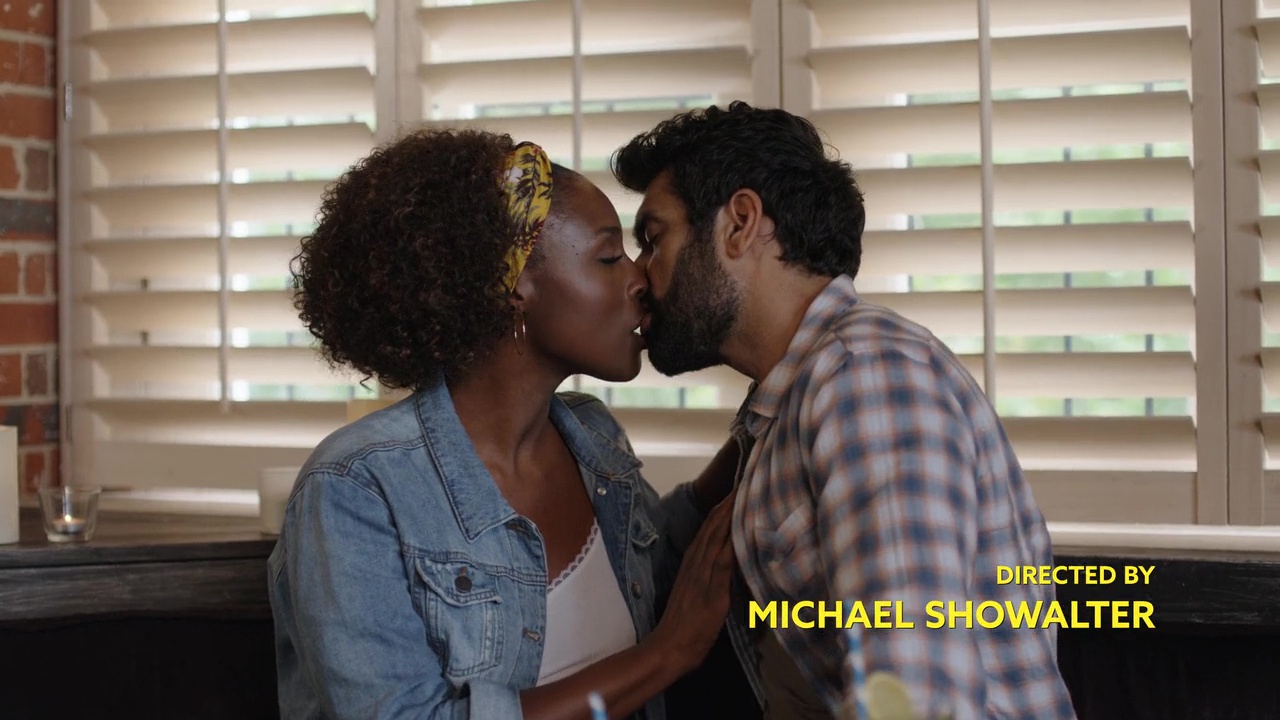
Which brings us to our true subject, Showalter’s The Lovebirds. Another victim of the quarantine, its theatrical release was shuttered and Paramount sold the rights to Netflix. Just like that, a film made for cinema screens joins the streaming ranks. What does it truly mean to be a Netflix Film? The film stars Issa Rae and Kumail Nanjiani as a couple on the rocks who accidentally get caught up in a conspiracy and then try to run around town and clear their names. Its comic structure is tired, exhausted. Rae and Nanjiani try to liven things up, but they are defeated by a plot which tethers them to a restless exposition, a search that ultimately leads nowhere all that interesting (a parody of Eyes Wide Shut?). These are gifted and charming actors who have come up through the ranks of HBO comedies (Issa Rae is the auteur of Insecure while Nanjiani was an ensemble player in Silicon Valley) and are now beginning to stretch their legs in the cinema realm. In The Lovebirds they are not too far from their established personas (Nanjiani does not really ever stop being himself; Rae delivers a more energetic version of her work on Insecure minus, you know, the whole interrogation of contemporary Black life), but the world around them is more of a cartoon; the jokes are broader, there is less dramatic conviction or risk. Everything seems built on a bet: these two actors can overcome the formula at play; the collision between their personalities will overcome the tiredness of the concept and provoke a new sensation in the viewer. But the bet is lost; the plot dominates far too much for the actors to exhibit any sense of inner life or freedom (ADR jokes do not count). Perhaps to be a Netflix film means, ultimately, to forsake risk. The Lovebirds’ images are metadata, meant to be plugged into an algorithm, and populate various Netflix personalized recommendation categories. The dream of Michael Showalter seems to be over. We will always have The Baxter.
For me, auteurism is wrapped in the idea of discovery because there is always going to be something new to discover. Each week in the United States there are many unknown films by unknown filmmakers playing; stalwarts from various industries that the Western critical establishment completely ignores. Around five years ago I wrote a review of Baahubali: The Conclusion, the Telugu blockbuster directed by S.S. Rajamouli. In that review I wrote, “auteurism is not of the past; it is happening right now at your local multiplex.” American cinephile culture must deal with these releases which slip into American screens undetected and without fanfare. The anime sphere led by GKIDS and Funimation pumps out films constantly, the various Indian industries always have something out every week, and there are also plenty of other Asian films from Hong Kong and China on display. There is, however, another key part of the equation – we must consider the various anonymous Latino productions that have an even lower reputation.
Over the last 10 years Pantelion Films, a Hollywood studio that’s emerged from a collaboration between Lionsgate and Televisa, has produced and distributed many of the most notable releases aimed at Latino audiences in the United States. Pantelion aims to follow in the footsteps of Tyler Perry, and mirror his success with the African American community. Emilio Azcárraga Jean, CEO of Televisa, broke down the business logic succinctly, “people like to see themselves represented on the screen.” Many of the Pantelion Film releases take place in both Mexico and the United States, with frequent mentions of the border, immigration and more. The countries are deeply connected and their stories reflect this (many are both in English and Spanish; per Paul Presburger, Pantelion’s ex-CEO, when they do a “film with Latino stars in English, it unifies.”). Not only that, they frequently will bring in American actors of note in order to sell the movies – for example, 2013’s Pulling Strings features Stockard Channing and Tom Arnold and 2017’s How to be a Latin Lover (directed by Ken Marino!) features Rob Lowe and Kristen Bell.
Their most successful release, box-office wise it must be said, is 2013’s weepie Instructions Not Included (No se aceptan devoluciones) starring Eugenio Derbez, a film that’s frequently tasteless and maudlin. In this film, Derbez sneaks from Acapulco to Los Angeles in order to raise his daughter, and ultimately becomes a stuntman, but not before incurable diseases raise their ugly head. In a much more successful film, 2018’s Overboard, Derbez plays a Mexican billionaire heir who loses his memory and ends up in Seattle with Anna Faris’ overtaxed single mom. There’s a very interesting specificity to the film’s characters and their settings (everyone is obsessed with the Seahawks!) that’s wonderful. The extended sequences with the Latin American construction workers are one of the film’s considerable delights (it helps that these are mostly in Spanish). But the film lives and dies with the relationship between Derbez and Faris – they earn their vision of domestic bliss. By film’s end, they’ve created a partnership where each finds fulfillment in the other and their role in the relationship (money also helps, of course).
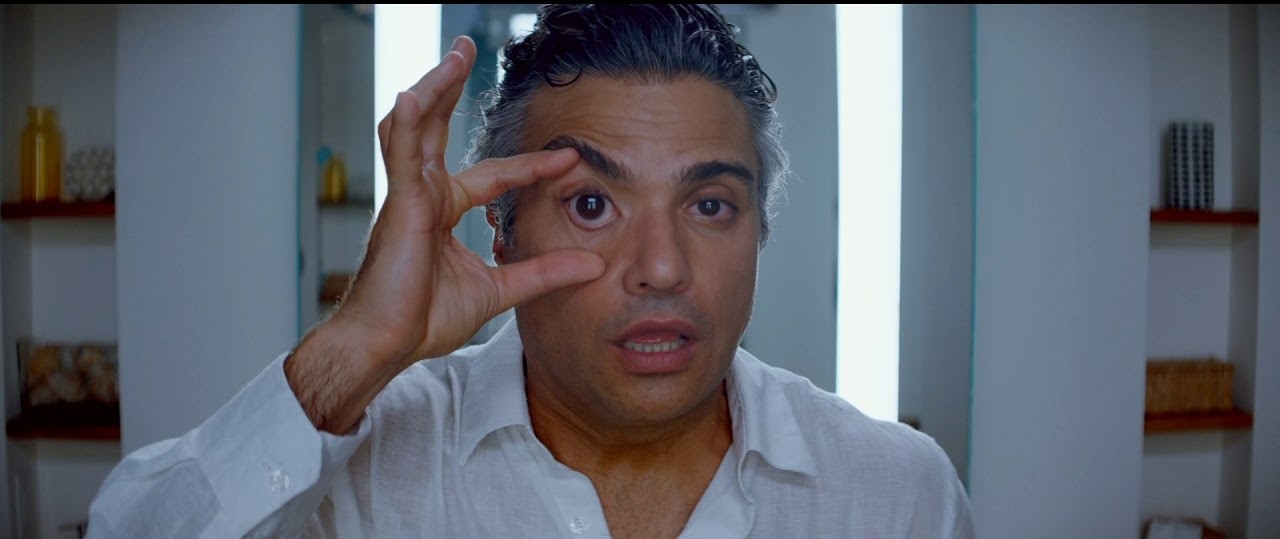
Their latest production, My Boyfriend’s Meds (Las pildoras de mi novio) stars Jaime Camil, most famous to American audiences for his brilliant turn in Jane the Virgin as Rogelio de la Vega, a famous telenovela actor. The film tells the story of Jess (Sandra Echeverría), an executive who works for a tequila company, who starts going out with Hank (Camil). After the relationship begins to get more serious, she invites him to a work retreat. Hank, however, has neglected to tell her that his smooth and charming facade is only possible because of the many, many pills he takes in order to manage all his various disorders. Of course, once they go on the trip, he ends up forgetting the pills and proceeds to freak out.
The film deals with mental illness in an obviously crass way – this cannot be ignored. Camil’s various afflictions are an opportunity for the actor to go over the top, curse like crazy, hump various inanimate objects, hallucinate, and more. To his credit, Camil commits to the role without vanity (it is a fun change of space for this actor who in his most notable roles plays vain rich playboy types, as in Jane the Virgin and his telenovela work in La fea más bella); he looks ridiculous and often. But he’s in good hands with director Diego Kaplan. This Argentinian director has something of a reputation in South America with various other sex comedies to his name (2017’s Desearás al hombre de tu hermana AKA You Will Desire Your Sister’s Man has its champions). More than anything else, My Boyfriend’s Meds reminds me of the late 80’s comedies of Blake Edwards. These are comedies full of destruction and disintegration. Skin Deep seems like an obvious a model. Like John Ritter before him, Jaime Camil undergoes a series of humiliations and personal disasters. His carefully managed sense of self is systematically destroyed throughout the film. My Boyfriend’s Meds is a comedy on the surface, but the undercurrents of desperation are unmistakable. The film takes seriously the various stigmas related to mental illness (Camil does not believe that he will be accepted if he reveals his ailments), but explores them, not tactfully, no, but rather with a gleeful perversity, and ultimately a slight sadness. In Skin Deep, Blake Edwards diagnoses the modern man as having only psychoanalysis and sex to deal with what ails them (the rampant alcoholism, unspoken for the majority of the movie, seems like a natural condition rather than the common denominator in the various pratfalls and disasters). In My Boyfriend’s Meds, an elaborate prescription of self-medication is what’s necessary to conform, to exist. To drink oneself into oblivion seems more socially acceptable than having a mental health episode in public – Kaplan recognizes that it is all a transgression against what is appropriate. In the film’s universe, Camil becomes an eccentric and outre character, puzzling and embarrassing everyone around him. Seeing a man go off his meds is sad, but we laugh so we do not cry. By film’s end, Camil regains a sense of normalcy and he is able to breathe a sigh of relief. It is then, finally, that the film’s romance can be truly addressed. We must deal with this stigma, and see if the characters can push past it, reach understanding.
I cannot speak to the overall quality of the Pantelion Films corpus since I’ve only seen a few of the films that they’ve released. These are glossy mainstream productions, full of lowest common denominator humor and such (see No Manches Frida); but that does not mean they lack for ambition (see Saving Private Perez, an incredibly odd and bleakly humorous film about a group of narcos who sneak into Afghanistan, take on the Taliban and the US Army, all in order to find their little brother – it is a lot!). There are actors to follow and directors to watch – Manolo Caro seems like an important name in this space (the auteur behind Netflix’s very successful and quite amusing soap opera Casa de las Flores has had his own films released by Pantelion as well). It is a new world to discover. So, we return to auteurism. Yes, we are in search of great new films and directors, but there is also pleasure in the journey, a delight in the unknown, watching film after film, the spadework of auteurism is the most important. Perhaps sometimes the films will not be worth it (I could not finish En los brazos del asesino, a truly garbage film), but sometimes we will marvel at something new, something we had not discovered before. Everything is research.


