
Confronting the Dragon
Teenage actors and actresses are often seen in comedies or horror movies. In Petite Solange, did it matter to you, contrary to this, to not tell this type of story biased toward youth?
Perhaps if young actors are emerging above all thanks to comedy or genre films, films that are a little fresh, it is because the filmmakers are looking for their freshness in them. As a director, I especially like
mature actors, who are aware of their profession, who have irony, humor, a science. George Sanders, Michel Piccoli – or currently, Sarah Paulson – the kind of actors I like, you can’t even imagine them at 15 years old, it wouldn’t make any sense! Freshness was not at all what interested me in Petite Solange. Probably because I am a female director, and because I have the impression that women are less interested in the first time than men. Maybe it’s a little obscene to say, but this very masculine project of taking a young girl who would have never acted, of training her, revealing her on the screen, and drawing personal glory from her, that doesn’t interest me.
Like Pialat?
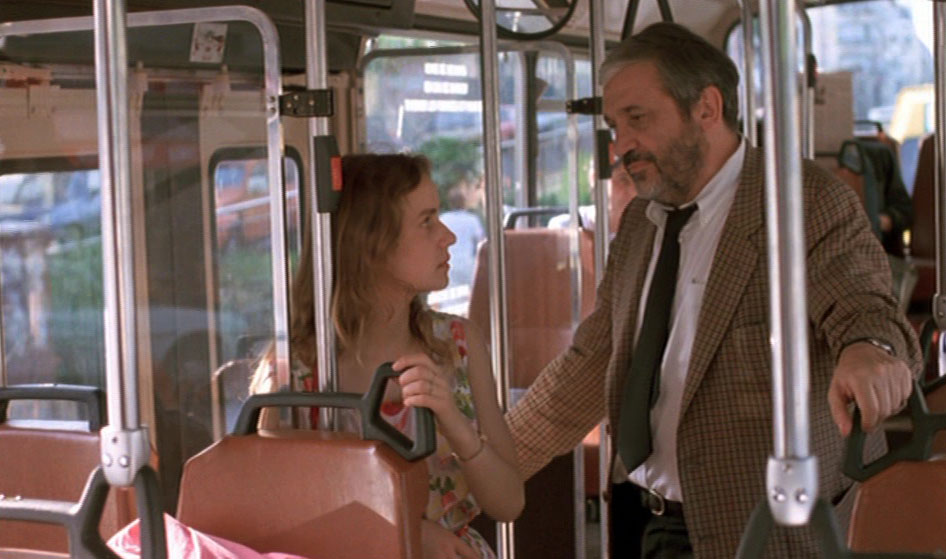
It goes back even further, even back to Preminger when he did Saint Joan with Jean Seberg! It is the general history of cinema that should be reviewed in this light, although it is above all the modern cinema that has brought this Pygmalion/young actress tandem to its pinnacle. The idea of controlling and shaping a young person like this is revolting. The feeling that you have to own an actress in order for her to give you something… it’s sadistic bullshit and, above all, a very limited vision of the art of directing an actor. To talk about it, it would be necessary to leave the field of moral virtue for that of aesthetics: if you need to hurt someone to achieve something, it is not only morally painful it is artistically limited. In any case, as a female director, filming someone in the innocence of their gestures didn’t interest me at all. I was looking for a young actress who had the art of acting, not just a young girl to train. Besides her candor, which can only belong to a young person, Jade Springer had this ability, something of an artistic nature that those others who auditioned did not have. During filming, we all had this very strong feeling that the camera was not satisfied with regarding a beautiful freshness, but rather it wanted to bring this actress to our astounded eyes. It is a rather unique experience in the career of a director, the kind of moment when you understand why you chose to do a job that’s so hard most of the time… and I got it without blows and injuries.
Did this involve any specific challenges in terms of writing?
Petite Solange is very simple in appearance, but everything written was very planned. I claim to be very obsessed with the mise en scène, but also with the way things are written, writing not being quite the same vulgar thing as a scenario. I love the questions and even the problems of writing. I really like to read the “practical manuals” of writers, Stephen King, Patricia Highsmith… One of the writing challenges of the film was to narrate the cruelty of life, and not the cruelty of this or that character. It was then necessary to respect the reasons of each character – those of the father who deceives his wife, those of the mother to be cold, etc. Solange struggles in a web of adult reasons that is all the more cruel because she cannot take it out on anyone. In that sense, it is very different from a book I’ve thought a lot about, What Maisie Knew by Henry James, as it is the inverse, the parents are terrible, but life is not. It’s complicated to write a film on the general cruelty of life without falling into existential mumbo jumbo.
Often films that seem banal or are concerned with the problems of rich people actually suffer from a lack of mise en scène.
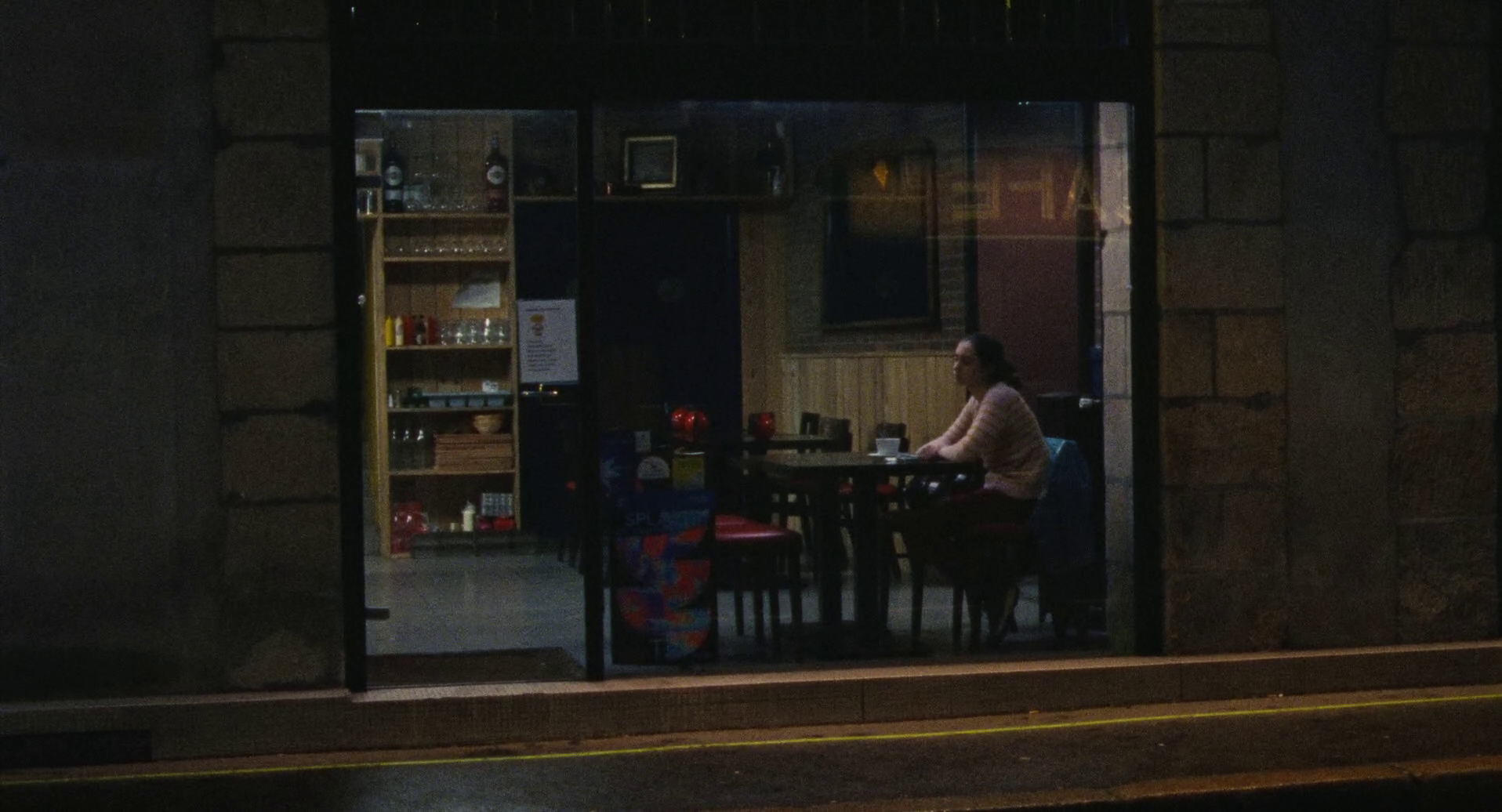
Yeah, this was a mise en scène issue that excited me a lot: how to make the tiny details of everyday life heartbreaking? I have a personal taste for characters who are humble and anonymous, defenseless, who have only their courage like a meager shield. I really like in Tavernier’s My Voyage Through French Cinema a moment where he evokes Orwell’s idea of “common decency,” as it relates to the cinema of Jacques Becker, I believe. I have a taste for humble things, but also for great collapses. When I was young, I was very marked by this one episode in Nietzsche’s life where the philosopher collapsed in Turin after witnessing a scene in the street – a horse being beaten by its owner. Nietzsche then leaned toward the horse, whispering in his ear: “Mother, I’m a fool.” Petite Solange is the meeting of Orwell and Nietzsche, the soft pink version! For the sequence where, being a simple teenager, she waits in a café with 2 euros in her pocket, I made a storyboard as precise as if we were going to film a car crash with 50 cars and 200 extras, and I gave this to the whole team. Ten shots, ten stages, to be shot in 2 and a half hours. I loved doing that. Almost all the scenes of the film are animated by this stake on the mise en scène: to make the trivial heartbreaking.
It’s not unrelated to what Stanley Cavell loved about the comedy of remarriage. How did you approach the dramaturgy of adultery, of separation?
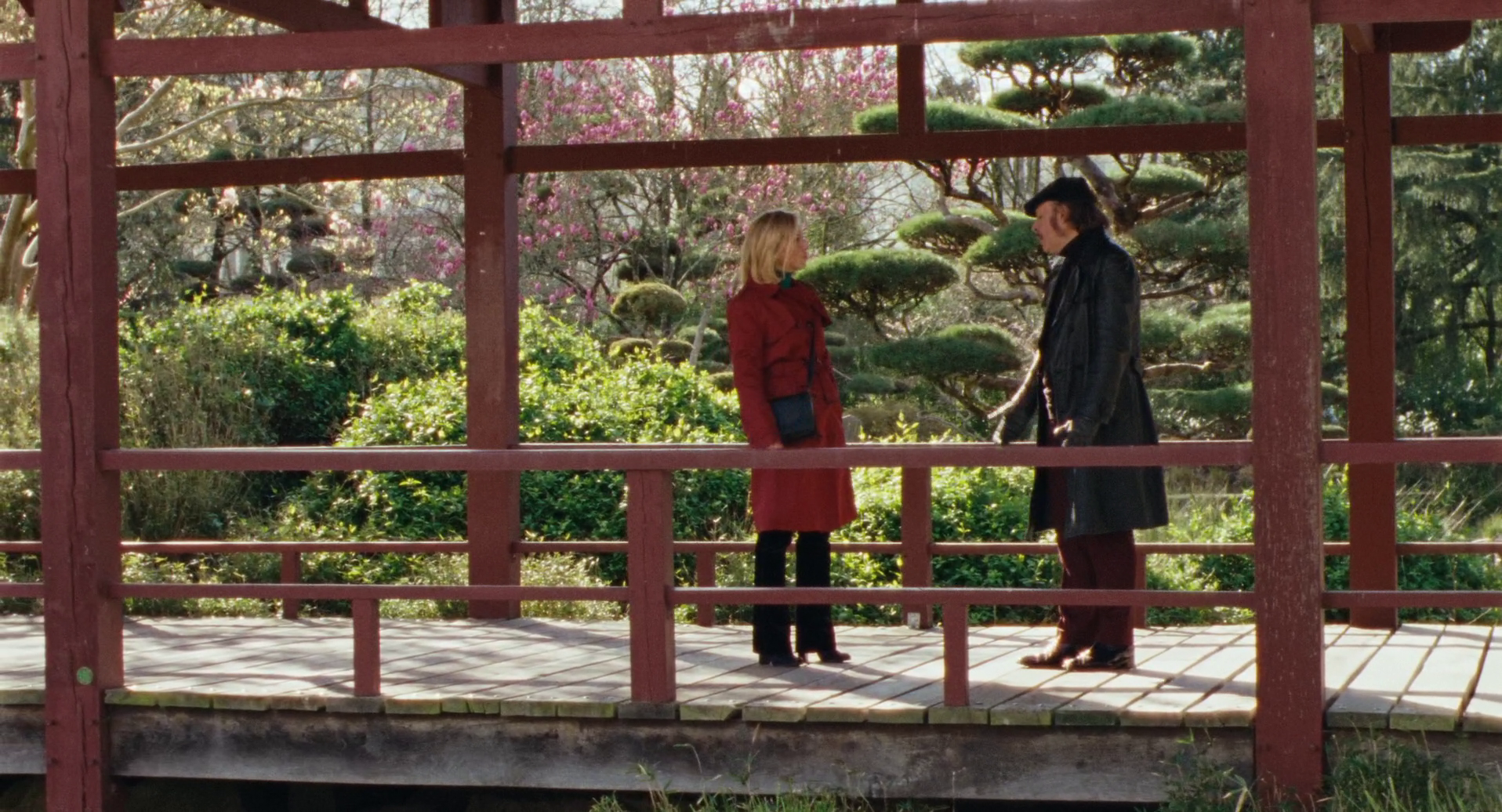
As a spectator, I’ve remained a child, I have a deep disgust for “adulterous” scenarios, it revolts me against the world adults and against love in general. Nevertheless, my heroine is going through this, so I how can elevate this issue? I’m not a fan of Bergman, but I love Scenes from a Marriage, which is nevertheless the scenario of an adulterer and of a sinister marital psychology times 1000! Bergman films faces like landscapes, faces which beyond their poor, hackneyed situations open onto very distant, mysterious perspectives… I wanted to find mise en scène ideas that would let breathe that dirty little scenario of marital betrayal: for example, an argument between parents in the middle of an exotic garden, or a young girl questioning her father against the backdrop of a brightly lit winter window.
The final scene, where the family gathers around a meal in the garden, is marvelous in conveying each emotion individually within this broken family.
We designed it as an odyssey. Julie Gouet, the assistant director, had the great intelligence to set it aside in the very tight work plan, like another shoot within the shoot. We shot it in two days. This scene was my reason for making this film. We made sure that behind each shot, there is a world, the world of the character, which opens and can never be closed again.
What also impresses is the solitude of Solange’s odyssey, the duration of her inconsolable wanderings, a type of linearity that seems increasingly difficult to achieve in French cinema. How were you able to impose this?
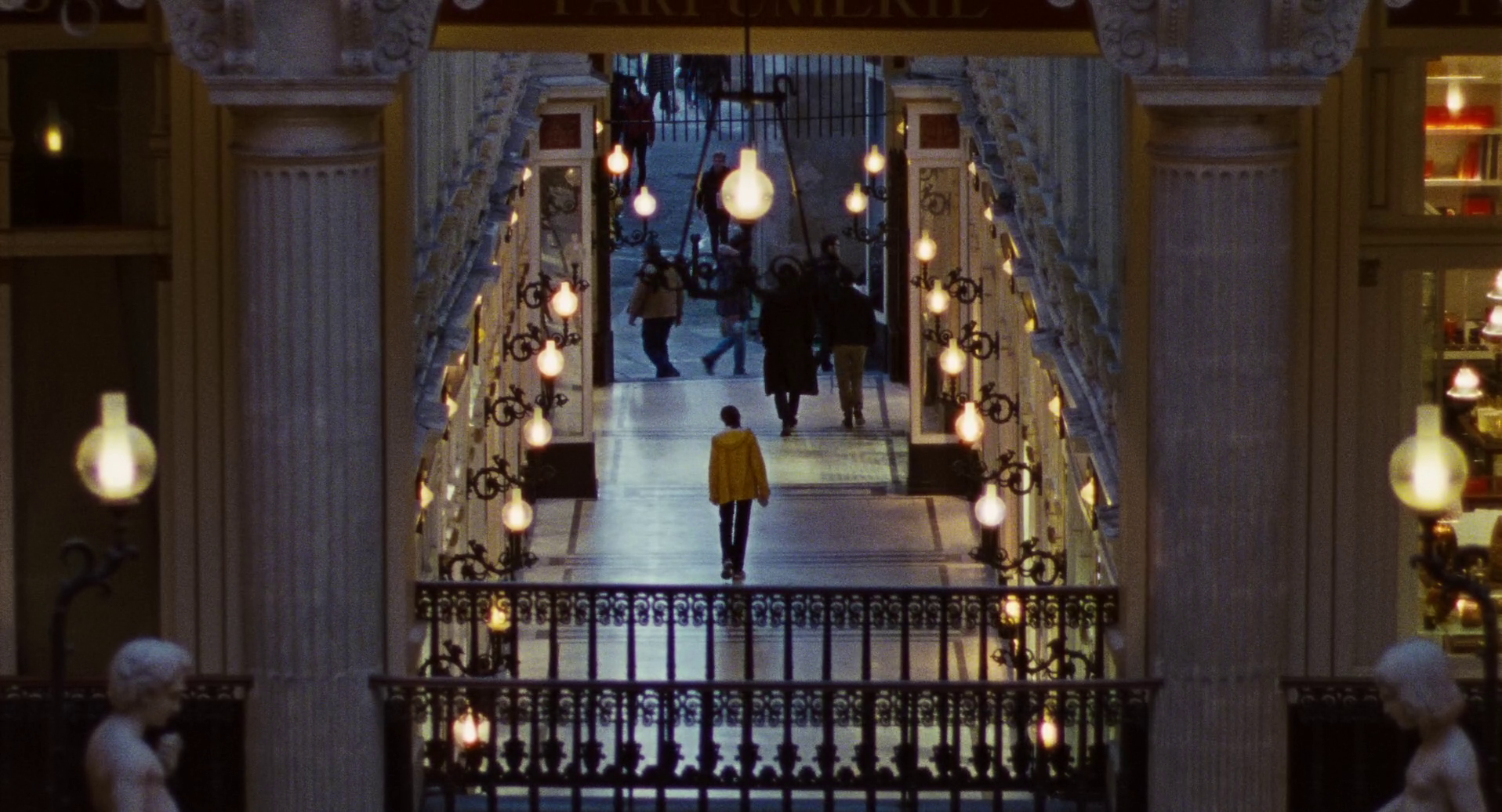
It was a fundamental question: everything in the film passes by the character of Solange, almost without incident, because the emotion of the film went hand in hand with following her, of being with her all the time. During financing, I was criticized a lot, the scenario seemed too simple, too linear. No doubt because today we give a premium to those complex scenarios with multiple points of view, ruptures, fragmented structures – this is a way to hide, I believe. It covers a deeper question, that of the classical cinema, which for me is the cinema of the line, of an organic continuity. I love modern cinema and the shattering of this linearity, but it has had the twisted effect of disqualifying this art of the line, which is profoundly musical and complex, and which creates a relationship to time which is perhaps what you are describing. In short, before the financing commissions, it was necessary to make clear that writing a very simple scenario was the fruit of a technique that was desired and worked on, an artistic bias so that an emotion occurs, and not just simpleness or a lack of ambition. But I often reflect on this question of the cinema of the line (the classical cinema) versus the cinema of rupture (the modern cinema), I must even say that it torments me a little when I conceive a film! It took me a long time to love Godard intimately, the way in which the dialogue, and even the struggle between classical cinema and modern cinema plays out in him — this brilliant sense of the cut he invented (the editing cut, the musical cut), but always inhabited by the haunting memory of the secret of classicism — fascinate me. Godard is really the cinema which violently resolves to be modern, and which cuts all the more violently the ties with what it passionately loved. Classicism is a lost secret; the great modern filmmakers have understood this well.
This classic linearity makes Petite Solange a popular film, or at least one that calls for a very broad emotion. However, the current context – the release of the film was to take place in November
before being postponed – makes it more and more difficult for an auteur film to be accessible to a wide audience. How do you feel now at the moment of the release?
The feeling that the world of cinema has been turned upside down the last two years. Due to closing theaters for more than eight months, a murderous and unfounded measure which allowed the streaming platforms to stuff themselves in an absolutely cynical way, and which upset all practices. There’s something tragic about it, it is a dark episode in the history of that will have to be written about. Jean-Pierre Melville declared in the 70’s: “the cinema will die in 2020.” It’s crazy! This accelerated three changes. First, the disappearance of the notion of mise en scène as we know it, reduced, if we summarize quickly, to the specifications of TV series or to the bloated stylistics the streaming platform films. Second, it is the concept of auteur itself that is coming to an end. La politique des auteurs was based on a policy of friendship towards a filmmaker that we would follow all our lives, and who would give us news of themselves and the world with each new film. We saw the last Moretti, the last Woody Allen. This pact of friendship, of affection between a filmmaker and an audience, is disappearing. And, finally, with the loss of interest for theaters, the whole experience of cinema changes radically: the theater allows for a very particular and very precious dialectic between each person as a solitary being and each person as embedded in a community, something that builds our relationship to the world. Watching a film on your computer, even if you can have great and real emotions that way, does not build a relationship to the world! In any case, all auteur cinema is threatened by these new practices.
What do we do?
When I talk with the directors around me, specially within the SRF (Société des Réalisateurs de Films, the French Directors Guild), where the subject occupies us a lot, I have the impression that there are two schools of thought: those who will continue to make the films they made before the Covid crisis, at any cost, and who will not change anything in their art with an irredentist determination that I admire. And then the others, those who are in crisis or who are more pragmatic, who think that we can no longer make films like before. I’m from that school and my next projects are very different from what I’ve been able to do so far, more aggressive in any case. We must confront the dragon. In particular, I have the project of
telling the story of the nouvelle vague and the invention of the modern cinema in the 1960’s, through a new lens – Godard, Demy, Rohmer, Bresson, as told from a female prism … In short, to write a feminine history of cinema, insolent and entertaining.
Interview conducted by Fernando Ganzo, January 6th, Cahiers du Cinema issue #784
Translation by Jhon Hernandez. Thanks to Diego.


