We continue our commitment to the work and ideas of Axelle Ropert with this translation. Ropert also did one on the work of actresses, which can be found here
The 7 Families Game: The Families of Actors
by Axelle Ropert
To James Mason
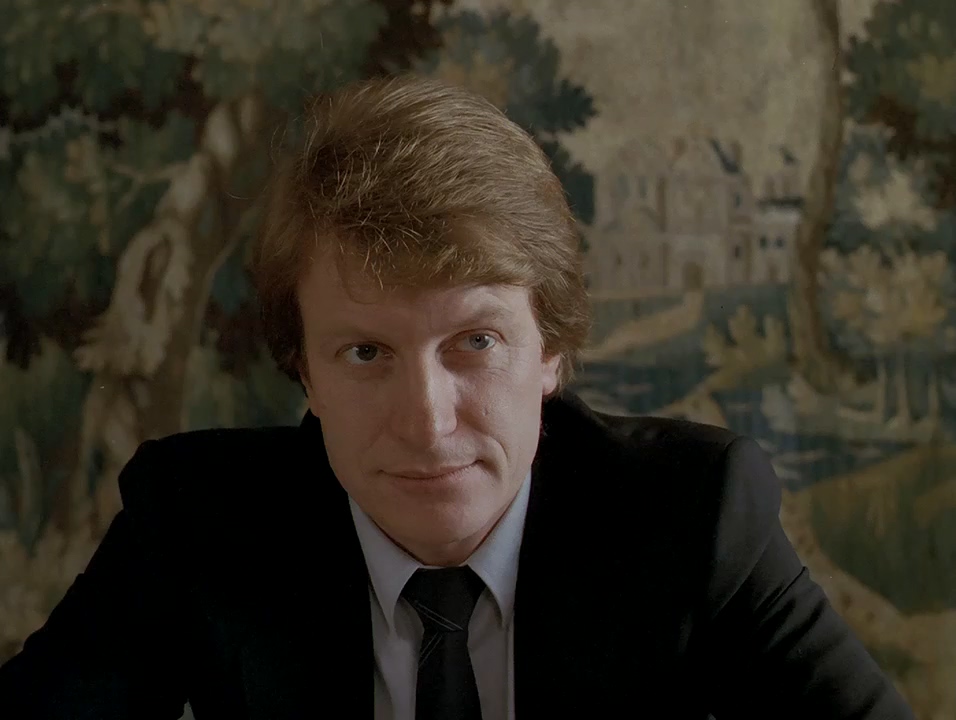
The Affable
Emblematic figure: André Dussolier.
Place of origin: the king’s court.
Distinguishing characteristics: they look very good in uniform.
Nature: The Affable has managed to transform (an audacious sartorial challenge if there ever was one) a timidly schoolboyish duffle coat into the armor of a lovestruck warrior (see Same Old Song by Alain Resnais). Yet some may find it grating, at first glance, this sense of propriety, of good taste, of social tact. The Affable is that curious social creature who establishes, before anything else, a certain boundary not to be crossed. No hypocrisy dictates this attitude, for he cares little about flouting the rules of good conduct. Simply put, the Affable is a profound introvert who has become a past master in the art of the bow – that gesture by which he exempts himself from the obligations of contact that social life demands. “There’s no use in running; one must bow at the right time” could be his motto. Where others exhaust themselves in vain displays of spontaneity, he remains at the starting line, ready to bow, ready to offer a greeting. The “crab tactic,” backing away so as to keep looking his partner straight in the eyes, sidestepping to avoid the awkwardness of frontal situations, perfectly sums up the choreography of his gestures. Unlike Anglo-Saxon politeness, unlike all the Herbert Marshalls of the world, the Affable are never brilliant men-about-town but young beginners. This sort of tender awkwardness obviously comes from the young James Stewart and his untimely blushes in front of Margaret Sullavan (The Shop Around the Corner, Ernst Lubitsch). One could say of them what Goethe says of children, who “know so well how to keep a secret but cannot hide that one has been entrusted to them.” In Le Beau Mariage (Éric Rohmer), André Dussolier seems to apologize in advance for the words he is about to speak, as though it were necessary to prepare the ground for conversation, smoothed of all conflict. The Affable know how to extract themselves from an embarrassing situation with elegance – by sketching a smile, by standing on the threshold even as the party is already in full swing. This art of retreat, a most martial art to be sure, reveals the hidden side of politeness: a reason that makes no compromises. Like Béatrice in Le Beau Mariage, demanding an engagement as misplaced as it is improper. André Dussolier does not want to indulge Béatrice Romand’s extravagance, and this refusal, during a cruel clarification delivered with legal precision, will allow no compromise. Like the hero of Benjamin Constant, the Affable could exclaim in their own defense: “there was no impatience in me; on the contrary, there was a desire to delay the fateful moment.” To make the world more pleasant by bending obstacles through the reverence of bodies and words seems to be their immediate aim. Yet the Affable’s greatest fear is not the expression of a hidden ulterior motive, but the wild eruption of dependence, for the Affable prides himself on being perfectly autonomous. This self-control is undoubtedly the reverse side of a very strange flaw: the tendency to transform, to let the beast within them emerge, to howl a “Qu’est-ce qu’elle a ma gueule!”, as tribal as it is disturbing, during a social evening (Same Old Song). When lions begin to resemble André Dussolier, the metamorphosis will at last be complete…
Prohibited: the leather jacket.
Suggestions: the role of Fantômas.
What they ask of us: above all, to claim nothing.
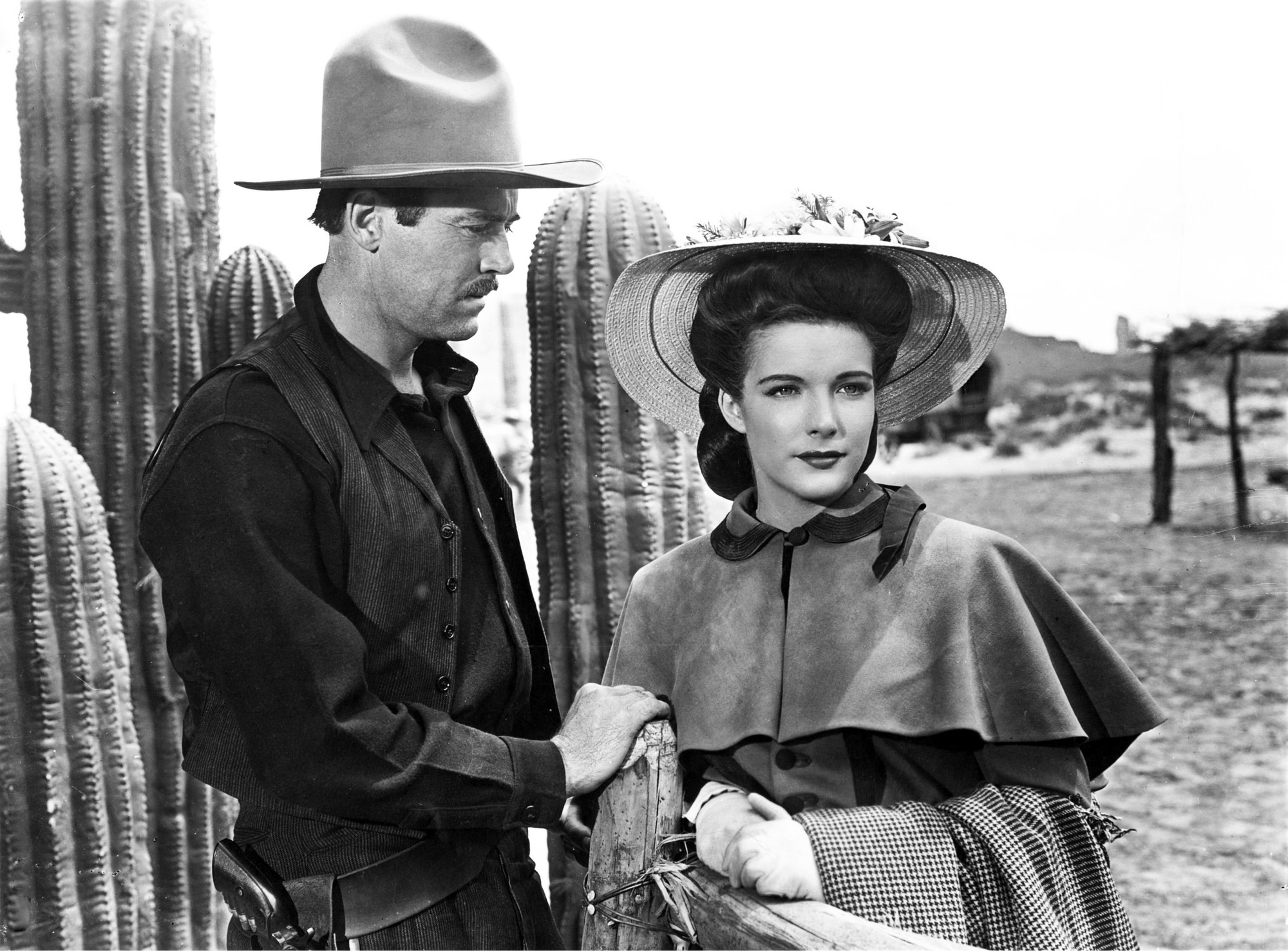
The Blind
Emblematic figures: Henry Fonda, Christopher Walken.
Place of origin: the ice floes
Distinguishing characteristics: the voice, which “prayers, sobs, and imprecations had changed it so that at times it was of a singularly penetrating sweetness, and at others rough and almost hoarse.” (Alexandre Dumas)
Nature: A strange calm always precedes their arrival, and we close our eyes before these men’s faces. The Blind is first of all a gaze so translucent that it loses its immediate clarity. This innocent look, which struggles to see what is right in front of it, belongs to those who devote themselves to very distant horizons. Henry Fonda and Christopher Walken are always looking farther than the immediate target offered to their eyes. When they lean toward a woman (to speak to her, to embrace her, to kiss her) we are moved by how much it costs them to make that gesture, as if they must force their mistaken sense of distance in order finally to answer the imperative call of what is near. That very deep sense of proximity that characterizes them shows in their somewhat clumsy, somewhat feverish way of “surprising a woman.” Repainting a house and waiting anxiously for Isabelle Huppert’s judgment (Christopher Walken in Heaven’s Gate by Michael Cimino), or dousing oneself a little too generously in perfume to seduce Clementine (Henry Fonda in My Darling Clementine by John Ford) – these are modest yet excessive gestures that express a very American sensibility, akin elsewhere to the beautiful films of Nicholas Ray (They Live By Night, On Dangerous Ground), in the immediate intimacy of everyday gestures. The Blind move driven by this perception of the distant, which gives them a very sure sense of orientation and a cowboy’s vocation, even if they sometimes stumble and often stammer. They are fine dancers. Henry Fonda’s shy waltz (My Darling Clementine) and Christopher Walken’s astonishing agility (King of New York by Abel Ferrara, Roseland by James Ivory) reveal the childlike wonder of those who discover the ability to touch ground, men whose gaze is always elsewhere. This apparent candor, all a quivering gentleness, is the best instrument of persuasion: it wins love while inspiring a little fear, because “this man was never where one expected him to be.” If Henry Fonda ultimately wins Joan Crawford from Dana Andrews in one of Preminger’s finest films (Daisy Kenyon), at the moment when everyone believes in his defeat, it is thanks to a Cornelian patience that sets the rules, beneath its apparent feverish resignation, of a true reconquest: “Let us adjust all our designs to her intentions / While through the gentleness of a long haunting / She finds herself taken, as if without knowing it.“
Prohibited: tropical countries.
Suggestions: to play the monotonous and terrifying ambassadors of Henry James.
Clues: a whisper in the ear, for the Blind, like Giraudoux’s hero, “love distant women – but up close.”
What they ask of us: to take off our high heels, we are tall enough already.
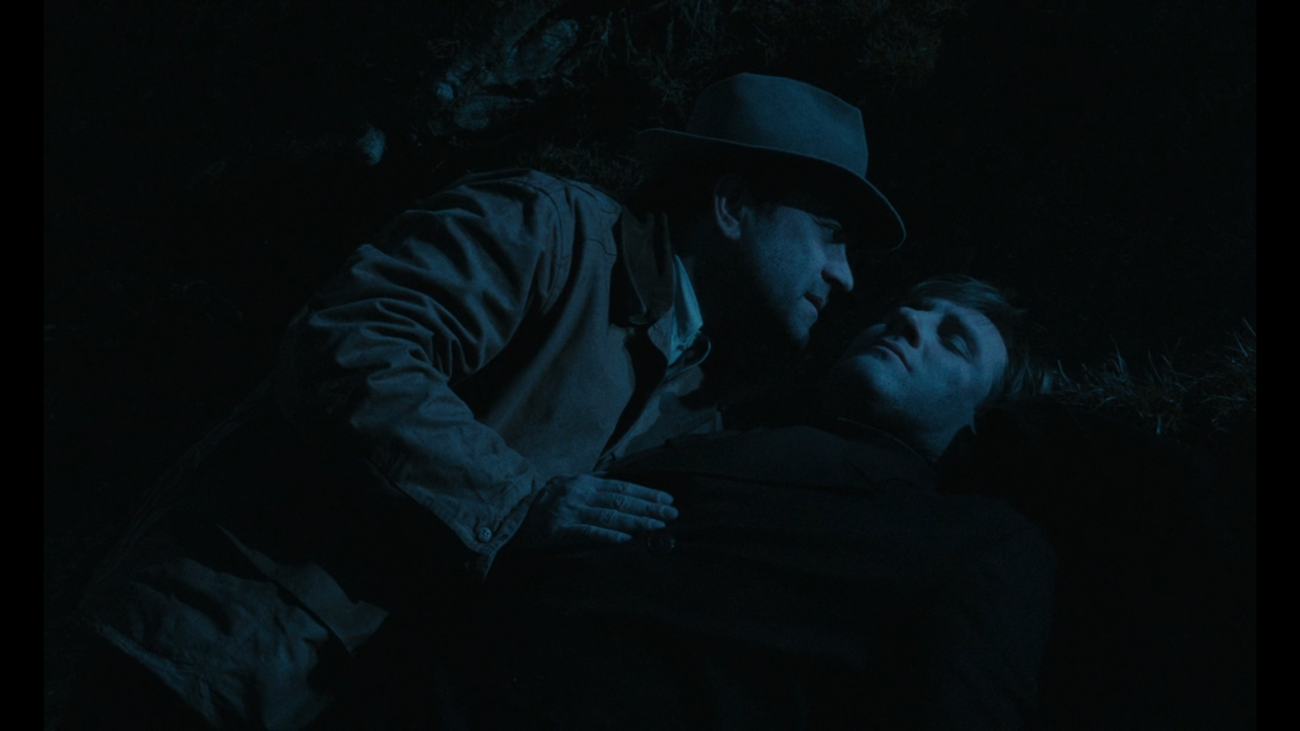
The Ferocious
Emblematic figures: Luís Miguel Cintra, Jean-Christophe Bouvet.
Place of origin: the winding streets.
Distinguishing characteristics: an opalescent gaze.
Nature: There exist two categories of watchers in cinema: one incarnated in long, gangling silhouettes (the Eastwood lineage), the other in small, stocky bodies (the Bouvet lineage). The first, graphically elegant, sometimes disappoints in the ostentatious parsimony of its means, and one comes to prefer a certain solar expenditure. To leave the shadows that cloak concealment and step fearlessly into the full glare of the sun, while keeping the same shared aim: to swoop down on prey. Such is the instinct of the hunter, the instinct of the Ferocious. Luís Miguel Cintra and Jean-Christophe Bouvet have both incarnated the Devil (The Convent, Manoel de Oliveira; Under the Sun of Satan, Maurice Pialat). “What frightens me is not abandoning the Good – it is no longer recognizing myself,” said one of the victims of the false Monk (M.G. Lewis), but a true demon. This power to petrify, to freeze their victims in terror, Luís Miguel Cintra and Jean-Christophe Bouvet exercise through a staggering ocular property: they do not look, they do not aim, they X-ray the spectrum of the living. The Ferocious also possess a genius for pronunciation, articulating more than they place the voice, decomposing syllables more than they chain them together, and attaining thereby a precision of language that is among the most lethal imaginable. “What frightens me is that moment when he is about to begin speaking,” said another victim of the Monk. Magnetism (that quality so thoroughly debased by overuse) allows them to stockpile force in order to unleash cold eruptive crises in which disdainful injunction and the virtuosity of perfectly mastered scandal are fused together: such as Jean-Christophe Bouvet’s pedophilic monologue in La Machine (Paul Vecchiali), or Luís Miguel Cintra’s sylvan provocation before a Catherine Deneuve turned to stone in The Convent. We would nonetheless recommend they not forget the threat that undid Vautrin: “The devil has let you change everything but your eyes, and those no one can ever forget” (Balzac). To put a watcher to sleep, perhaps that is the challenge those eyes hurl at us, and the only chance we are granted.
Prohibited: the closed room and its conventional confrontations.
Suggestions: to play Dumas’ Cagliostro, Balzac’s Carlos Herrera, Stendhal’s Francesco Cenci.
Clues: a pain in the back of the neck.
What they ask of us: to remain in their sights.
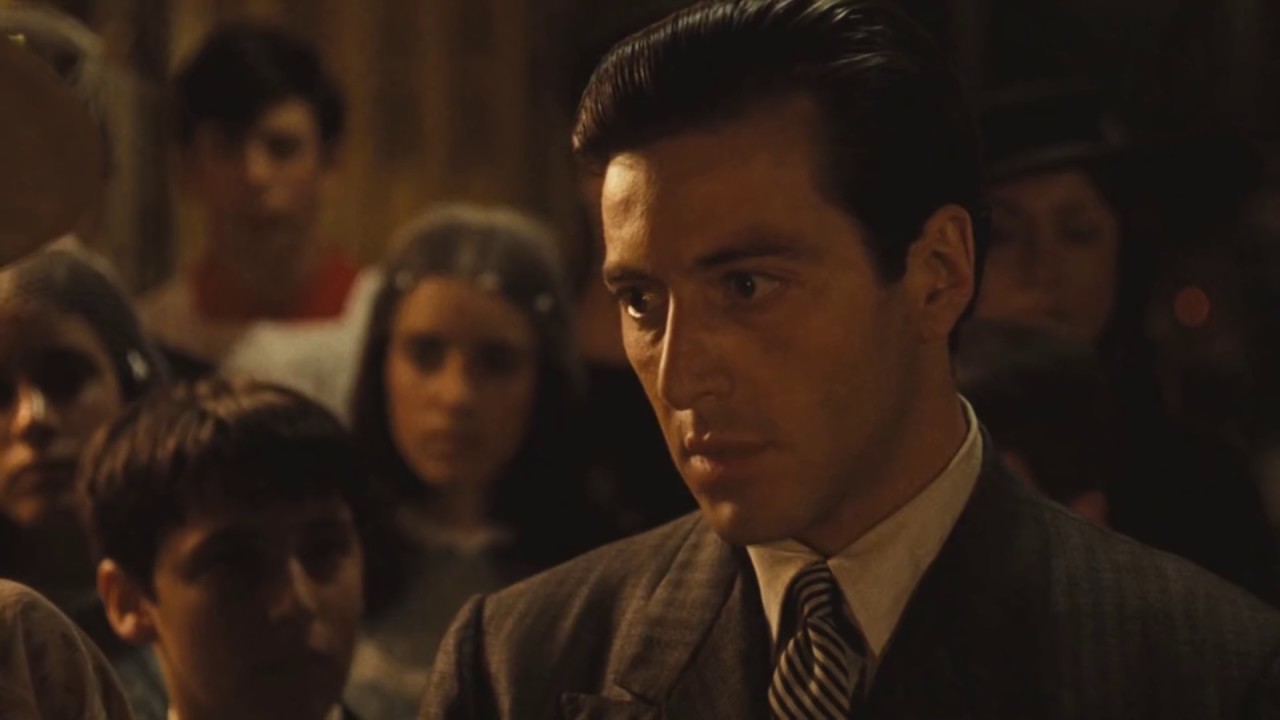
The Buried
Emblematic figures: Al Pacino, Homayoun Ershadi, Jean Desailly.
Place of origin: the ruins.
Distinguishing characteristics: admirable dark-ringed eyes.
Nature: “I do renounce.” That sentence, which closes The Godfather so magnificently, resounds like the program of a life. “I renounce.” Voices delivered of all human contingency, hesitating a beat before answering, as though questions reached them only with difficulty from the world of the living… What if the Buried were posthumous actors? “God will recognize his angels by an inflection in their voice and by their secret regrets.” The veiled gaze of Al Pacino (The Godfather I, Francis Ford Coppola), the reddened eyes of Homayoun Ershadi (Taste of Cherry, Abbas Kiarostami), the apoplexy nailed to the body of Jean Desailly (The Soft Skin, François Truffaut) – these are so many after-wounds that hold these actors in final defeat, at the risk, obviously, of forbidding them all movement. Why, sublime in the first Godfather, does Al Pacino become subsequently less and less moving, more and more frozen, in the manner of a Robert De Niro whose years fossilize the single grimace of a disdainful and violent mafioso? Let us not blame the actor too quickly, for it is no doubt the very nature of those who renounce to hold to the straight thread of a long decision, to fix themselves forever in that initial expression where everything tipped. One does not renounce one’s youth, or a woman’s love, because one never finishes renouncing. The impossibility of completion, Al Pacino is compelled to endure it through The Godfather II and The Godfather III, obliged to stretch that initial decision which dictated the abandonment of a personal trajectory in favor of the family’s criminal path. Al Pacino, Homayoun Ershadi, Jean Desailly share, beyond their respective mafioso, Iranian, or adulterous odysseys, the same paradoxical obligation: to survive their decision to be done with it – the better to carry it through. Why does one not die at once? In the revocation of a youth’s hopes, in the point-of-no-return spiral of conjugal compromise, the putting-to-death coincides with an apprehension of what still holds us, in its very cruelty, to life: the inexorable estrangement of a wife (The Godfather), the uncompromising pact with an old man (Taste of Cherry), the silk-sheathed skin of a woman (The Soft Skin). The epilogue in the form of a smiling enigma in Taste of Cherry, soldiers scattering among the flowers, manifests, in the piercing emotion of a spring suddenly resurrected and already shadowed by memory, an unextinguished belief in what was the worth of a man: the mark of his passage on earth. Before this scene that follows the suicide, how not to think of Goethe’s verses: “Selig, wer sich vor der Welt / Ohne Hass verschliesst, / Einen Freund am Busen hält / Und mit dem genießt, // Was, von Menschen nicht gewusst / Oder wohl veracht, / Durch das Labyrinth der Brust / Wandelt in der Nacht.” – “Happy he who, without hatred, / shuts himself off from the world, holds one friend to his heart, / and with him enjoys / That which, unknown to / and undreamt of by men, / wanders by night / through the labyrinth of the heart.” In choosing to die, but not yet, the Buried, in this voluntary reprieve, leave a trace among us forever.
Prohibited: to play cemetery keepers.
Suggestions: to play Poe’s Valdemar.
Clues: the rare dark circles of C.B.
What they ask of us: “…sitting opposite the buried man who had been dug out, and wondering what subtle powers were for ever lost to him, and what were capable of restoration—the old inquiry: ‘I hope you care to be recalled to life?’ And the old answer: ’I can’t say.'” (Charles Dickens, A Tale of Two Cities.)
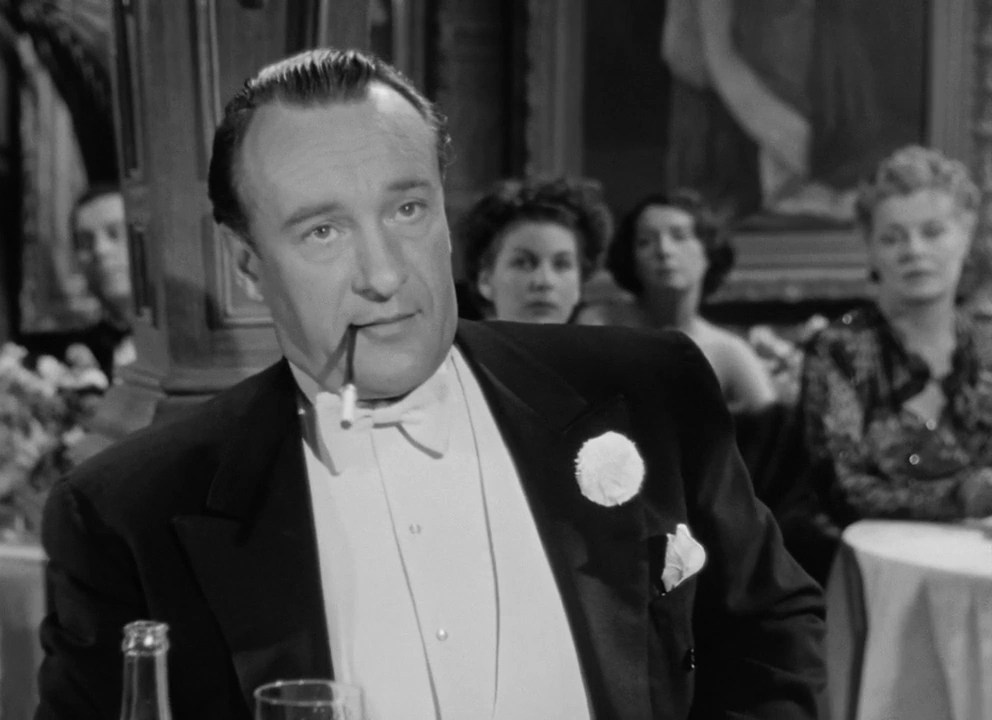
The Tomcats
Emblematic figures: George Sanders, Victor Mature, Michael Lonsdale, Michel Piccoli.
Place of origin: the Orient of the Thousand and One Nights.
Distinguishing characteristics: the heavy eyelid.
Nature: If they purr, lounge, and arch their backs, they are not for all that contented idlers, but rather indolents who are mildly disillusioned. Their idleness, mother of all vices, does not spring from a taste for leisure but from an excess of lucidity that fells them insidiously and obliges them to let themselves drift in that slightly derisory quietude, in the midst of the “burlesque army of society people” (Balzac). In this manner of always operating well below their capacities, the Tomcats might have been Wellesian actors, were it not that in them the power of irony replaces the megalomaniacal madness proper to the Arkadins, Falstaffs, and other Kanes. Eyes glazed, unctuous and good-natured, the Tomcats are there because they were told to be there, and the morose relish with which they discharge their duties speaks volumes about their motivation. For with them, everything is a question of interest, and a small provocation is all it takes for them to raise one eye, then the other. The awakening of the Tomcats then gives rise to the deployment of an impressive aristocratic disdain in which a terrible oratorical power is revealed: from the definitive and vengeful sermon of George Sanders as Addison DeWitt to Anne Baxter in the shabby décor of a hotel room (All About Eve, Joseph Mankiewicz), to the splendid amorous ultimatum delivered to Jeanne Crain on a hotel terrace one evening (The Fan, Otto Preminger), by way of Victor Mature’s supremely inspired declamation of Shakespeare (My Darling Clementine, John Ford) – the Tomcats take the floor. And yet no effect is sought in these anthology moments, offered as pure expenditure. What is at stake here is perhaps a way of losing the game in advance: George does not for a single instant believe in the possible conquest of Jeanne through his declaration, any more than Victor believes he can recover a certain dignity by giving free rein to his love of Shakespeare. It is simply a matter of wagering on a moment, the moment when one finally gives free rein to what one is. The astonishment that accompanies these moments of revelation, in which an artistic, moral, or amorous aptitude is unveiled that no one suspected, is no doubt the last mystery of the Tomcats. A reserve of talent, such is the promise they fulfill, but just for a moment: the moment of exhausting its potential for wonder, of astonishing even themselves with what they did not believe themselves capable of. To whom else to give such riches, if not to the gratuitous sumptuousness of an instant?
Prohibited: the abuse of alcohol.
Suggestions: the haughty and resigned general Surena, from Corneille’s last play, for George Sanders.
Clues: the impression of having judged them a little too hastily.
What they ask of us: to put the question to Zsa Zsa Gabor, George’s official fiancée (!)
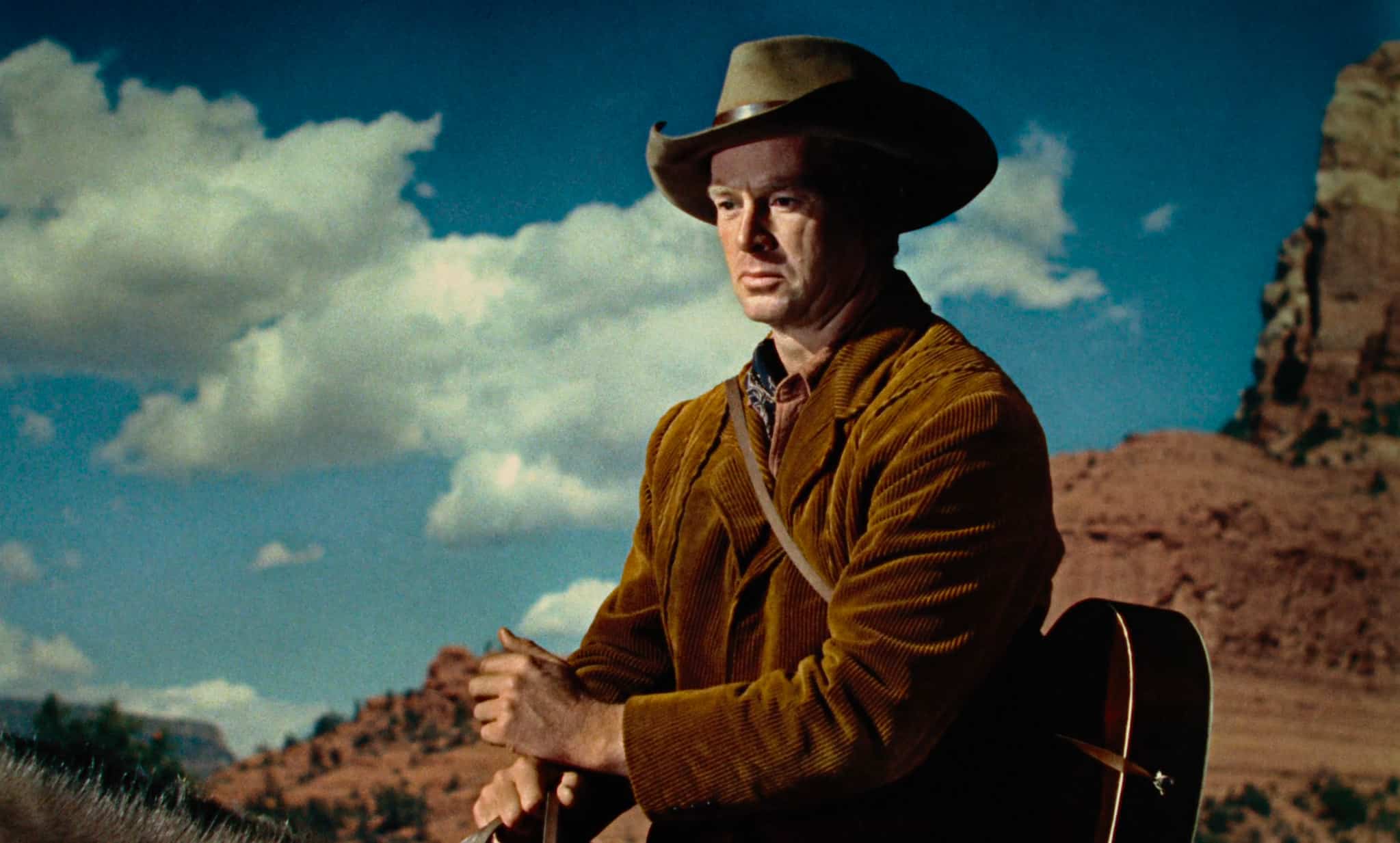
The Revenants
Emblematic figures: Robert Taylor, Sterling Hayden, Robert Forster.
Place of origin: the waiting zones.
Distinguishing characteristics: a slight handicap (they limp, they drink, they see poorly…)
Nature: They are not ghosts, but men who know only how to return – to a town in the far west (Johnny Guitar, Nicholas Ray), to a woman’s life (Jackie Brown), to illegal practices (Party Girl, Nicholas Ray). Their appearances, tentative because never certain of being expected, assured because always certain of being necessary, are accompanied by a strange feeling: that of a forgotten familiarity. Each time, we are moved to rediscover them and to sense the “power of wresting” (from oblivion) that tautens their every gesture. Their numerous previous lives weigh on them, and this is why, as vulnerable younger brothers of the mineral actors John Payne and Randolph Scott, they are stalked by aphasia, for “one loses by a single voice, and that voice makes everything” (Madame de Staël). Why do they return, and why do they know only how to return? One must know how to seize one’s last chance, for the last is also the only one, the one that follows the twelfth stroke of midnight: “The Thirteenth returns, it is still the first / And it is always the only one – or the only moment” (Nerval). The only moment to accomplish what the return promises: the possibility of a first time. Youth, too hasty, too unwritten, can know only initiation, while these heroes, straddling the border between maturity and old age, experience the piercing sweetness of first times that are also last times. It is of course a woman who embodies that chance. Dancer (Cyd Charisse), flight attendant (Pam Grier), or saloon keeper (Joan Crawford), she never responds immediately to the gaze of the Revenants, who, great observers of the beloved woman, lurking in shadow, hidden behind the door, husband their forces to seize the occasion in flight. Their manner of approaching their promised one resembles the great leap into the void, and we hold our breath, fearing, for them, yet another failure.
Prohibited: to retrace their steps.
Suggestions: to look forward.
Clues: the art of avoiding entrances (onto the stage, into the ring, into the subject…).
What they ask of us: to wish them luck.
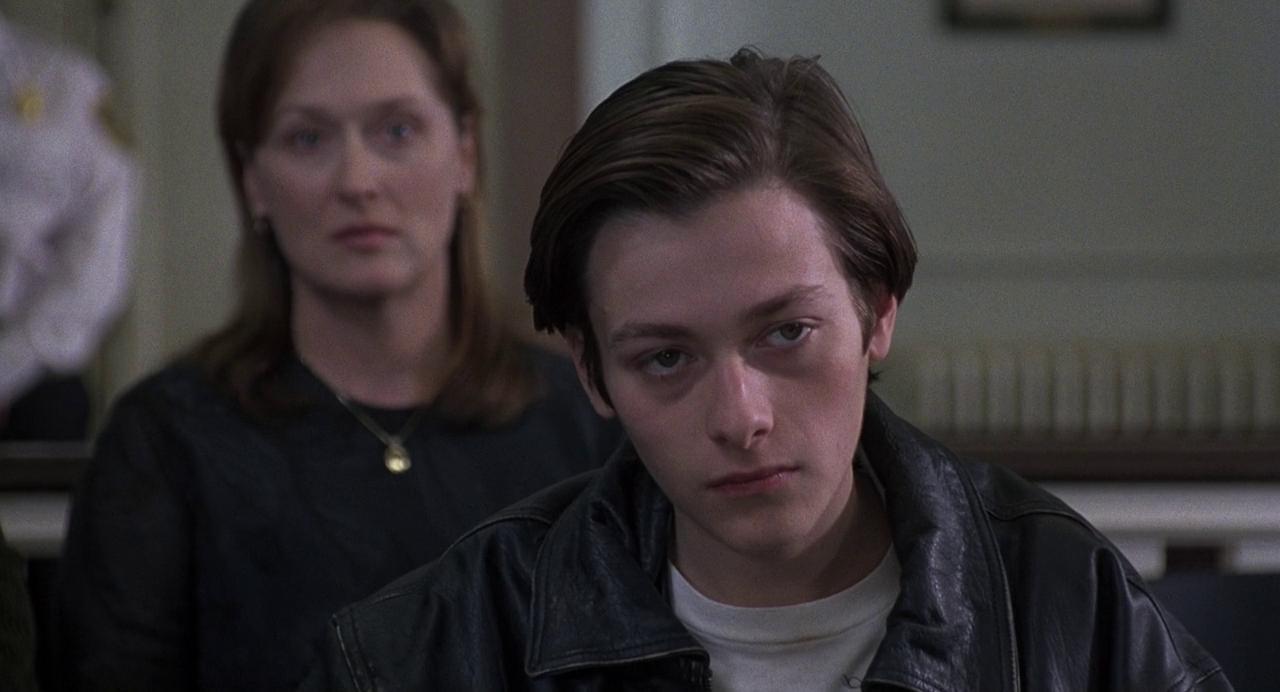
The Exhausted
Emblematic figures: Giancarlo Giannini, Edward Furlong.
Place of origin: the arms of Morpheus.
Distinguishing characteristics: “…that original and metaphysical gift of sadness…” (Charles Péguy)
Nature: They are children who were woken too early and who suffer all their lives from that particular brutality. They are condemned to search for those few missing hours of sleep that would have completed their childhood and led them gently toward manhood. Already aged, perpetually tired, they must nonetheless live with this head start on evil; no stronger than it, but ahead of it. This precocious initiation into evil grants them the power to neutralize moral dilemmas by endlessly sending guilt and innocence back-to-back, to the sole benefit of an “improbable truth.” Neither diabolical nor angelic, their mere presence is enough to create an insoluble tension between passion and horror: when Edward Furlong finally appears before his parents, their fears and their hopes will never cease to hold themselves at equal distance from the young man (Before and After, Barbet Schroeder). The Exhausted are neither ambiguous nor Machiavellian, but carriers (despite themselves) of a moral randomness that obliges everyone to remain in that zone where the question of choice no longer even arises (the cage of a prison, for instance). The only chance for these aged adolescents to escape this exhausting tension may lie in that property of space described by Leonardo da Vinci, who held that “no luminous body ever sees the shadow of the body it illuminates,” a property that belongs equally to the Exhausted. In other words, for Edward and Giancarlo to regain the advantage over the Devil, they must recompose the shadows of the circle surrounding them, restore their parents to their errors (Before and After), restore the world to its horrors (The Innocent, Luchino Visconti). To be ahead of evil is not to be stronger than it, but to be before it – by deciding that the malefic forces are, in the course of a Sternbergian and Anatahanian boat ride, finished.
Prohibited: to play the gifted child.
Suggestions: to take the place of Leonardo DiCaprio, that “made-up endive“, in the happy formulation of Jean-Claude Guiguet.
Clues: the Jamesian children.
What they ask of us: to call the sandman.
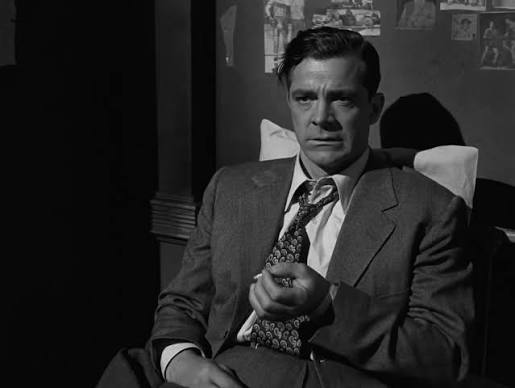
N.B.: Dana Andrews is obviously missing. Serge Bozon’s article (Vertigo no. 15) has definitively captured him.
“Le jeu de sept familles: les acteurs” was originally published in La Lettre du Cinéma, N°6, June 1998. Translation by Jhon Hernandez. Thanks to Vasco for providing the original French text.


