
The first images a film festival presents its audience don’t tell us much. The Cannes film festival, to name one example, routinely opens with films that are abhorrent and tell us nothing about the quality of the selection. This came to my mind when I sat down for the very first screening of the 2024 Asian Film Festival of Dallas (AFFD), which started with a student shorts block. The images of white high school kids pretending to be bounty hunters, dressing up and firing off fake guns made me sink into my seat and regret every decision that had led me to this moment. The second short of the block was of much higher quality and ambition with at least one indelible image (a young woman struggling to not dip her feet into the water of a flooded classroom as she takes an exam). And from there the block bounced around from differing levels of accomplishment. It was quite a bracing but sometimes amusing experience and the surprisingly full audience seemed supportive. The scheduling of the student shorts, a noon showtime on Thursday, seems rather a necessity (let’s get these out of the way) rather than any particular statement of intent. But it begs the question: if the images we start off with are not particularly important, what are the images that we take away from a festival?
I bring up this initial experience not to dump on student shorts (!) but rather because attending film festivals is not something I usually do. If there is a film festival happening in town there might be one or two films that I’m interested in, and then I simply ignore the rest. I’ve never bought passes, nor I have attended multiple films in a day – this is just something I’ve never done. The primary reason is, of course, economic – passes for these film festivals are usually exorbitantly priced. The second is a distrust of the programming sensibilities of the major festivals in Dallas. Thus, shorts blocks, festival trailers, filmmaker Q&A’s, swag bags, t-shirts, memberships, are all things I know almost nothing about.
Most of the festival coverage on the internet is focused exclusively on the major international events of the calendar, such as Cannes, Venice, Toronto, etc. But unless you’re a working critic, or happen to live near those cities, you’re probably never going to attend those events. Most of us will rely on our local regional fests. It’s the purpose of this column to interrogate the programming of festivals – what better place to start than with one in my own city? The Asian Film Festival of Dallas is my favorite of my local film festivals. During the last couple of years they’ve played Soi Cheang’s Limbo, Absence (Lee Kang Sheng in a rare non-Tsai Ming Liang role), Next Sohee (Doona Bae!), Waiting for the Light of the Change, A New Old Play, Baby Assassins, a restoration of Satyajit Ray’s The Music Room. I don’t know if there is a coherent editorial programming line, but at the very least they don’t shy away from bringing in challenging films (this is the festival where I saw Tsai Ming Liang’s Visage and Stray Dogs). And I will always treasure a festival that allowed me to see Johnnie To’s Sparrow on the big screen. Ever since I started my own festival I’ve grown even more curious about the programming of the other festivals in the city and what the audience and attendance is like. And because of Lucky Star I was able to attend as press, which solved the economic aspect of the matter. The 23rd Asian Film of Festival of Dallas ran from Thursday July 25th to Sunday July 28th and packed in 17 features and over a dozen shorts, a total of 32 hours worth of films. I attended almost every screening. Here are my impressions.
Survival
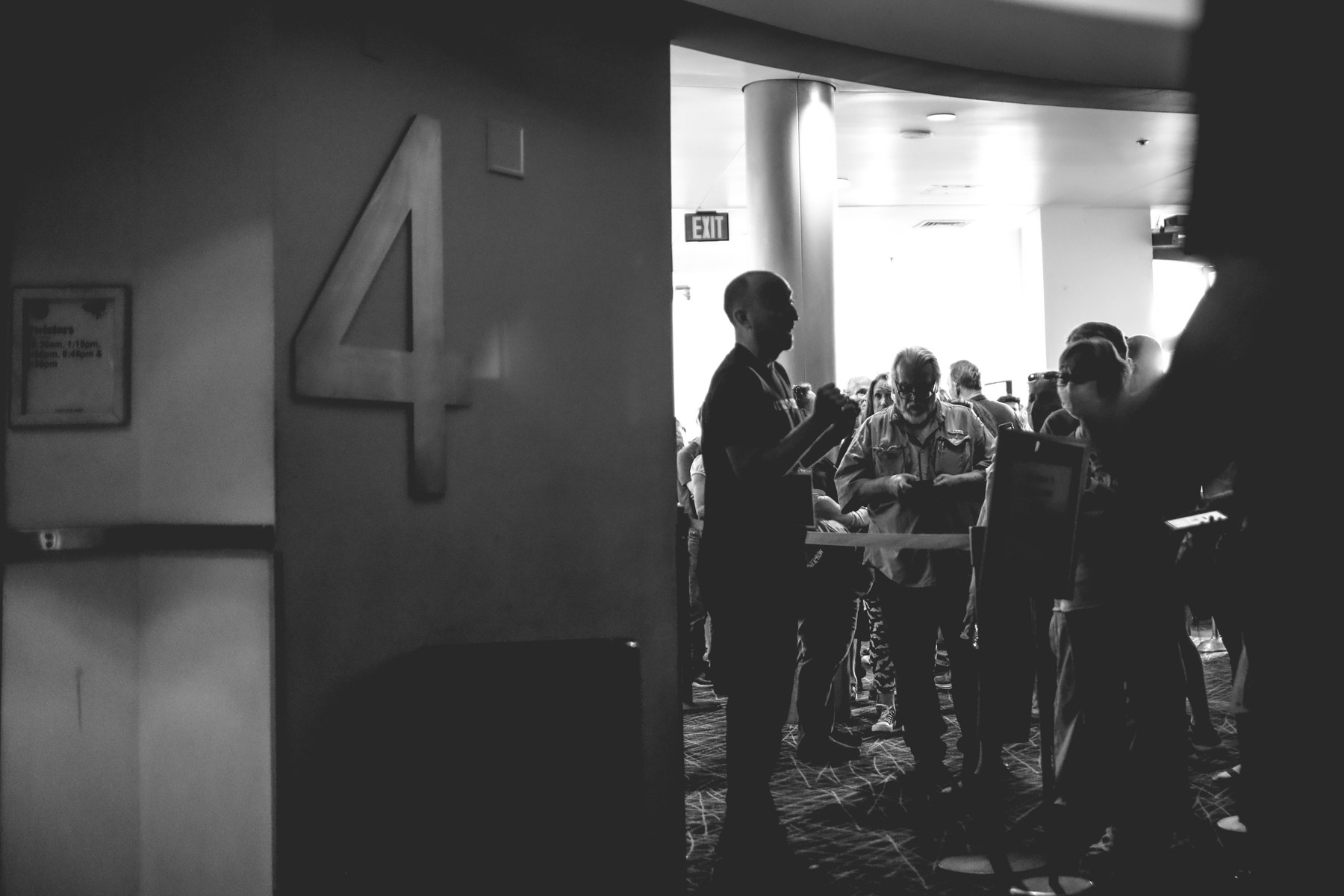
We flashed our badges as we entered the theater. We were handed a small piece of paper which would act as a ballot for us to rate films from one to five. We sat down in the same theater 3 of the Angelika Film Center on Mockingbird Lane. We heard either the festival director (Thomas Schubert) or the lead programmer (Paul Theiss) talk briefly before each screening (usually a bit of housekeeping about talking, cell phones, or how to tear our paper ballots). We listened to community partners do their thing or go wildly off-script (Bart Weiss, founder of Video Fest and a fixture of the Dallas film scene, said that if we all watched Frank Capra films such as Meet John Doe before the election, we would all be less angry!). We watched trailers for a Jean Do-Yeon revenge vehicle called Revolver, a showcase for Well Go USA’s embarrassingly-named streaming service, Hi-YAH!, a trailer for the closing night film, Soi Cheang’s Twilight of the Warriors: Walled In, and finally a trailer for the festival itself. The lights went down.
When reading film festival reports, I get the impression that festivals can be a largely social affair for a lot of critics. Films are seen and texts are written, sure, but the festival also serves as an opportunity for critics and programmers to mingle, party, network. But my experience was rather different. I attended the event using a press pass on a mission to attend every single screening and to account for every film. This, of course, posed several logistical challenges. Namely, finding time to eat and go to the bathroom. I started my day with a 12pm screening and a small bag of popcorn and a drink, hoping that it would last me until there was enough gap in the schedule so I could eat something more substantial. I prioritized seating where I could easily duck out of the theater quickly if I had to use the restroom, or immediately go to the sushi restaurant next to theater for a quick bite (either some gyoza or yakisoba). I prayed for films to be over so I could stand up, move around and stretch. In short, the festival became a feat of endurance that also happened to feature some movies.
The film festival trades in the idea of the pleasure inherent in the act of moviegoing. But I had perverted it: the experience turned alienating and frankly psychotic! Stuffing yourself on movies in a gluttonous rampage, while appealing in theory, leaves a lot to be desired if there’s no room for comfort, if there’s no space for reflection. Going into the weekend I had felt hesitant, but optimistic. I wanted to give myself over to the sensibility of a film festival and experience everything it had to offer. But, in practice, I felt myself a hostage, trapped in a stunt of my own making, questioning the very reason why I was there in the first place. Why did I care so much about watching these movies anyway?

Good Vibes
In a perfect world, AFFD would have such films as Takeshi Kitano’s Kubi, Takahisa Zeze’s One Last Bloom, Haruhiko Arai’s A Spoiling Rain, Hong Sangsoo’s In Our Day and more and more. It becomes clear that the programming team is looking for films in the margins rather than going big game hunting (the lone exception would be Twilight of the Warriors: Walled In which held its second screening in North America at the festival, just a couple of hours after it premiered in New York). There’s nothing wrong with this strategy, but it does mean that many of the films I mentioned will never play Dallas in any capacity. AFFD and the festivals in Dallas at large, due to a variety of reasons (budget, prestige, audience), do not have carte blanche when it comes to selecting films, thus they must place bets on smaller films they believe to be worthy.
AFFD does its best to offer its own unique charms. One of its traditions is the annual screening of a GEKIxCINE property (per their website, “Geki(stage) has its own allure, Cine(Cinema) has its own appeal. A new entertainment that combined the two is Geki x Cine”). This year’s offering is Rose & Samurai 2: Return of the Pirate Queen. This is essentially a recording of a giant stage production, a mixture of kabuki and rock opera. It is a spin-off of a series called Goemon Rock which features Arata Furuta’s legendary thief, Goemon Ishikawa. It is an impressive bit of nonsense about fake European countries whose rulers are scheming to invade their neighbors, but in practice this looks and feels like a particularly over the top anime, and the actors follow suit. Yuki Amami’s Pirate Queen Anne is all imperious charm in her many incarnations (does she at one point lose her memory and become a gentleman thief of the night?); Yuki Saotome’s spoiled heir learns how to be a ninja from a book; and Goemon routinely sneaks around and impersonates all the other characters. All of it is very entertaining and quite overwhelming by design. There’s hardly any breathing room before some bit of action or gag, before a song takes flight, before something ridiculous happens – the film overpowers you. What helps everything go down smoothly is the good humor of the performers- who are never above the material, who sing their hearts out, swing their swords around, and do silly dances after drinking a juice that everyone agrees tastes awful, but sure gives you a boost of energy. This is undeniably a unique theatrical experience, but does it belong in a film festival? For a screening on a Friday at 12pm, the crowd was sizable and seemed very into it, but I kept wondering about other Japanese films that could’ve been here in its place. And yet, novelty or not, I would absolutely watch more of these!
Another off the beaten path selection is the Taiwanese film Namesake by Yung-Chi Chen, which appears to be a TV production. It tells the story of a wedding photographer who meets a makeup artist who shares the name of his ex-girlfriend. This is a somewhat muted romantic dramedy where the connections between characters depend on a larger design, something inexplicable which draws one to the other. River Huang’s photographer takes a girl on a date to the movies, but her choice of movie puts him off and he chooses to end the date early (he instead goes back to the movies to watch a different film, relatable!). When he spies Li Ling-wei’s character next to him, crying her eyes out as the credits finish, something begins to happen… Chen isn’t afraid of indulging in romantic cliches because he can usually come up with images which breathe new life into them (the umbrella by the seaside refuses to work due to the wind, the main character dresses up as a zombie on a dare to scare passersby). But Chen does not want to make a full-on romantic comedy. He’s after a certain melancholy air regarding his chosen themes of memory and the passing of time. The gentleness of his approach is necessary to register the more abrupt gestures. In other words, to make the film his work, some violence is required (the hard drives which stored old photos become corrupted, car crashes and earthquakes are necessary to begin anew). Death and loss are never too far from our romantic couple. And it’s this violence that makes the romance mean something, to the characters and to the viewers.
The Iranian film A Childless Village by Reza Jamali proved to be an unexpected crowd-pleaser. It tells the fictional story of the making of a documentary by a local man, Kazem, about the infertility of women in their village. The crowd-pleasing aspect reveals itself in the way that it frames filmmaking – a film can be an attack against women, but it can also be an apology to them. Filmmaking is a populist act, one that can serve a community and right previous wrongs. It doesn’t matter that the film they’re making is completely inept, with the crew often visible in the frame, hijacking the shots, looking directly at the camera (at least they have a sound guy). The women are given time to speak and tell their stories (the shame of infertility, divorces, etc.), and the men listen. The charm of the film is that this is not done in a way that’s at all politically correct – the men constantly boss the women around, telling them to keep talking, telling them to look at the camera or not. Perhaps this small irony is not enough to sustain the film, but it did make me laugh several times. Minor in the grand scheme of Iranian films on the lessons and ethics of filmmaking, of course, but what isn’t.
Bad Vibes
The need for variety within a program dictates many choices. There’s a search for balance between countries, between styles, between moods. You want a mixture of comedies, dramas, romances, action, horror, etc. – it can’t be a film festival made up solely of Tsai Ming Liang or Apichatpong clones (do those still exist?). Thus, you also need some films with bad vibes.
Ms. Apocalypse, a South Korean film directed by Lim Seon-ae, is a film of two halves. The first half is shot in black and white and takes place in 1999 on the eve of the new millennium. It depicts a dour and miserable experience for our main character, played by Lee Joo-Young (sublime in Hong Sangsoo’s Yourself and Yours), who does the books for a local factory, lives with an elderly aunt who is going senile, and who is regarded as quite ugly (the apocalypse of the title refers to her face). The experience of the first half is quite punishing and dark. It’s no surprise that the second half will introduce color to the film (she dyes her hair a bright orange) and signal a turn in her luck. But in the film’s formulation, even with much more humor and life, the characters never quite escape their fate. It is designed to deliver blows to the characters, in an inorganic way. Im Seon-Woo’s character, in particular, a tough-talking woman who is entirely immobile and who drives most of the plot machinations in the second half, seems set up to suffer before Lee Joo-Young, to clash against her, before ultimately bonding with her. The suffering of the characters is prioritized above all else, a melodrama where levity is short-lived, and there is always another disappointment around the corner.
From Taiwan comes Old Fox, executive produced by Hou Hsiao-Hsien and directed by Hsiao Ya-Chuan (a former assistant to Hou). This is a coming-of-age narrative where the options of a young boy are whether to follow the advice of his father, or that of the local landlord (the old fox of the title). The landlord’s advice is seductive. He speaks in the language of capitalist self-preservation, the I above anything else, a worldview that is attractive to our young protagonist who is becoming aware his father’s lowly station in life. When the Old Fox delivers his advice, audience members winced and said “Oh no.” After all, it’s one thing to speak this language in the world of adults, and quite another to see so clearly the cruelty of this worldview when it is laid before a child. In the moral construction of the film’s universe, however, we get off too easily- Hsiao goes to great lengths to stack the deck and show the violence of this character, while the kid’s father plays saxophone and whose greatest sin appears to be still carrying a torch for an old girlfriend (played by Japanese actress Mugi Kadowaki, whose appearance in this film is so baffling that I imagine it must’ve been a concession to a Japanese producer or something). The final leap in time made me appreciate the film a little more. It’s a depressing though probably realistic admission that perhaps this capitalist cruelty espoused by the Old Fox was somewhat necessary in the end.
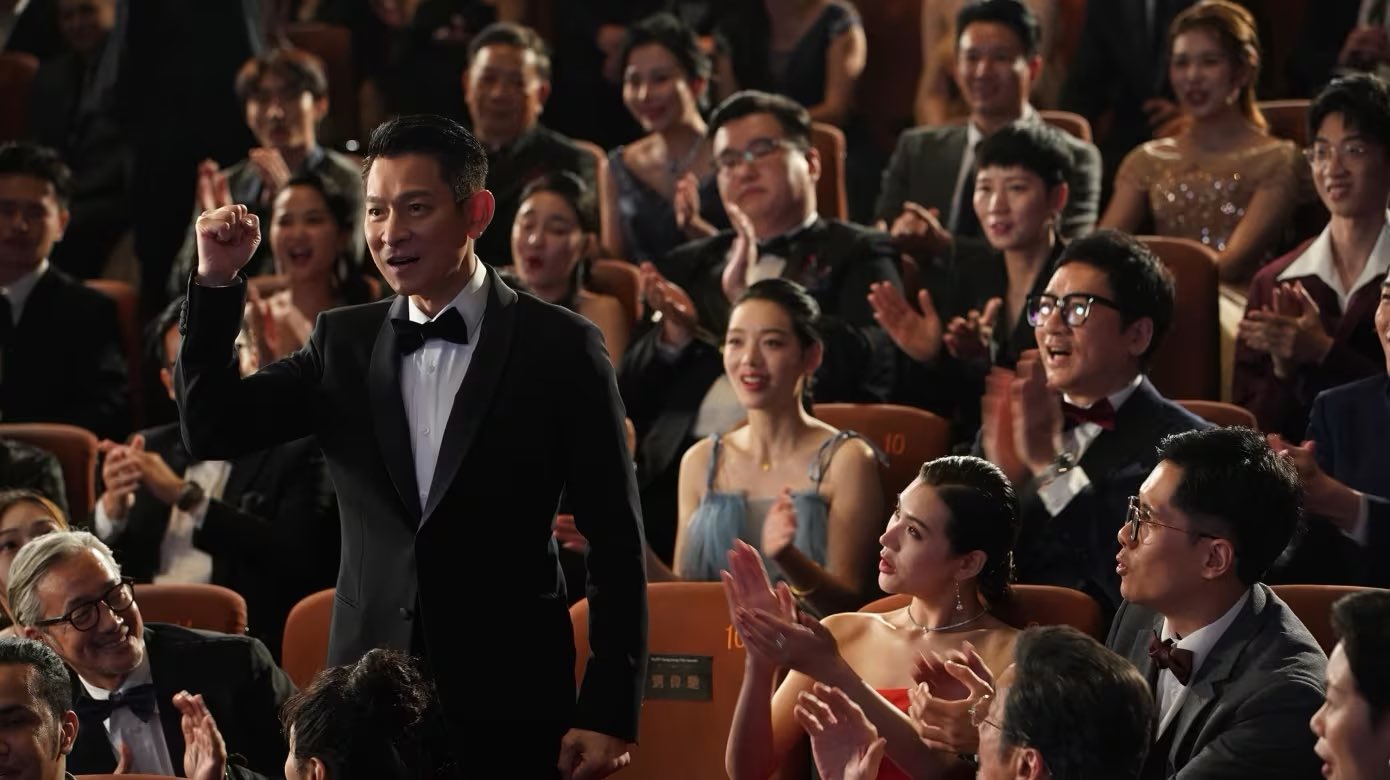
It’s hard to imagine a film with Andy Lau having bad vibes, but that’s exactly what Ning Hao’s The Movie Emperor is all about. This is a very depressing satire of the business of filmmaking and a withering send-off of a certain class of movie star. After a small humiliation at an awards function, Andy Lau’s character sets out to make a movie about the regular people of rural China (the kind of film that wins awards and plays at foreign film festivals). Ning’s film is very precise about the entire battalion of extras and hangers-on around movie stars, and also the way that a giant production can impose its own logic on the spaces that it is supposed to be depicting. Andy Lau’s character says he wants more authenticity and wants to see real people, where they live and what they do, until he actually does. The reality that stares back at him, with its wild pigs, potential hidden cameras, stunts that go wrong, is one that that hates his ego and wants to see him come crashing to down Earth. Of course, his character is so removed from the everyday world that it’s impossible for him to admit fault, to kowtow before anyone. What is available to him is solitude and a bit of private amusement. Ning’s film is too reiterative of this point and goes on too long, coming up with situations that are just variations on something we’ve already seen. His mise en scene is so controlled that it’s as if he is also displaying his own power, his own influence and mastery – maybe everyone here could use a good drop kick.
In theory, horror films are perfect fodder for late-night festival viewing (the midnight sections of film festivals now seem like a dutiful requirement). The two South Korean horror films that AFFD presented, however, were truly miserable experiences that have nothing to do with what’s striking about the horror genre. First, The Tenants by Yoon Eun-gyeong, which has a young office worker who is facing eviction try to take advantage of a loophole that allows him to sublet his own space. The film invests some of its scant running time in trying to set up a social context for the events of the film (we return often to the meaningless tasks at the guy’s job), but immediately we are thrown into a situation where logic and realism are soon forgotten. Once the tenants insist on moving into his bathroom, the situation escalates in predictably absurd ways. Shot in a pointless black and white which does nothing to conjure any atmosphere, we’re soon faced with “creepy” images, nonsensical behavior, and twists that do nothing to elucidate the film’s concerns. Anyone who describes the film as Kafkaesque should be ashamed. This was a late night screening and was the only film I contemplated walking out of (the only reason I didn’t leave early is because when I stepped to the corridor to check if I could cancel my scheduled Uber, the cancellation fee dissuaded me). Second is The Guest by Yeon Je-gwang, which is so lazy that everything about it seems predetermined. The killer’s ruthless pursuit of the protagonists is purely functional (he’s the bad guy, thus he must chase them till the bitter end), everything is the first choice, within reach – where is the invention? The voyeuristic setup of the situation, where the hotel employees are secretly recording the guests for potential blackmail, is completely squandered. A better film would’ve explored the moral implication of the story in greater detail, but instead The Guest abandons it quickly to get to the generic horror that is its true goal. More and more I am becoming disillusioned and downright suspicious of the idea of low-budget horror becoming a launching pad for new talent trying to break into mainstream filmmaking. It feels too easy – why don’t you make a romantic comedy instead?

Intermezzo
I only missed two films in the entire lineup, for two very different reasons. The first was Tokyo Cowboy (though I later caught up with it via screener) and the second was the Indian film Stolen. I skipped Tokyo Cowboy because there was a huge line for it after the screening of Ms. Apocalypse and so when I overheard festival staff talking about it being a sold out show, I suddenly felt very strange holding a press pass and taking somebody else’s seat. I opted to go find something to eat at Sushi Mockï, a place at the foot of the long stairs that take you up to the Angelika and to Mockingbird Station. All through the weekend I felt very self-conscious about my press badge, hiding it from anyone who might see it. Perhaps because I’m not an actual journalist and I didn’t like the way that it differentiated me from the rest of audience (a volunteer asked to see your badge every time you entered the theater in order to determine how to count you in their audience tallies).
The Angelika Film Center is a big space. The first floor has a dedicated lounge space with a coffee bar (never once gone near it). Then you can take the escalator up to the second floor where there’s a concession stand/bar. For some reason French editions of classic Hollywood cinema posters (Face au Crime or Crime in the Streets, Il Faut Marier Papa or The Courtship of Eddie’s Father, Vacances à Paris or The Perfect Furlough) hang on the walls and every time I see them I can’t help but think that the Angelika would never be caught dead playing films like these! In essence, this is a theater that’s not really hospitable to cinephilia. They play what the distributors have, and almost never go beyond this. So I left and quickly took refuge in some yakisoba next door.
I feel bad about not seeing Stolen, an Indian film from last year that premiered at Venice and seems to have pretty good reviews. I tried to secure a screener from the distributors but never heard back. I missed the film because I wanted my wife to watch Twilight of the Warriors and I had to go pick her up to bring her to the theater. It’s a shame, but breaks like this seem now to be completely necessary in planning out your schedule when tackling these festivals. It seems contradictory, but sometimes the best thing you can do to enhance your enjoyment of the film festival experience is to not watch a film. During this time away from the theater you can breathe, organize your thoughts, drive across town in a mad rush!
During those yakisoba meals, brief and pathetically alone, I thought about the original idea behind what I wanted to do for this text. Instead of a festival report that highlighted two or three films and left the rest outside, I wanted to account for every film, every event, everything! I knew then that I would fail however. What did I have to meaningfully say about an opening night party? What do I have to say about the comedy hour put on by Kufiya Comedy? It’s beyond me to address these things. As I milled around waiting for my ride, watching the people get in line to get their food at the opening night party, I understood that my place is the cinema. Alone and anxious, it’s best to return to the things I know something about.
Dragon Seal
Making films within the mainland Chinese film industry is no easy task. Especially if those films concern themselves with some sort of societal critique. Films are subject to censorship, alteration, release cancellation, etc. Only a few years ago several of the Chinese films in the Berlinale were pulled days from the festival due to “technical reasons.” Once a film is deemed fit for release, it is given what is known as the Dragon Seal. The films that sported the Dragon Seal at AFFD worked in vastly different ways.
Gao Peng’s debut, A Long Shot, takes place in a rural community where the biggest factory has been shut down for months and is now semi-regularly raided at night to be stripped for parts. The main character is part of the security force that’s tasked with protecting it. The economic desperation of every character is felt at every moment, and Peng’s realist frames always makes sure to highlight the decay of the environment. Violence remains at the edge of the story, but because the protagonist is a former Olympic sharpshooter who is seen building his own gun throughout the film, violence is something we expect (for many characters, violence is definitely an option in this world). When violence does erupt, it is a result of a world that has closed doors to its characters, one by one. This bleak, almost hopeless, film that ends with a shocking eruption of violence (with a fantastic action sequence built out of the logic that this sharpshooting gun can only have one bullet in the chamber) as a topper to its critique of the relentless pace of Chinese capitalist reinvention, gets a Dragon seal by making sure to include on-screen text that says the Chinese government passed laws to address the issues depicted, and that the bad guys went to jail for a decade. That’s one way to work within the system.
Da Peng in his role as writer, director and star of Post Truth tackles the issues of online gossip by mixing in his critique with a nice big dollop of sentimentalism. The film charts the journey of the main character to clear the name of a recently deceased woman from an online accusation of prostitution. This accusation then causes issue with her grave, as the families of those around her don’t want to be associated with someone in this line of work. The film tracks the broken telephone-like path of this rumor from person to person in a series of humorous set pieces (my favorite being the one where he goes to a haunted house to track down his sister). Peng’s instincts are that of a showman – he wants to make you cry (everything with his daughter who is being bullied herself), he wants thrills (near the film’s end, he will become a fugitive!), he wants to make you think about the issues (all themes of the film are spoken out loud). But society is never allowed to become too ugly; the guy who started the rumor is an outcast, apart from society, an easy scapegoat for our ugliest impulses. There’s a bit of martyr complex going on, of course, as the main character essentially blows up his life for a person he barely knows. Even as he breaks all sorts of laws, his morality is never in question. This calculation is how you get an audience on your side, and how you get the Dragon Seal.
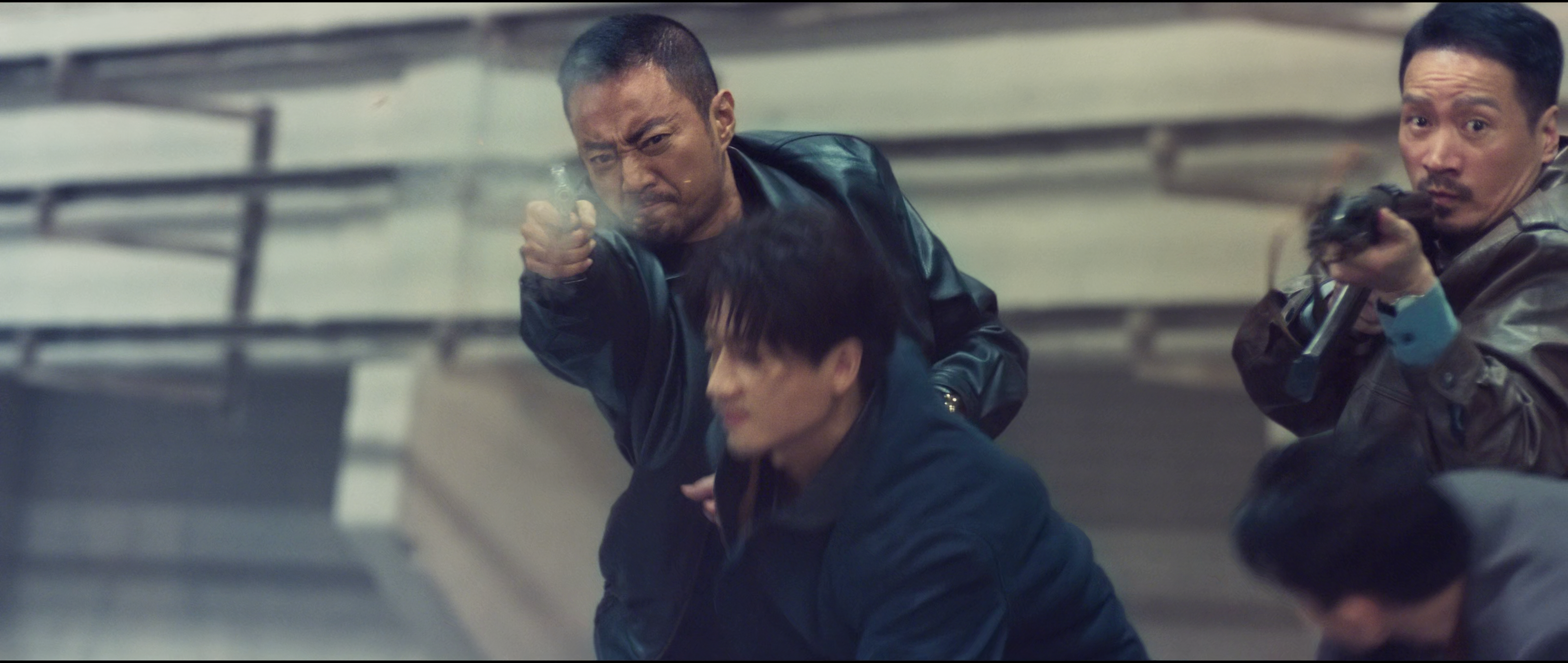
What happens when you drop an anti-establishment Hong Kong guy like Herman Yau deep in the mainland China film machine? How does a guy like that make it out unscathed? Perhaps part of the strategy is to make a film that moves so fast that moments of reflection (for the characters, for the audience) are impossible. By the time Moscow Mission came to Dallas, Yau had already premiered two new films (Customs Frontline and Crisis Negotiators, one of our editors stresses that they’re both much stronger) that played in US multiplexes, so perhaps his working speed is also part of the method. Moscow Mission, which tells the story of a group of Chinese cops who go to Moscow to investigate a robbery on a train and spirals from there, is the type of film that could easily be misunderstood. The Chinese supercops are never wrong, their morality is never in question, they act quickly and decidedly toward the overall goal. Their intent is to follow the orders of the government, apprehend the bad guys, and return them to China. This is never in doubt. On its face, a complete propaganda premise, ready to be exploited for nationalist points! But Yau is far too slippery a filmmaker to sell us this. So while he will dutifully film the action sequences (and they are incredibly exciting!), I think we find Yau more in the depiction of collateral damage that this mission contains. We find him more in the brutality of the villains who leave destruction and bodies in their wake than in the hyper efficiency of the cops. The destruction of cars, buildings, bodies is always emphasized. He never lets us forget that in their mission many lives are lost and that the unforgiving logic of the screenplay will punish those who collaborated with the bad guys but who are still decent people. It’s in these small gaps where I think you can find Yau. It’s where he survives. It’s not quite auteurist smuggling, but it does enough to complicate our reaction to the action.

Home Court
The films at AFFD are not exclusively foreign. There are always a couple of films that are made by Asian American filmmakers, or are made by American filmmakers about an Asian subject. These are frankly the films that you could most easily skip. But these are also the films that are most likely to have guests at the event for Q&A’s so they feel like something that a festival like this has to cultivate. The results were sadly mixed.
Let’s start with Art is Love: Nepal, a film by Exploredinary, the documentary filmmaking duo of Sarah Reyes and Daniel Driensky. It follows Sean Starr, a visual artist based out of Texas, as he takes a trip to Nepal to explore the country’s artistic practices. The film is a rather slapdash affair, going from tourist sight to tourist sight, with a surface-level approach to the art that it is depicting. Starr talks to some people, asks some basic questions and, in the voiceover, enthuses about the spiritual nature of it all. There’s a somewhat interesting section where the crew has to go on a motorcycle ride up the mountains to a remote school where he has agreed to paint a mural. But, mostly, this is a very aimless film. I was never convinced as to why this Sean Starr person was worth following at all. During the Q&A, the filmmakers revealed that when they went to Nepal they were not planning on making a film, but rather content for social media. It’s entirely possible they had the right initial idea.
The audience prize winner was Ashima, a documentary by Kenji Tsukamoto which follows Ashima Shiraishi, a young rock climber who broke several world records and has climbed increasingly difficult boulders that nobody her age has been able to. The film catches her around 2012/2013 when she’s 13 years old and getting ready to climb a very complicated boulder in South Africa. The scenes of Ashima and her trainer father, out in the middle of nowhere, trying to figure out the right path to climb the boulder are the best of the film. The dead time in between approaches, the way that Ashima begins her climbs and then inevitably falls on the pads that surround her – you get a real sense of what it is like to prepare for a climb, or how to solve a “problem” as they call the boulders. The relationship with her father is a fascinating one. Here is a person who supports her entirely but is willing to walk away for the day if she doesn’t think she’s mentally ready. His encouragement could also double as a neat bit of mental manipulation. It’s possible whatever strategies he employs might not do anything at all, but he’s there, with her, and that seems like the most important thing. The film is let down by its structure which arranges a “fake” climax of her delivering a meaningless TED talk at some youth event. While Ashima is inspiring, it’s not in her words, it’s in the way she stretches her arms impossibly to reach another part of the rock and contorts her body to go even higher. That’s the movie.
Tokyo Cowboy has at its disposal a great actor in Arata Iura. He’s a veteran of Japanese film and television for the last 25 years and has worked with some great directors, like Koji Wakamatsu, Naomi Kawase and Takahisa Zeze. I bring this up because the material he has to work with in this film is completely uninspired, a fish out of water comedy about the meeting of Japanese business culture and the blunt world of American ranch hands. The journey of the film is one from the empty and sterile world of corporate takeovers to the powerful feeling of riding a horse in a cattle drive. In other words, the whole thing is exactly what you would expect. The beauty of the Montana landscapes is probably more effective on the big screen, of course, but even on the screener, it registered as nothing more than an effect, rather than a true object of contemplation and thought. While watching the film, I thought to myself what a pleasure it must be to film a horse – and what a shame to squander that gift on material this rote and cliché. The horse and Arata deserve better!
Twilight of the Warriors
Part of the branding of the festival can be understood in its relationships to its sponsors. Well-Go USA’s streaming channel, Hi-Yah!, had a short trailer before every film. In this trailer, we see a parade of stars past their prime (Jackie Chan, Jet Li, Donnie Yen) as it cuts between crazy fight scene to crazy fight scene. At certain points in the trailer we would see an American star such as Dave Bautista or Frank Grillo pop up. Mike Tyson has prominent placement. Everything in the trailer is geared toward action, toward thrills. Perhaps this reinforces that the festival (or at least its branding) holds a somewhat conservative position when it comes to Asian cinema. Martial arts and action films are part of a great tradition within East Asian cinema, but it becomes a defeatist attitude when you can’t imagine something beyond this. We could say that perhaps the festival would be more likely to play John Woo versus a Mabel Cheung, even though both are of equal importance. I bring this up to discuss two final films. One is from Japan and another is from Hong Kong. Both are action films which deal with the legacies of action cinema within their own countries. The programmers for AFFD described films like these as the “meat and potatoes” of their festival.
Yudai Yamaguchi’s One Percenter stars Tak Sakaguchi as a martial arts actor who considers himself a purist, and wants to make a real action film, not something fake that can be described as “dancing.” Pissed off that his philosophy of action has not had its fullest expression, he decides to make his own movie, and while scouting a location, he stumbles into a very real power struggle between rival yakuza factions. This then provides an ideal showcase for Sakaguchi to display that he’s a masterful warrior who has no equals. I completely reject this film. First, because I fundamentally disagree with the way the fight scenes are approached. In a great fight scene, there is grace, there is inventiveness, there is beauty. I would use the same adjectives to describe the “Dancing in the Dark” scene in The Band Wagon, for example, where there is a lightness, where there is genius, as I would describe some of the fight scenes in a film by Lau Kar Leung. The fight scenes in One Percenter are almost entirely uninteresting. Where is the beauty in Sakaguchi and Yamaguchi’s approach? The entire thing takes place in an underlit warehouse in the middle of nowhere, reflecting the anonymous nature of the enterprise. Second, Sakaguchi is not an interesting performer or, at the very least, does not make a good leading man. Sakaguchi’s moves are fast, but they feel like they barely land with any force or weight. He disposes of all the anonymous bad guys with almost no effort all while the main villain calls him Jackie Chan over the walkie talkies. The difference is that Jackie Chan had a very recognizable personality. His action scenes were not about mastery of a move or a style (though he had movies where that was the point), but rather about responding to his environment, activating the elements around him, and incorporating them into his choreography, looking for a slapstick gag or for something that hadn’t been done before. In this film, Sakaguchi is never in any danger, he always has the upper hand. And when he finally gets a foe that he can actually go all out with, the match is so singularly ill-conceived as a showcase for how badass Sakaguchi is that it loses all meaning. As the film concludes and reveals a final twist, it is one last nail on the coffin of this film’s misguided ambitions. The film could’ve been an interesting action comedy by having fun playing around with the idea of “stunt guy brain,” but instead it chooses to take him seriously, to try and give him a bit of psychological depth. The results are embarrassing.

Dear reader, I appreciate you reading this far (it’s a lot). Like AFFD, we have saved the best for last. Soi Cheang’s Twilight of the Warriors: Walled In loomed large over the entire weekend. The trailer played before every single film at the festival and I never stopped being excited for it, even after seeing it 14 times. It’s no exaggeration to say that Soi Cheang is probably the single most gifted director to emerge from Hong Kong in the last 25 years. He is a figure who has emerged from the world of horror to helm very big and prestigious productions, but never quite lost the taste for it. He has a feel for the violence of the world – how this manifests in his characters, and how it manifests in the world of his films. Twilight of the Warriors is many things at once: it is both a requiem for the Hong Kong action tradition, its history and its stars, and a rebirth for a new generation; it is an ode to the community aspect of many of the great Hong Kong pictures; it confirms that Louis Koo might be single-handedly keeping the industry alive; and it is proof that Soi Cheang is among the greatest of currently working filmmakers. And, yes, my wife liked it.
Cheang’s characters often have to fight to survive – think of the boyfriend in Love Battlefield who desperately struggles to find his way back to his girlfriend again, the Cambodian hitman in Dog Bite Dog who finds himself in the middle of a Hong Kong in total collapse; or Wu Jing in SPL II: A Time for Consequences fighting Tony Jaa in the middle of a prison riot. The violence of the world often fully rains down on his characters. In Twilight of the Warriors it is no different. Raymond Lam’s refugee arrives in Hong Kong ready to work. He saves up some money to buy some fake documents and is quickly scammed by Sammo Hung’s gangster. In order to get even, he steals some drugs and he is chased into the Kowloon Walled City which is controlled by Louis Koo’s Typhoon. When we enter the Walled City, we immediately understand the difference between a pretender like One Percenter and a work of true vision and craft. As Raymond Lam runs around trying desperately to get away from his pursuers, Cheang lets us into his vision of this space. The Kowloon Walled City is depicted as a series of cramped dingy hallways, huts and shops, but they are never anonymous. Every inch of the place has a history and personality. And Cheang exploits it in his set pieces. Raymond Lam isn’t a hidden martial arts master, but rather someone so desperate to live that he will do anything, go against anyone, to try and make it. Thus Cheang exploits the cramped hallway of his sets to stage a fight scene where the characters have to jump around and on top of each other in order to fight. And the verticality of the space is exploited when Lam throws himself off the ledge a few levels below, barreling through wires and pipes and more. And after a fight, what is there? The daily life of the Walled City becomes the film’s focus as we regain a bit of normalcy, and our main character starts to make friends and a little bit of money. Of course, the past of the Walled City will soon haunt all the characters. Violence will return, as it always does.
The old martial arts masters of our youth are older legacy acts now. How can the Hong Kong tradition renew itself when the kind of training that gave birth to generations of stars is gone? Thus, Twilight of the Warriors acts as a last hurrah for the old guys before something new can be built. Soi Cheang’s conception of the Walled City is that of a film space where the ghosts of Hong Kong legends and their past fights are literally etched onto the walls. It is both the birthplace of their legends, and also their tombs. And while the young guys admire the older guys, they are the ones who will have to live in the Walled City is torn down (read Hong Kong post-handover, read filmmaking in Hong Kong in the age of the PRC stranglehold). This anxiety is part of the text, but it is also something that must be transcended. The final fight scenes with our heroes going against a bad guy who seems to supernaturally unbeatable are such a glorious mix of traditions (heroic bloodshed, wuxia, shades of the effects-driven spectaculars) that all notions of this academic context are forgotten. Watching this film, I grew even more retroactively offended by the smugness of One Percenter (a film that really believes its own bullshit). Instead of wasting time espousing a philosophy of action, Twilight of the Warriors sees the act of filmmaking as a way to pass an image of the world onward, not through self-satisfied theorizing, but rather through action. Each punch and each kick lands with the force of history. Late in the film, a character says, “I expect to die in Hong Kong.” It’s a line that reverberated for me throughout the film’s finale, a beautiful expression that encapsulated the strange melancholy mood of many Hong Kong films that are explicitly about their city’s own precarious situation. In the context of a brutal action finale where the main characters, crippled and bloody, manage to survive another day, it struck me as Soi Cheang’s most optimistic ending. The characters defend their adopted home and fight for its continued survival. Soi Cheang does the same for Hong Kong cinema.
When Twilight of the Warriors premiered at the Cannes Film Festival, it was part of the official selection in the Midnight Screenings section. There’s a certain prestige to being at Cannes, of course, but this placement within the festival to my mind encourages a certain critical ghettoization to take place. Because it is not part of the competition, we are encouraged to not take it as seriously (the trailer for the film calls it “beyond insane”), to set it aside for the more important films (Yorgos Lanthimos? Ali Abbassi?) While an event like the Asian Film Festival of Dallas is very minor in the grand scheme of things, it at least recognizes the importance of this film, and treats it with the importance it deserves.
If the first images a film festival presents ultimately don’t tell us much, perhaps it is up to us to find the images that speak to us. I know that AFFD 2024 will be the festival that gave us Twilight of the Warriors: Walled In, and if we are to take one final image from this festival it is that of the replica of the Kowloon Walled City built out of mahjong titles. When faced with this image, the characters know they must spring into action, to defend their home. But it is also an image that defends cinema. It is a fragile image; after all, a gust of wind could topple the construction. But on that image are written the legacies of all those who came before them, and those who will be there to see a better tomorrow.
The Asian Film Festival of Dallas took place July 25th to July 28th, 2024. The writer was not able to see one film, Stolen, from India. You can review the lineup here. Read our interview with Paul Theiss, the lead AFFD programmer, here.


 Lucky Star

2 comments