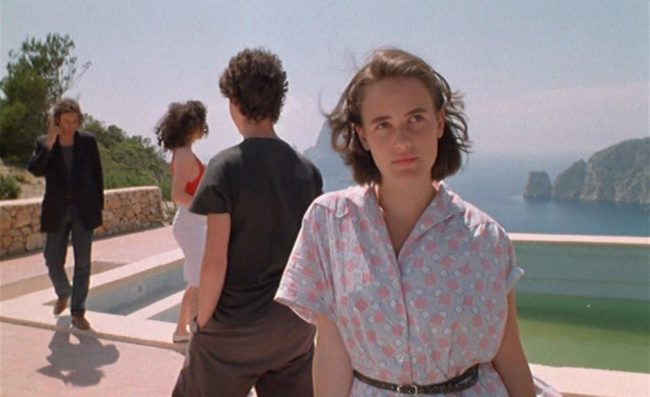
Lucky Star is proud to update our Profiles with two more articles on Axelle Ropert. The first is a translation of an interview that Ropert gave regarding the Judith Godrèche affair, a cruel and sad account of the exploitation she suffered at the hands of directors like Benoît Jacquot and Jacques Doillon when she was a child. The second is a text dedicated to highlighting the different ways that cinephilia has historically been a masculine matter – and more importantly the ways in which cinephilia can be reclaimed to be more feminist. We publish these two translations together in order to continue our commitment to Ropert’s cinephilia, which is not exclusive to her filmmaking, but also her ideas. As we wrote in our earlier profile, each interview she gives and text she signs is usually an event!
***
Following the statement of Judith Godrèche, Axelle Ropert, director and feminist, analyzes the serious dysfunctions affecting cinema.
How did you receive Judith Godrèche’s comments?
The real #MeToo of French cinema is playing out right now. It had started a bit with the Adèle Haenel/Christophe Ruggia affair. But, in a way, it remained isolated, without repercussions on the rest of the film industry. With Besson, it was rather the power of money over actresses that was attacked – but without real upheaval. On the other hand, with the Depardieu and Benoît Jacquot affairs, we are witnessing a fundamental upheaval.
In more “artistic” modes and therefore more difficult to resolve: we had to work on our admirations and our “myths.” With Depardieu, we were suddenly confronted with a particular case: how can an artist for whom we have the greatest admiration behave in the most reprehensible way possible? I, who unhesitatingly condemn sexist and sexual violence, had to work on myself to get rid of this admiration which was an obstacle.
As far as Benoît Jacquot and Judith Godrèche are concerned, it is something else: the destruction of the the myth of the muse and the artist which has long poisoned the history of art. We have always known that actresses are subject to sexual violence, I have known this for 25 years. And, for a long time, not very many of us took a position on this subject. In the case of Benoît Jacquot, it is not only a question of sexual violence, but of torture-like behavior, of incredible sadism. All of a sudden, it gives radicality to the phenomenon of sexual violence which, unfortunately, still aroused too few reactions. Judith Godrèche’s words thwart a myth, which has never been mine, but which has been very strong in cinema, that of creator Pygmalion and his muse – the first, in reality, crushing the second by promising her “beauty” on the screen.
Why does cinema, French in this case, promote the behavior of attackers?
The aggressors find in the cinema the perfect environment to give free rein to their violence. For several reasons. The simplest: cinema is a place of power where the rules of domination which govern society are multiplied by ten. Rules of power at their peak, and also an area of lawlessness: in short, the worst of the worst. In mainstream cinema, money protects the attackers. In auteur cinema, it’s just as violent, but more devious. This type of behavior is protected in the name of art, and the figure of the all-powerful artist. Many people were deluded, or accepted to be deceived, because they saw Jacquot and Doillon as cineastes with a capital C.
I would add that some of their films nevertheless attested to a problem for those who were not fooled. In Pas de scandale by Benoît Jacquot I immediately saw that something was wrong with the characters of Vahina Giocante, filmed complacently as the prey of adults. Just as the project of The Crying Woman, by Jacques Doillon, which consists of making an actress cry for an hour and 30 minutes in front of a camera, is problematic and disgusted me.
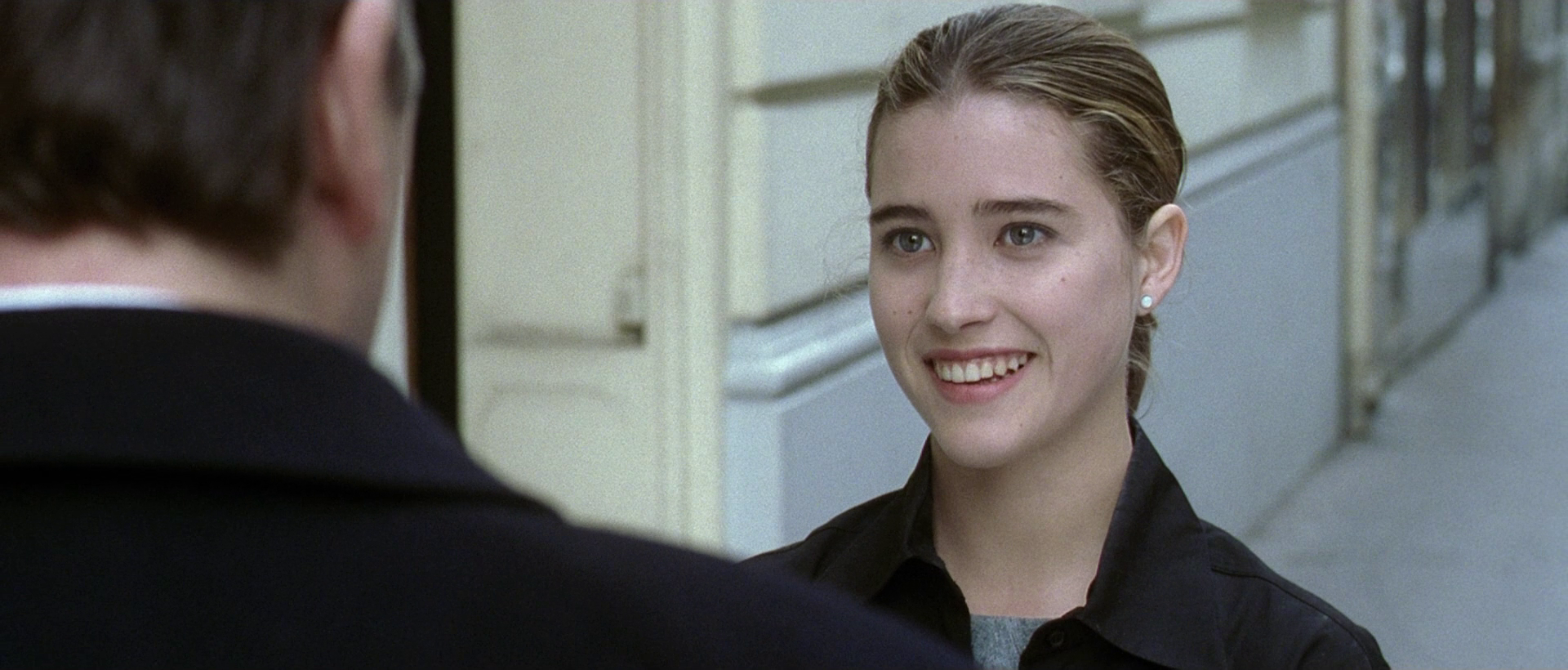
More broadly, many female characters are little valued, passive, dominated…
The quality of a female character is not linked to the fate, whether happy or unhappy, that she experiences on screen. Mizoguchi, for example, has featured a lot of prostitute characters who don’t end up making it. They are not “powerful” women – a term I am a little wary of. On the contrary, they are overwhelmed by misfortune. But the grandeur of the mise en scène and the quality of the view that the filmmaker casts on them makes them great characters.
It’s the mise en scène that gives greatness to female characters, not just the script. Furthermore, it is obvious that there is an element of sadism in cinema towards actresses and female characters. There are countless women crying on the screen, raped, beaten, frightened, a spectacle from which we derive pleasure from questioning… We have not sufficiently questioned the repetition of this type of scene: what obscure affect do we want to arouse in the spectators in this way?
Jacquot and Doillon claim to be part of the New Wave heritage. Has this left them their dark side?
I do not agree with that hasty connection. The new wave never promoted the figure of the ‘great narcissistic artist’ with all the rights, but affirmed the pre-eminence of mise en scène over everything – that’s quite different. Of course, Truffaut was certainly difficult with certain actresses (I’m thinking of Adjani in Adèle H), but I don’t see anything of that order in Chabrol, Rohmer or Rivette. No way. It was their supposed descendants who messed up and confused the affirmation of the power of mise en scène with the exercise of deleterious power over the actresses. I would say that violence against young actresses and their eroticization has been established by a certain cinema since the 1980’s: let us think of the fates of Valérie Kaprisky, Maruschka Detmers, Julie Delpy, and a few years later Judith Godrèche and her female colleagues.
Let’s take Rohmer: he filmed with a number of young actresses. In a book appearing these days, “Au travail with Éric Rohmer”, several of them are interviewed today. None speak of any reprehensible behavior on his part…
Rohmer really liked female company, the company of young actresses. It was a moment of observation for him, with the aim of creating his characters and starting to dream of his film. But that stopped at long conversations over tea. That said, a filmmaker can have sexual fantasies, including degrading fantasies, but as long as he does not disclose them to the actress and does not seek to make her submit to them, everything is fine. Of course, we can stage fantasies. You simply have to keep them for yourself and work on sublimation!
I will add this: I am not sure that it is so much a question of “sexuality,” as of outright violence. Many feminist activists are campaigning for the term “violent crimes” to be substituted for “sex crimes.” I, too, find it too easy to invoke sexuality. There is not one side with male filmmakers who have an overflowing libido and a very strong sexuality, and then female filmmakers who would be deprived of it and would be chaste. The aggressors do not have an “overwhelming libido”, they just have a problem with violence and domination – the issue must be desexualized and repoliticized.
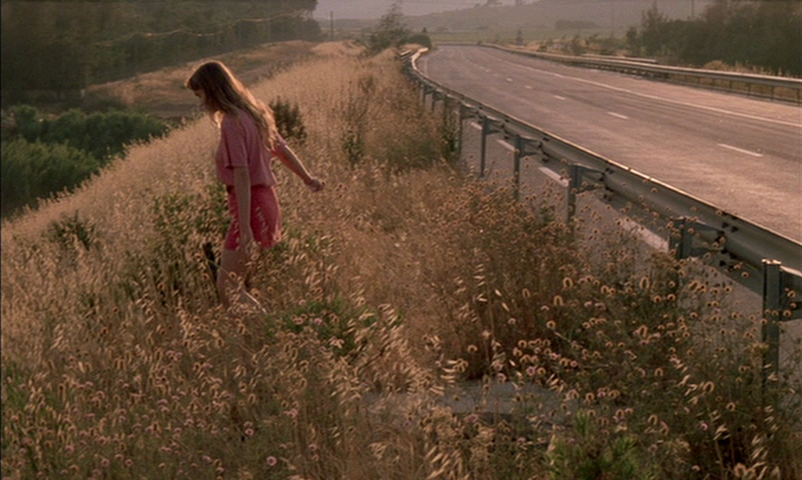
Don’t you think that the vision in France of what concerns creation remains deeply imbued with romanticism, which implies suffering and chaos? Maurice Pialat is one of its greatest symbols…
In the world of cinema, suffering at work is indeed valued. The figured of the tortured director owes a lot to literature and the representation of the cursed poet of the 19th century. And, indeed, the working method of Pialat, a director so important for many filmmakers – but not for me – with his violence, his anger, and his processes of humiliation, was stupidly considered from the 1990’s as a mechanism of exemplary creation. With him, it is not so much the myth of the tortured artist who annoys everyone with his moods, as it’s the myth of the set as a “cauldron of torture.”
I think that Pialat himself, who was more intelligent than that, did not affirm such an idea. He never said: violence on set = artistic creation. This myth was very polluting for people of my generation and those who preceded us. I remember that when I started making films, as I was gentle and quiet on set, people would say to me, “you’re not demanding enough!” One day, an actress even called her agent to tell him that I wasn’t giving her enough takes and I was speaking to her too nicely!
It is said that at the time when Fellini was a journalist, reporting on film sets at Cinecittà, he was used to the chaos that reigned there, to the cries of the director. One day, he arrives on the set of a Rossellini film, and there, he is very surprised because everything is calm…
In artistic creation, the idea of a sacrificial logic dominates. Namely, for example, that an actress delivers her body or her psyche to a director, who gives shape to this sacrifice by making a beautiful film. It ranges from That Most Important Thing: Love to current films. I find this idea totally stupid. We can make masterpieces in an atmosphere of empathy, gentleness and respect. What a poor conception of art to measure creativity by the sadism that one can display! On a set of Jacques Tourneur’s, who made sublime films like Cat People, not only could you not speak loudly, but you had to whisper! Art is a matter of inner vision to me, not an exercise in torture: I am not interested in seeing the first degree of suffering of an actress onscreen, but in having access to the high vision of a director, yes.
A clarification about power: on a shoot, a film crew is very hierarchical, with the filmmaker at the top. It’s she or he who decides…
Yes, the mise en scène and the entire process of making a film have an author: the filmmaker. Creation does not involve egalitarian and democratically discussed decision-making, I don’t believe in that at all. But the exercise of creation does not mean the exercise of an aberrant power. What is stimulating is not to be on equal footing with the filmmaker, but to put into shape exciting artistic instructions. On a set, technicians do not demand to be placed on the same level as the director. They demand to be respected. When the director has clear ideas, knows what they want, and gets everyone in tune, the work is far from being experienced as an enslavement.
For your latest film, Petite Solange (2021), you shot with a 14-year-old teenager, Jade Springer. You said that she was very modest, which requires, in order to suggest certain feelings, to be inventive in the direction, more than if you had been able to directly film this or that scene…
Taking things from an actress that she doesn’t want to give, especially when she is a minor, is odious. It’s a question of ethics for me. It would disgust me to get a sex scene from a young girl who doesn’t want to perform it. Or to manipulate her so that she gets there. This is extortion, it has nothing to do with art. Mise en scène, in my opinion, consists not of filming head-on or extorting by force of circumstances but, through diversion, managing to find truth.
When I feel in a film that an actress has given up something in spite of herself, I hate it. I feel like I’m watching a rape live. Furthermore, this whole “school” has produced a number of very lazy films. Even Abdellatif Kechiche, who is not a bad filmmaker, when he makes an actress cry 60 times so that she plays a scene, of course he is achieving something: he made her cry 60 times! But where is the art in that? Isn’t it simply the exhaustion of an actress at the end of her tether what he’s filming?
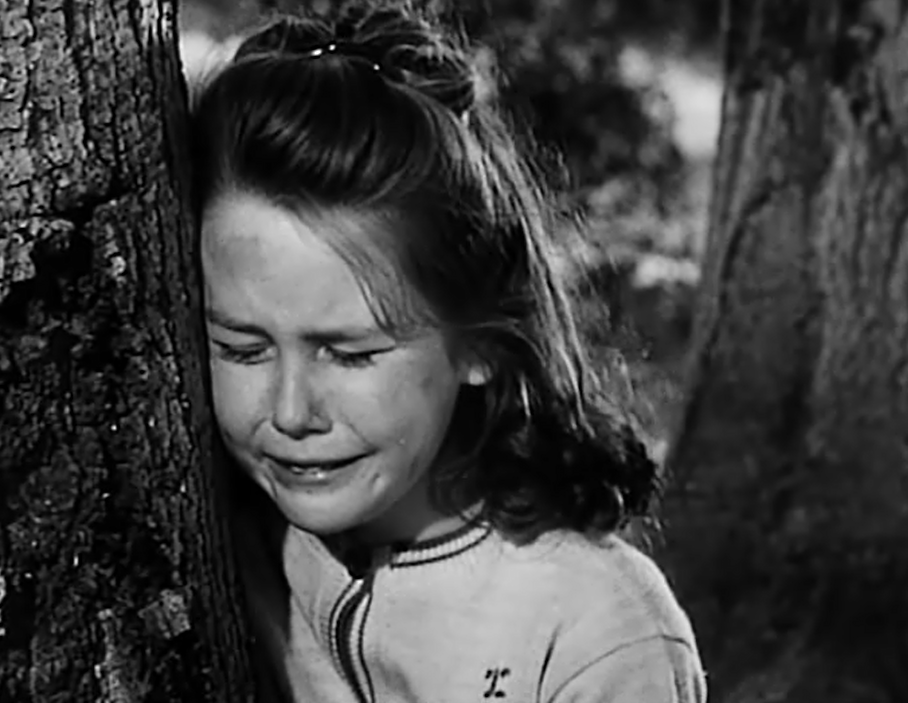
Limits or constraints force us to find subterfuges to make people feel things. I’m not elevating the metaphor to the rank of dogma, and sometimes shots filmed head-on can be magnificent. But filming indirectly requires scenes to be eroticized differently. I recently saw a little marvel, Child of Divorce, by Richard Fleischer, a family melodrama from 1946 whose central character is a little girl: with the hyper-codified American studio methods, he nevertheless managed to obtain extraordinary emotion in this little girl…
Did you deal with the parents of your young actress? What Judith Godrèche reports shows that she was not at all surrounded by her people when she was under the influence of Benoît Jacquot.
My actress’s parents came at the start of the day, and to pick her up at the end. As soon as there were excess hours, we warned them. It was unthinkable to do what we wanted with this 14-year-old girl. Film sets with minors are now closely monitored by the DASS (Direction d’action sanitaire et sociale, ed. a state organization dealing with child welfare). As it concerns to Judith Godrèche, we were in the 1980’s, with a certain laissez-faire attitude. It is also poignant to read the affinities with the solitude of Vanessa Springora delivered to Matzneff in Consent. It was a time when the “young girl” was only the passive target of painful erotic fantasies, and not at all a being with rights, like today.
Hasn’t the growth of female filmmakers in the ranks since the 2000’s improved things?
This feminization does a lot of good for French cinema. This breaks the mechanics of sexual blackmail and violence. Women don’t do it. Not because they are less sexual than men. But because they have learned to express their desire differently: not through rape, appropriation, etc. They do not put their power into extorting gestures or feelings from an actress.
However, the archaisms are still very deep and difficult to overcome. The work is not yet done. For example, around me, I hear a lot of people saying: when #MeToo has finished up cleaning French cinema we will be bored! According to reactions in cinema, a form of damaging moral and aesthetic hygienization of cinema is at work. They confused “moralism” and “ethics,” “domination” and “subversion.” There is a lot of hidden resistance.
Measures have been taken by public authorities which show that things are changing: encouraging the hiring of women on film sets, the existence of a harassment representative (even if it is not yet obligatory), gender-based violence at work training…
This is progress, and there will be more. In particular thanks to the new generations, who are very vigilant on feminist issues. At the SRF (La Société des réalisatrices et réalisateurs de films), of which I am co-president this year, we support the CNC (Centre national du cinéma et de l’image animée) in its desire to impose gender-based violence at work training on filmmakers, who until now where not subject to it. But if, on morals, I am optimistic; I am less so on more “concrete” levels. For example: why do women filmmakers have so little access to big budgets? Why are there almost no female cinematographers on heavy industry films?
In terms of money, nothing is changing. And why is it so complicated for women to be selected in festivals? You should know that the five major festivals (Category A) have men at their head. For what? When I see that is it now women who lead the major French trade union centers, I say to myself when it comes to access to concrete power, we still have things to do…
Should we continue to broadcast or program the works of alleged or convicted aggressor filmmakers?
I have had enough of feminists rushing to censorship (or “cancellation”). In fact, the term “feminists” is too general, it’s like saying “people of the left” when we’re just not talking about the right-wing. There are plenty of currents on the left, just as among feminists there are plenty of different schools. The censorship of works is not at all a feminist obsession, but manifesting anger through spectacular acts, yes! I am in favor of continuing to show all the works, even if they are accompanied by an explanation or contextualization card, and that the public decides for themselves in their soul and conscience. Show works whose authorship is problematic, but perhaps refrain from paying homage.
The Cinémathèque française can program all the Polanskis without necessarily creating an event around him. I see the fact of going to demonstrate in front of the Cinémathèque because there is a Polanski retrospective and a tribute paid to him as a salutary expression of anger. Let us not forget that the supposed “feminist violence” (which has never caused deaths in the history of the world, unlike male violence) is a response to the violence received. And a well-thought out, structured, controlled response. Judith Godrèche did not respond with a punch, but with a TV series on Arte, texts, and the delivery of a precise story. It’s an impressive work of thought.
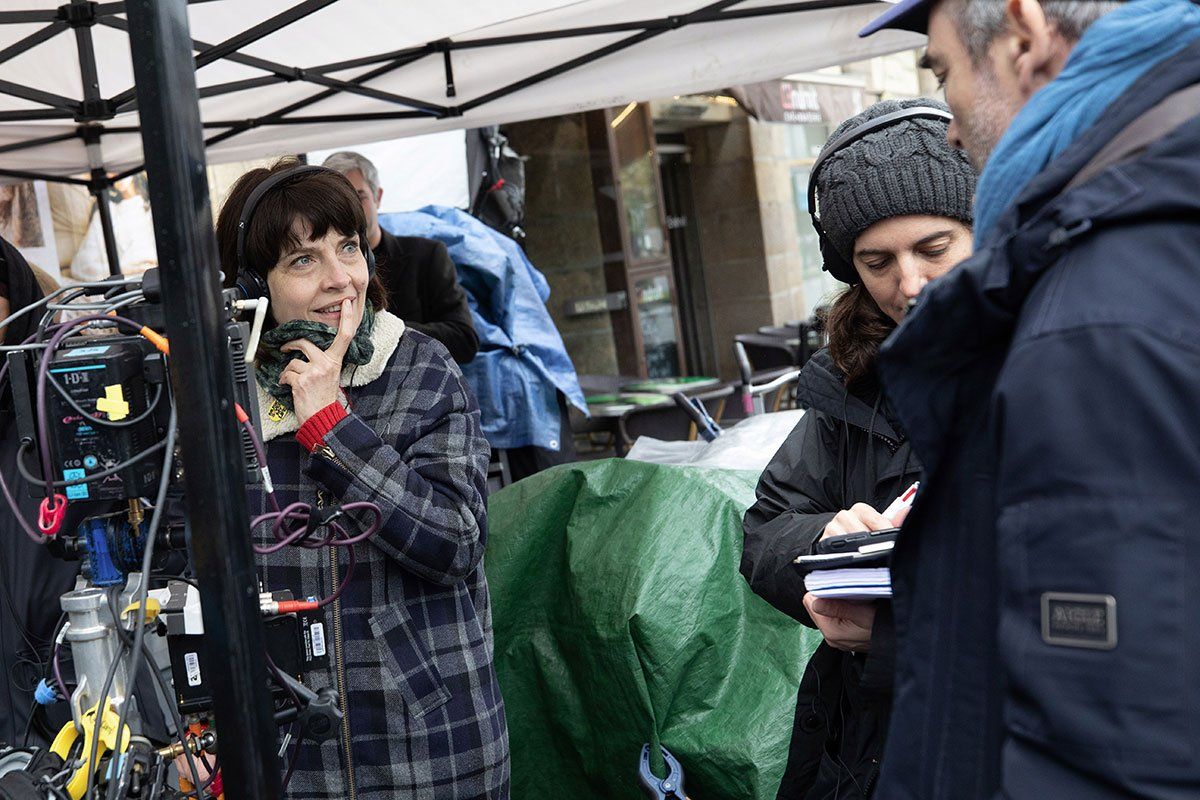
“« Arracher à une actrice des choses qu’elle n’a pas envie de donner est odieux »” was originally published in the online website, Politis, on February 15th, 2024. Interview conducted by Christophe Kantcheff.
Translation by Jhon Hernandez.
Cinephilia, a masculine bastion to deconstruct
It’s not easy to be a feminist cinephile right now. Let’s not mince words: the powerful act of Judith Godrèche compels us to question the ideas of those thought leaders who have built a certain history of cinema – founded on another form of power, a masculine one. One must be a feminist.
However, criticizing “the system” by reducing it to the supposed vices of auteur cinema is completely off the mark. The politique des auteurs born in the 1950’s, the one that managed to conceptualize classical cinema and launch modern cinema, has nothing to do with promoting masculine power. It was primarily about giving cinema, which was then considered a “misunderstood art”, its due recognition and placing the director, who has previously seen as a mere laborer, at the heart of the work. Nothing more, nothing less. One must be a cinephile.
Let’s attempt an inventory
Can we simply be feminists for the spectacular cases of predation, and strictly cinephiles for the others? No. Everything is intertwined. As a cinephile since my adolescence, and one entering feminism in the last few years, I ask myself a lot of questions.
We are in 2024. Let’s attempt an inventory. Not a single woman directing a major film festival, not a single woman at the helm of the Cinémathèque française (and one since 2021 at the Institut Lumière). No female filmmaker’s name carrying an authority like the international voices of Scorsese or Tarantino. At the helm of major French cinephile magazines: no women leading Positif, a woman only for the past two years at the helm of Cahiers du cinéma, almost no women leading the countless cinephile magazines and prestigious journals created since the 1950’s. A woman has been at the helm of of Masque et de la Plume for a few months, despite its existence for… 69 years.
Not a single French female critic recognized on par with the likes of the American Pauline Kael, not a single French cinema book authored by a woman that has become a reference. No (major) history of cinema written by a woman. Where are the equivalents of works by our critic friends such as “Travelling de Kapo,” “montage interdit,” “cinéma filmé,” and “travelling affaire de morale” by women? Only Nicole Brenez has managed to emerge, but in the rather circumscribed field of experimental cinema.
The only concepts that managed to leave a mark, like Laura Mulvey’s “male gaze,” are stamped with the “feminist” label – which is to say, a poisoned gift: a feminist concept cannot be a cinephile concept. The rare occasions when a woman attempts to interrogate forms of male domination in films (thank you, Laure Murat, thank you, Iris Brey): immediate mockery, principled disqualification. A feminist can only be considered intellectually deficient in terms of cinephilia.
It’s a desert. Positions of power, material and symbolic, as well as the field of ideas have eluded female cinephiles: what happened?
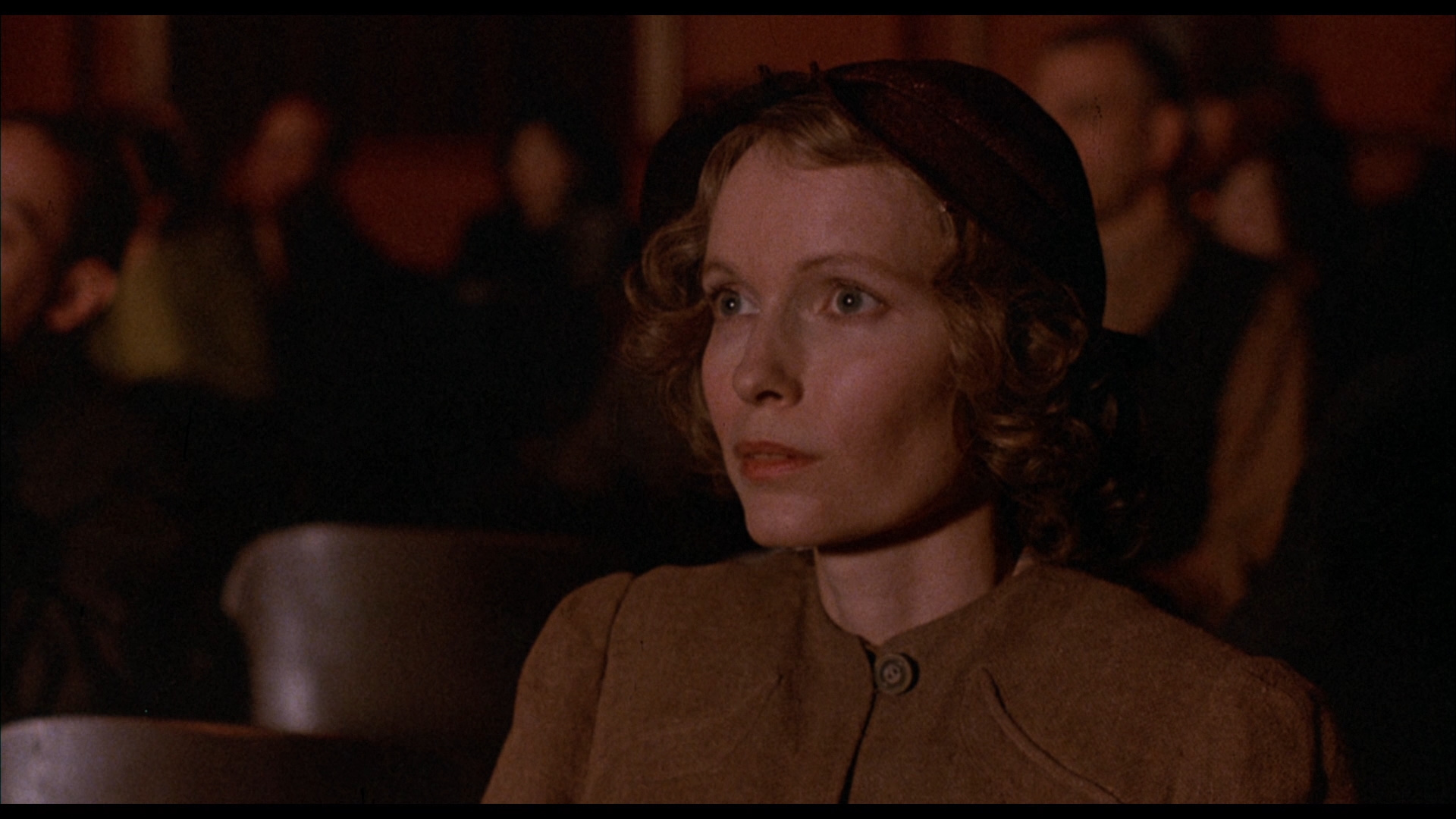
And yet, we are the anti-Mia Farrow in The Purple Rose of Cairo: what makes us dream is not at all about entering the film, but rather writing about it.
So, is cinephilia a matter for men?
Certainly, one would need to conduct a nuanced analysis of this history: the history of Cahiers du Cinéma is not the same as that of Positif, nor is it the same as those of Première or Starfix. A Michel Ciment has nothing to do with a Jean-Claude Biette, a Narboni with a Jean-Baptiste Thoret, a Christophe Gans with a Jacques Lourcelles, a Tavernier with a Moullet. To lump everyone together would be to commit a great intellectual justice; the history of these differences is also a story of great complexity.
A game with its rules, its punishments, its rewards
But still, what went wrong for so few women to enter that game? Because, yes, cinephilia is indeed a game, with its practices, its rules, its demands, its punishments, its rewards. Essentially, it’s young guys who spend their lives at the Cinémathèque. Sometimes, there are young girls, often silent for months – I only dared to enter cinephilia “chaperoned” by two boys.
Cinephilia involves acts of classification: lists, rankings, information sheets. We organize the world, we miniaturize it, we fit it into boxes.
Cinephilia is a very particular relationship with time: infinite and repetitive. Discussing a film for hours, watching it 256 times, thinking about it for ten years. It’s the time of maceration, crystallization, reevaluation, that does the work of cinephilic thought, and it’s through this relationship with time that the most profound texts are invented.
Cinephilia is a relationship with life based on a radical rejection. It’s because we don’t like life that we’re cinephiles, and the dark cinema hall is above a refuge turned against the outside world. Great cinephiles are individuals terrified by “real life” – that’s their greatness, their truth, their bizarre heroism as well, and how right they are.
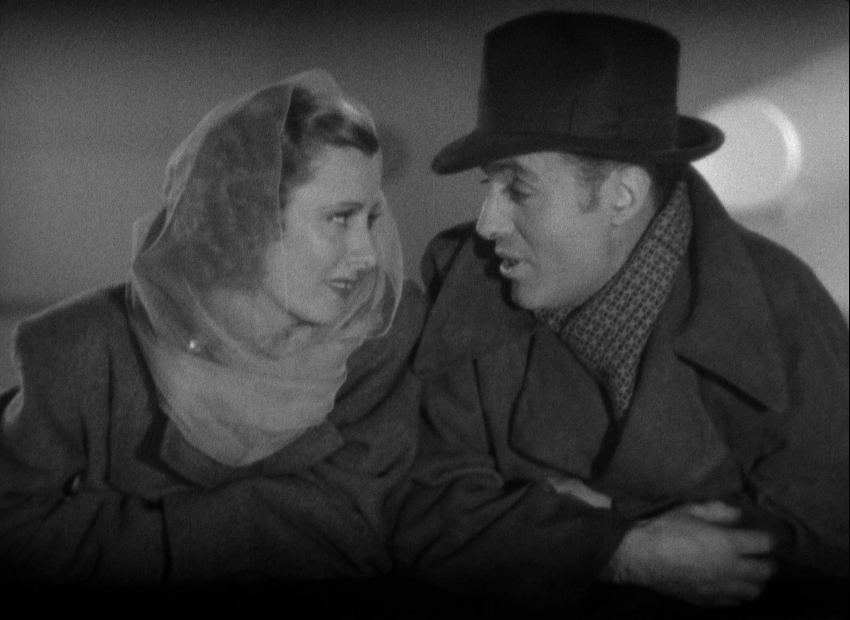
To classify, to repeat, to flee: why haven’t we followed this triple movement of the grand cinephile gesture? I would say that the material life as it imposes itself on women is what has prevented us: while you were listing your top ten Preminger films, we were making the grocery list. The Human Factor versus Canard Gel WC. While you were rewatching Vertigo for the 356th time, we were also reviewing, for the 356th time, the first group verbs for our 8-year-old son. Alfred H. versus Mrs. Quentin’s second grade homework. While you were escaping reality by locking yourself in a movie theater, we were obliged to organize summer vacations.
We hate practical life as much as you do. We hate reality and its boring injunctions, we want to daydream endlessly in a dark theater, but we didn’t have a choice: at some point, we had to go back, because women are always called back by practical life, physical life, life in general. Since I’ve had children, I haven’t attended a complete retrospective at the Cinémathèque, it’s a free fall, I know I’ve regressed, and now I know the grocery isle of my Franprix better than the game of spot the difference between the 1939 and 1957 versions of Love Affair – the shame.
A legendary and bellicose cartography
Cinephilia is a legendary and bellicose cartography with camps, masters, strategies, defeats, victories, and battles. It’s exciting, and I would never say it was trivial or immature. Why did none of us become a General? Probably a matter of priorities: the reserve of aggression you put into cinephilic battles, it’s mobilized elsewhere for us. We are busy resisting elsewhere. For battles much less noble, much more trivial – not getting harassed, assaulted, raped, for example. Yes, the argument is compelling, but profound. You could deploy your combat energy in issues external to your daily lives, not us.
And then, even more deeply, not only on the side of cinephile practices, but also its essence – hasn’t cinephilia always been posited as masculine? With the premise that only men would truly understand cinema – because we are not perverse enough, obsessed enough, morbid enough, not orphaned enough, not clandestine enough, too healthy, too alive, too integrated, too normal. Nonsense, of course, you have so underestimated the darkness of our psyche.
Isn’t cinephilia founded on homophily, a Melvillian mirror world where male recognition effects shimmer, where men recognize each other as similar and supportive, and where the feminine gender is superbly ignored?
I fear so.
We should delve into the case of Serge Daney, the greatest French theoretical critic. I’ve read and reread him with passion, and yet he certainly contributed to making cinephilia something exclusively for boys. Did his concept of “ciné-fils” (Ciné-Son), so rich, so profound, not exclude us by making cinephilia a story of strictly male lineage? Of fathers, sons, brothers? Did he not de facto pose the impossibility of its feminine version? Can a “ciné-fille” (Ciné-Daughter) exist within his system, deprived as she is of historical, sexual, existential, dramatic validity? I doubt it.
So, yes, regrets: cinephilia wasn’t very welcoming to us.
The history of cinema was woven with the blood of actresses
And tremendous anger: if there’s one area where cinephilia royally messed up, it’s regarding the question of the female body – in this case, that of the actress. Like you, I collected photos of actresses, but unlike you, I was immediately revolted by the mistreatment I sensed behind films. In thirty years of cinephilia, I haven’t heard a single profound questioning on this subject, not a single word of empathy (remember the sinister Brisseau affair in 2003).
You didn’t want to see how much the history of cinema was woven with the blood of actresses. It’s no coincidence that the scandal arises now through the figure of the actress, it’s no coincidence that my first real critical text was dedicated to actresses: it was the ‘dark’ domain where there was new thinking to product, where my male friends occupied the already marked domain of ‘mise en scène‘.
So, let’s posit an axiom: the actress’s body is the Rosetta Stone of cinephilia – through it, we read an exercise in admiration, blindness, and sadism. A stone whose ambiguities shimmer madly. Through it, everything is translated, everything is illuminated, everything makes sense, three times over.
So yes, cinephilia is an exhilarating practice. I’ve loved frequenting its “minor,” asocial, poetic and wild fringe, which has nothing to do with basic males: the Biettes, Guiguets, Vecchialis, Delahayes, Narbonis, Skoreckis – secretive beings, beings of music, original and profound beings.
And yet it has fundamentally been a “boys’ affair.”
So there are still questions to ask. And if you feel like getting into it, then maybe we can say together: “L’exercice a été profitable, messieurs.”
Note: Thank you to Marie S., Elisabeth L., Chloé L., Christine M., Blandine L.
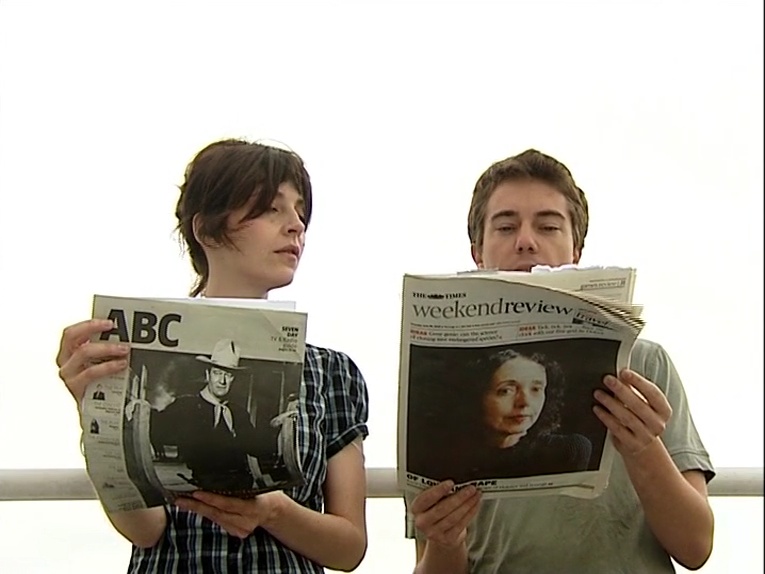
“La cinéphilie, un bastion masculin à déconstruire” was originally published in Liberation, on April 4th, 2024. Thank you to Richard Brody for providing the original French text.
Translation by Jhon Hernandez


