
In recent years there has been an uptick in Mexican comedies. Many of these films slip undetected to streaming platforms. They rely on recognizable stars (Mauricio Ochmann, Aislin Derbez, Omar Chaparro, Martha Higareda, etc.) and proven formulas (a Christmas movie, road trip film, remakes) to catch the attention of the unsuspecting scroller. You could get a subscription to VIX or Pantaya and catch up with most of this emerging canon. Is any of it good, however?
Malvada marks an interesting case. José Manuel Cravioto, a one-time editor of Ernesto Contreras (Blue Eyelids), begins his film with an approximation of indie clichés. The characters meet cute, they flirt, they dance to the immortal Fey song, “Azúcar Amargo”. But we know immediately that this construction, the base clichés that we’re presented with, is not successful – the relationship fails. In fact, the end credits begin to roll early on… the end of one possible movie. Out of the ashes of one movie a new one is born.
The romantic comedy can be a laboratory of ideas, a site for experimentation. In its most basic, let’s say classical form, it relies on the attraction between the performers, their chemistry, their charm, to seduce us and make us believe in the spontaneity (the magic) of scenarios which are perhaps unbelievable, or somewhat uninspired. But these days it is harder to believe in the device, to trust in the performer, to build a movie around their gestures, their smiles. I don’t believe it’s because of a lack of charismatic performers, but rather a decision to abandon them – a decisive break with the idea of the star persona as we used to know it (give or take a few actors here and there). The studio executives will blame the invisible market forces (while ignoring their own agency in creating these circumstances in the first place!) Writers and directors find different ways to approach the problem, coming up with little gimmicks and here and there to liven up the proceedings, to make their films stand out from the crowd. See the recent example of Tango, Tequila and Some Lies which has the main character follow a man to Argentina as a dare, the country becoming the “hook” of the film.
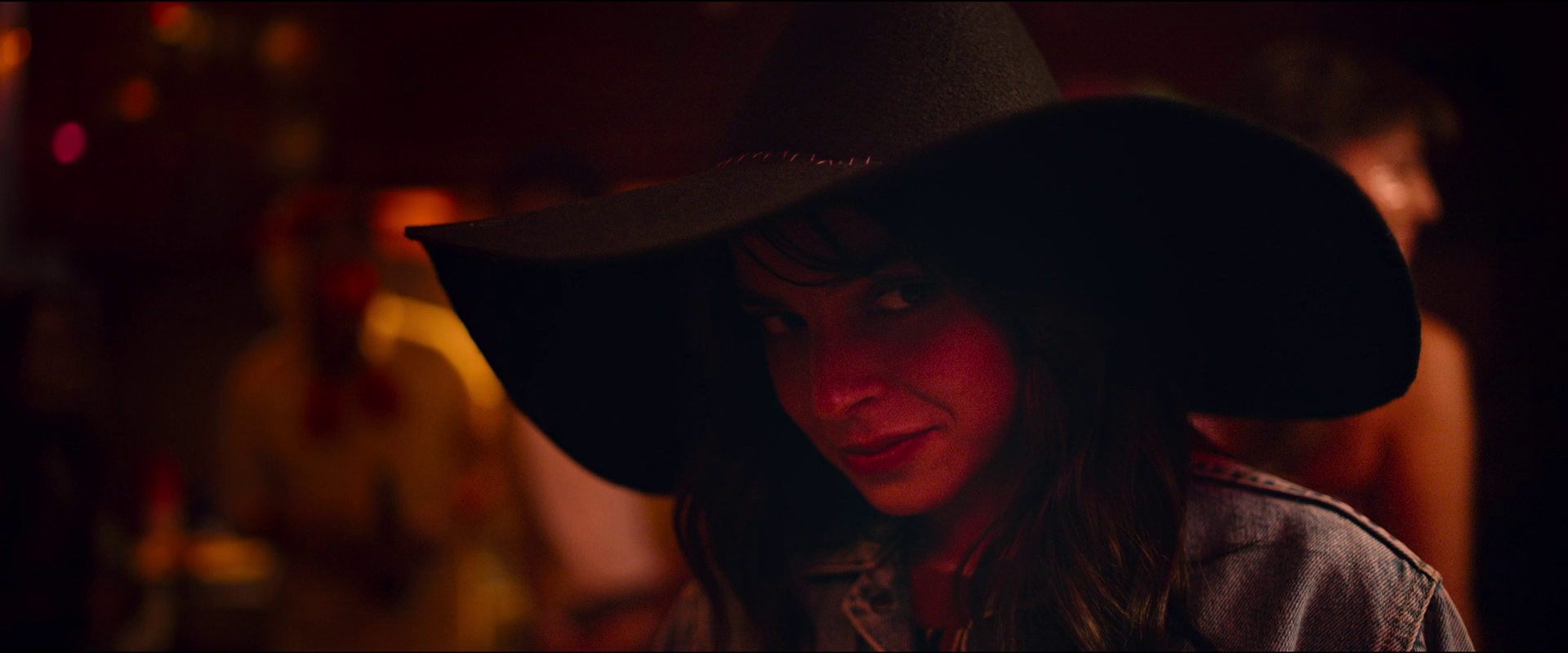
Malvada, in its own way, is not that different. A year after the breakup between Fernanda (Gisselle Kuri) and Daniel (Giuseppe Gamba), Daniel’s mother (Anabel Ferreira) shows up to Fernanda’s house to tell her that Daniel is engaged to a witch (Michelle Renaud), they’re getting married in a week, and she wants her help to save Daniel. This is high concept territory, and it’s to Cravioto’s credit that the film doesn’t totally give itself over to it. Instead Malvada becomes an opportunity to film a comedy with darker colors, at night, while still retaining a certain lightness. Fernanda is joined by her two brothers (seemingly joined at the hip, failures who continue to live with her, casually naked) to look into the claim made by Daniel’s mother. When Fernanda sees Daniel again, he has become a pod person, tanned beyond recognition, all his ambitions and possessions abandoned.
A classic premise, close to something like P.J. Hogan’s My Best Friend’s Wedding, but with the added twist of a little witchcraft. The Cameron Diaz of our scenario, Laura, isn’t quite as sympathetic a figure as that one. She uses her powers of witchcraft to brainwash everyone into liking her, including Daniel. Worst of all, she’s an influencer! She hawks her own brand of energy drinks, ToLoving (these are the potions she uses to control everyone). But Gisselle Kuri is not far off from the self-interrogation and doubts of Julia Roberts in that masterpiece. She spends the film in a constant denial of self – she doesn’t like Daniel, she doesn’t want to date him, they’re not together, she doesn’t love him. She makes excuses and deflects. The film even respects her delusions until it’s impossible to do so any longer – when the film reveals the exact way that Daniel and Fernanda broke up, I was reminded of that shot in My Best Friend’s Wedding when Julia Roberts and Dermot Mulroney pass under the bridge, and Roberts, given every opportunity, bound by her own complexes, refuses to reach out to the man she desires. The desire for love and acceptance, its most violent undercurrents, is made manifest here – in order to get the man you love, you must take a knife, shed your own blood, and use it to kill the evil witch.
So the romantic comedy must transform, by passing through the genre of fantasy and horror, to renew itself, to become fresh in the eyes of the viewer. More than anything else, I was reminded of the similar approach taken by the Korean TV drama, Master’s Sun, written by those scions of the romantic comedy, the Hong Sisters, who also played with the iconography of horror and fantasy in that work, another comedy that also lived by night, while still reaffirming the beats of the romance. Cravioto’s film has a similar trajectory. While the film will wear the disguise of horror for a few moments here and there, it never forgets its comedic impulse – when Laura turns all the lights off, turns them back on dramatically, and uses her minions to corner Fernanda in the restroom, we cut back to the dumb brothers taking a piss that lasts for minutes. And there’s also the appropriation of the image of the Guajolote, basically a Mexican turkey, that recurs throughout, an image that courts ridicule at every turn, and by film’s end is redeemed when the witch’s backstory is explained… the evil witch was a little girl once, too. And surely we can’t kill her now, can we?

That would be a different film than the one we’re in. After crashing their car on route to Daniel’s wedding, the credits begin to roll, seemingly the end of the film… but once again this is not the end. First, it rejected the cliché indie romance shown at the beginning; that’s not the film we’re in. And then it rejects the tragic ending, where Fernanda never reaches Daniel. No, this will not do. Malvada offers these branching paths of the narrative in order to reaffirm its own project – Fernanda must confront her own demons, and find a way forward. What will it take for the film’s ending credits to finally roll?
Malvada is certainly a frivolous object, its pleasures perhaps minor, especially when compared to the devastation (and transcendence) found in those P.J. Hogan films mentioned earlier, and it never tries to strike those tragic chords that the Hong Sisters sometimes aim for. No, José Manuel Cravioto’s film strikes its own path, committed to its somewhat quixotic blend of tones and shadows, its peculiar mixture – a high-concept made human by the frailty and tenderness of its performers.
Perhaps there are too many authors, too many subjects for further research… the anonymous spadework of auteurism is vital, taking a chance on anonymous productions, unknown stars and directors, all on the chance of a discovery. I was not familiar with any of José Manuel Cravioto’s work before watching Malvada – I stumbled on him more or less by accident, a single heart given to the film by an interesting Mexican film critic on social media and I was off to investigate. While he’s directed a few feature films, it seems like Cravioto has spent most of his time the last few years creating and directing TV shows. Diablero (2018-2010), created for Netflix, seems closely related to the fantasy elements found in Malvada and features Gisselle Kuri; now he’s doing a limited series for Disney called Journey to the Center of the Earth with Colombian telenovela icon Margarita Rosa de Francisco!

My investigation into Cravioto led to Corazonada, his other 2022 release, made for the Paramount+ streaming service. It is reportedly inspired on a true story about a lottery drawing, and the employees in charge of the video production who found a way to trick everyone and collect the winnings from it. Much to my surprise, the film did have some festival life, playing in Rotterdam in early 2023 in its Harbour section (which seems like a dumping ground for any international production which didn’t fit anywhere else?) with program notes written by Adrian Martin! Martin writes that “the film works as comedy, suspense thriller, heist caper and social commentary all at once.” Let’s examine each of the elements one by one.
Although the film is a group portrait of those involved in the scheme, the perspective is that of aggrieved middle manager Marco (not Marcos as he repeats throughout, played by Osvaldo Benavides), passed over a promotion, about-to-be divorced and separated from his family – miserable above all. Can a comedy emerge from such a protagonist? There’s an obvious intelligence to the character, a self-regard of course, where he believes he deserves nothing of what’s happening to him – the scheme comes to him because he gets stuck observing the production of the lottery drawing and he takes stock of its lax security, the triviality of its setup, how easily it can be done… It’s an ego thing. But from an idea to a concrete action, he must bring in others who he does not respect or trust or barely tolerate. Perhaps the comedy of the film is simply from the myriad ways that this character is frustrated by the actions of those around him. But this is rather feeble. Even in those shots where Cravioto gives us the fantasy version of his characters, each in their desired worlds, there is never a lightness… the film feels heavy, forced, even in its comedy.
There is some suspense, but the film never gives too much weight to this element – the wrong guard shows up, where is the legal representative, who will cash in our winnings… It all seems a little perfunctory. There’s not a lot of tension in these events, everything seems brushed aside far too easily. The “heist caper” does not develop its own logic, its own stakes, in any satisfactory way. And Cravioto then barrels through the aftermath, completely abandoning his other characters, as the narrative engine of the film stalls and finally dies, each of them barely glimpsed in their final fates.

What does this add up to? The full title of the film is Corazonada: La Leyenda del Mexican Dream (or, Corazonada: Legend of the Mexican Dream). Built into the premise of the film is a critique of the empty promise of this capitalist dream. Each character’s pursuit of this dream, to beat the system and reap the rewards, is ultimately shown to be rather hopeless. There is at the beginning a group portrait of those involved in the scheme, a solidarity if you will, that is immediately abandoned when it comes time to actually cash the checks. Everyone has their reasons, of course, but Cravioto never invests too much time and weight into those other ambitions besides Marco’s. At film’s end, we are stuck with him as everyone ruins his perfect plan. The film’s conclusion is successful in its political aims, its critique. Every single person is tempted by the dream, or perhaps ruined by it – Marco’s father blows up at him for doing such a foolhardy scheme and then in a grim punchline is shown arrested for trying to claim the tickets. The man who got the promotion at the beginning of the film will, of course, take a little money of his own from Marco in order to not pursue him too hard. The corruption is so matter of fact and casual that it almost doesn’t register. And the second-in-command of the scheme is revealed to have faked his son’s handicap – the son is but a willing tool in the potential political advancement of his father. Cravioto’s cynicism is well-deployed here and matches the tone that Osvaldo Benavides has been going for during the entire film.
Corazonada begins with an urban legend: an old destitute man in the middle of nowhere burns his last lottery ticket to start a fire, his last attempt to change his economic situation, and is about to slaughter his own dog for food, when officials from the government advise him that his lottery ticket is the winner. It’s a bracing comedic setup. But this type of ferociousness, this type of big gesture, is missing from the rest of the film, which sticks to a tone far too mundane, far too reserved. Frankly, the film called for more hijinks, more experimentation, more of everything.

We can see this inventiveness in an independent production that Cravioto made in 2018 called Olimpia. It is a retelling of the student protests that rocked Mexico in 1968 ahead of the Olympic Games. Three students join the protest movements centered at National Autonomous University of Mexico (UNAM) when the army begins a brutal crackdown on the students and occupies the school. But it is not just a film about these former UNAM protests; it is a film made in collaboration with the current UNAM students. The film is rotoscoped, and Cravioto sought the help of students from the Faculty of Arts and Design in order to do so (apparently becoming the first Mexican production to use the process).
The gesture of involving the UNAM students is not an empty one. The film concerns the lives of three students who joined the protests during this time – each of them finding their own way to understand the political proposal at the heart of the protests and their own way to contribute to the cause. One of the students is the son of a high-ranking army official who takes photos of the student leaders and the protests (but is bailed out by his father when he gets in trouble). Another is stashed in the back of a small car where he can surreptitiously film the army’s brutality (invoking El Grito, a documentary which was banned for depicting the Tlatelolco massacre, which would happen later that same year – Olimpia and El Grito screened together once in 2018). The last one struggles to make her voice heard, as a young woman, and wishes to speak at one of the events, and spends a lot of the film trying to find the right words to address her fellow students. By inviting the students to participate in the film, it is an opportunity to reflect on the political present, the aspirations of the student movement, and how to move forward, in a creative manner.
The rotoscoping process, by its very being, makes abstract, jagged, surreal, the world of Olimpia – the characters jump in and out of shape, their world a sketch…

What is gained from this abstraction? To compare to another Mexican production that came out the same year, Roma, which also features a lot of the unrest of those times (El Halconazo took place a couple of years after the events of this film). In Roma, it is not enough that the characters of the film are caught up in the massacre, there’s also a grand coincidence which brings together all the strands at the heart of the film. Every choice is in concert with the chosen monumentality of the production – the metaphors must represent the whole of Mexico! Olimpia is, of course, a much more modest endeavor. There’s an earnestness to it, which allows the rotoscoping to feel like the choice of youth, an inspired aesthetic intervention, moving away from a dour political docudrama toward something truer to the beauty of the sentiments of the characters, their ideals. It seems right that the film ends with a poem written during those days.
There’s also something to be said for the film’s almost fetishistic devotion to the particulars of film. We spend a lot of time in dark rooms, developing photos, exposing film – the characters rely on an older professor to fix the film camera (and we learn little tricks on how to get it to work, using the sweat on our nose!). The student protests relied on these tools to get out the message, of course, but we could also argue that this relationship to the film camera, as an object which must be understood and cared for, is essential to the great documents of these times – a lot of labor, a lot of thought, a lot of planning, went into doing this work, an important tool of political movements. Now we all have cameras in our pockets and the act of filming is more accessible than ever – how do we wield our tools? By making Olimpia, José Manuel Cravioto allows us to reflect on these questions.
I must admit that this political side was not on my radar when I first watched Malvada. Only by exploring Cravioto’s work did I begin to sense who this filmmaker was, or could be – with each film, my image of him became more complicated. Which is always thrilling. As I mentioned earlier, Cravioto has split his time between TV assignments and features. He now has a new film in post-production called Invitación a un Asesinato, a thriller with major stars. What kind of film will that one be? We now begin to track Cravioto with a lot of interest.


Amazon lists two earlier Cravioto films: BOUND FOR VENGEANCE and EL MAS BUSCADO. Have you had a chance to watch them yet?
LikeLike
Hi, Steve
I haven’t seen them yet. We are planning on a Capsule column and I plan to write about these as I keep watching his work. EL MAS BUSCADO seems to have more of a reputation from what I can gather and stars Tenoch Huerta from the last BLACK PANTHER film. BOUND TO VENGEANCE seems the more generic one but apparently screened at Sundance.
Thanks for reading!
LikeLike