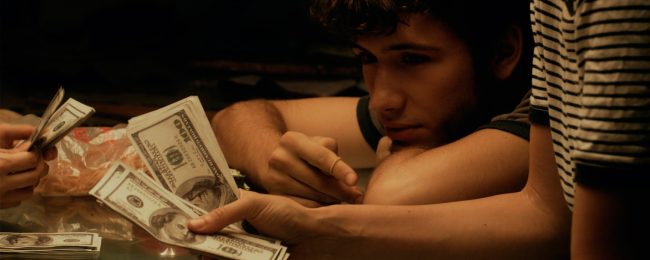
Money Trees: Lautaro García Candela’s Cambio Cambio How to film an economic crisis? How to show this in dramatic terms? Make it understood to an audience who doesn’t know its particulars? Or, perhaps more importantly, how to renew this experience for those who have lived it, or are still going through it? This is at…… Continue reading What is the Modern Cinema? #3 – Cambio Cambio
Author: Jhon Hernandez
cinephile and filmmaker based out of Dallas, TX.
TV Diary #2 – Kimi wa Pet

How do you film a utopia? First, of course, you must try to define it in whatever terms you deem appropriate. Second, once you define it, then it is the matter of filming it. How to approach it? What distance to use? What lenses? How to determine the mise en scene? Because this idea of…… Continue reading TV Diary #2 – Kimi wa Pet
What is the Modern Cinema? #2 – Dallas Shorts

There is a focus in cinephile culture on the latest and greatest festivals – Cannes, Venice, Toronto, etc. But, unless you’re a working critic or happen to live close enough to those cities, these are not the festivals where you will be watching the latest films. You will rely on your local festival, the regional…… Continue reading What is the Modern Cinema? #2 – Dallas Shorts
Translation Corner #3 – Writing and Programming from Latin America
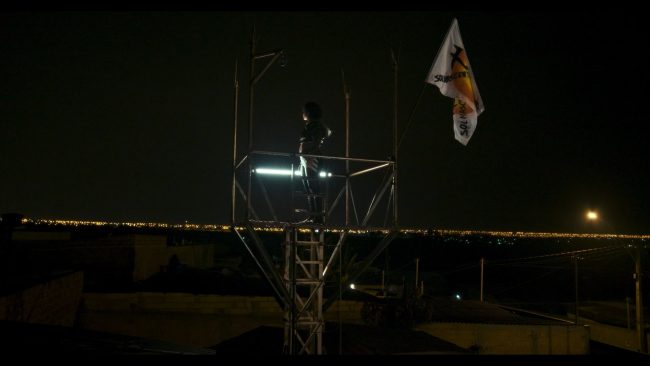
Dry Ground Burning (Adirley Queirós + Joana Pimenta, 2022) Writing and Programming from Latin America by Victor Guimarães “Don’t forget I come from the tropics.” The title of a 1945 bronze sculpture by Brazilian artist Maria Martins was a way of reacting against the capture of her art by a universalist criticism that stated that…… Continue reading Translation Corner #3 – Writing and Programming from Latin America
What is the Modern Cinema? #1 – José Manuel Cravioto

In recent years there has been an uptick in Mexican comedies. Many of these films slip undetected to streaming platforms. They rely on recognizable stars (Mauricio Ochmann, Aislin Derbez, Omar Chaparro, Martha Higareda, etc.) and proven formulas (a Christmas movie, road trip film, remakes) to catch the attention of the unsuspecting scroller. You could get…… Continue reading What is the Modern Cinema? #1 – José Manuel Cravioto
Editor’s Note #1 – Three Lists

The All-Time Edition In late 2022, a few film lists were released. The most visible was Sight and Sound’s once-a-decade poll, now topped by Chantal Akerman’s Jeanne Dielman, 23 quai du Commerce, 1080 Bruxelles. Compared to the films which have topped the previous lists (Citizen Kane, Vertigo), it is a radical proposal. But we will…… Continue reading Editor’s Note #1 – Three Lists
Translation Corner #2: The Empty Hour by Axelle Ropert
The Empty Hour An Inquiry into French existential films By Axelle Ropert A Rendezvous There are spectators who go to the cinema in the late afternoon. There are those, much more numerous, who only go to the cinema in the evening. And there is the cohort of students, idlers, old people and children, the privileged…… Continue reading Translation Corner #2: The Empty Hour by Axelle Ropert
Profiles #1 – Axelle Ropert: Secret Violence

Secret Violence All of Axelle Ropert’s features revolve in some way around family and the bonds that family has on us. In the previous films discussed, The Apple of my Eye and Miss and the Doctors, these relationships become entangled with other romantic ones. Two of her films, however, focus squarely on the pain of…… Continue reading Profiles #1 – Axelle Ropert: Secret Violence
Profiles #1 – Axelle Ropert: Love at First Sight / Alone Again
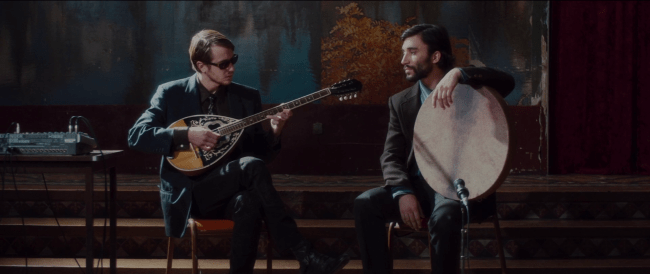
Love at First Sight A young boy approaches the brothers who are manning the music at a traditional Greek birthday party. He requests a song from Marika, their legendary great grandmother, but he is quickly shut down. Such songs are too sad for children one of the brothers tells him. He responds simply, “there’s no…… Continue reading Profiles #1 – Axelle Ropert: Love at First Sight / Alone Again
Profiles #1 – Axelle Ropert: Index
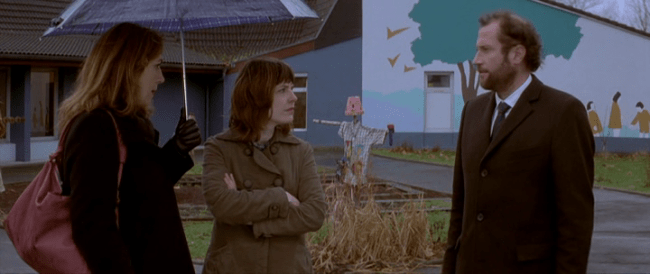
Alone Again: The Films of Axelle Ropert In the United States we do not have a long tradition of film critics becoming filmmakers. Critics usually remain critics and filmmakers stay filmmakers. There is a line that is rarely crossed. But in France there is no such line. It is a long tradition going back…… Continue reading Profiles #1 – Axelle Ropert: Index
 Lucky Star