In our last TV Diary, I wrote about why Japanese television drama is such an object of fascination for me. In J-Drama, there is an investment in genres that I’m deeply interested in, such as the comedy and the romance. The storytelling is often a little more patient, a little more down-to-earth. And there’s a coterie of actors and actresses who do sublime work that doesn’t necessarily translate to the big screen (Koyuki in Kimi wa Pet is transcendent, but did she ever get a chance to be that good in a movie?). The shows are broad in their approach, they want to make us laugh or cry; sometimes they demand a lot, they reach too far. But when a work overwhelms us is when it becomes interesting. When the images demand we give ourselves to a vision, a dream… It makes sense then to revisit two key works of the last 25 years, Orange Days and Beautiful Life, in this light.
Your Kindness
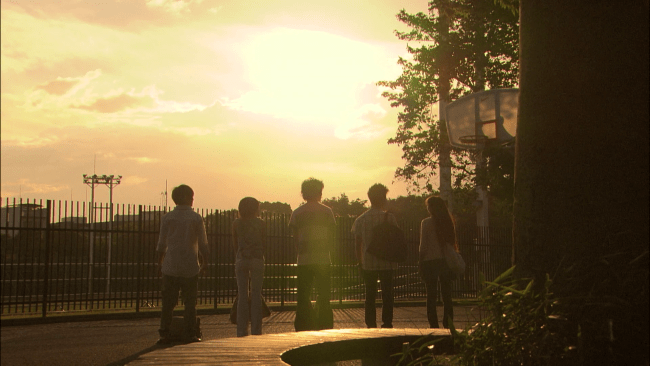
It’s been almost 20 years since I first watched Orange Days, downloaded via torrents and burned on to DVD-R’s, a ritual that seems quaint today. It’s a work that’s stayed with me, partly because of the optimistic lens that it brings to young adulthood. Back then it seemed to hold a promise of what the future would be. Now it seems like a dream that never quite existed. Twenty years later and Orange Days is streaming on Netflix, a development that makes little sense to me. And while the proliferation of Japanese television across streaming services (beyond anime) is a good thing, it feels like a secret is now loose in the world. I keep thinking of seeing the characters in Orange Days seeing a sunset and making an affirmation to it, and what that image might have meant to me 20 years ago and what it means to me now. This sunset… It is the type of gesture that quickly invites criticism – it’s too much, it’s schmaltz – but it’s the type of thing that I embrace. Maybe I didn’t change as much as I thought. I have to defend a work that dares to imagine the world as it should be.
Orange Days tells the story of Yuuki Kai (Satoshi Tsumabuki), a senior in college in the middle of job hunting. He encounters a violin player, Hagio Sae (Kou Shibasaki), at his school and discovers that she has lost her hearing and can only communicate through sign language. He begins to assist her in classes by typing up notes and immediately there is a clash between them, an unmistakable chemistry. Soon enough they form a group of friends that hang out together at the university and leave notes for each other in an orange notebook at the student center. There is a purity and innocence in the interactions between the characters that feels undeniably artificial, but which resists cloyingness through the charm of the actors.
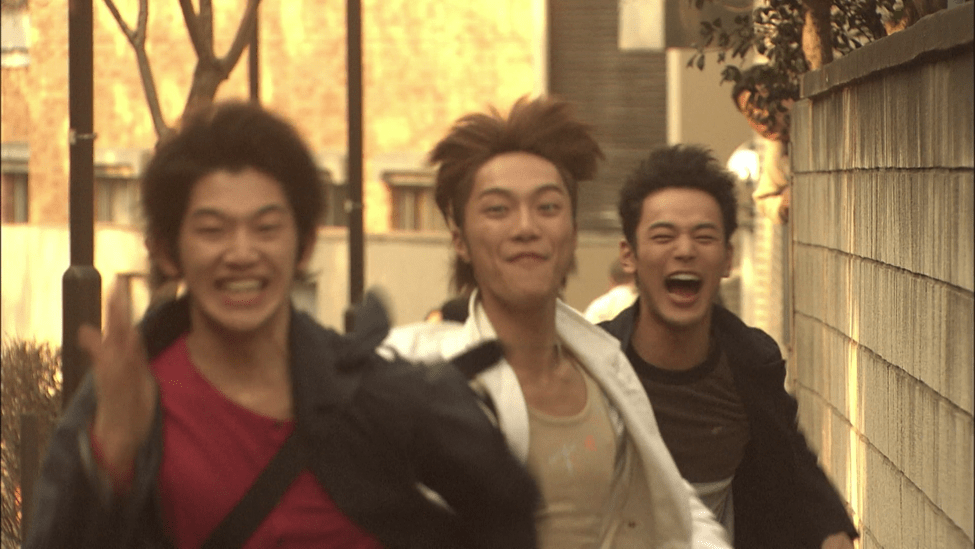
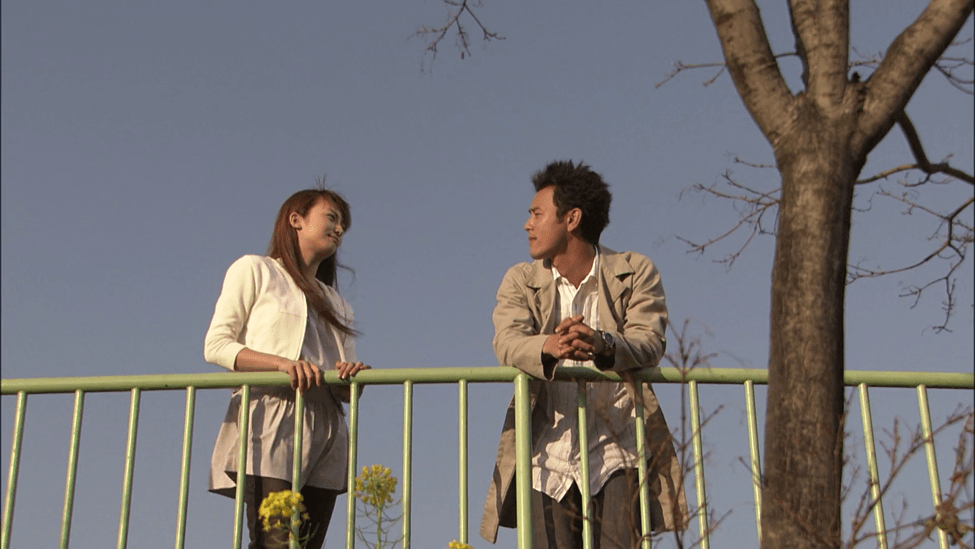
The show is written by Eriko Kitagawa, an auteur in her own right, who with Orange Days sort of remixes her own previous work – the group of college friends and their romantic entanglements come directly from 1993’s Asunaro Hakusho (an adaptation of the manga by Fumi Saimon), and the sign language is taken from 1995’s Tell Me You Love Me. The world of the star screenwriter is not one I’ve explored very much, but even my cursory explorations there are already notable figures such as Yuji Sakamoto (Tokyo Love Story, Last Christmas), Kankuro Kudo (Ikebukuro West Gate Park, Story of My Family) and Akiko Nogi (The Full Time Wife Escapist, MIU404). I admit that in my auteurist bias I’ve often gravitated toward the figure of the director, but it’s definitely something I want to explore more. Kitagawa’s works usually excel in the way that they approach their central relationships, often a study in contrasts. Kai is generous and earnest, he cares for his friends, he helps strangers, his sense of goodness is innate and it is bound up in his worldview. Tsumabuki’s open, boyish face is perfect for this role, which requires a certain lack of guile. Shibasaki’s Sae, then, is a bit of an ice princess – she’s haughty, rude, closed-off. Later, she confides to her best friend, Akane (Miho Shiraishi), that she can be strong and confident about just anything, but when it comes to Kai she’s just a girl.
With Eriko Kitagawa we’re in the world of romance, yes, but it is filtered through the lens of J-Drama where sexuality is, if not verboten, then strictly regimented and codified (a playboy character played by Hiroki Narimiya is usually seen hanging out with a girl, somewhat suggestively, maybe kissing, but never more than that; two characters are in bed with sheets covering them, the act completely elided). It is an idealized vision at pains to find the best in all the characters. The worst you can say about Kai, beyond a certain youthful arrogance, is that he gets way too close to Sae while he’s got a girlfriend. How can you say with a straight face that he doesn’t basically confess his love to Sae when he promises to save her from the darkness of a world without sound? The personality of Orange Days is found in such a gesture. The characters surprise us with depths of emotion, with foolhardy declarations, with their youth and vigor. It’s all too much.
Japanese television drama thrives on that too much. It lives there. In Orange Days, there are scenes near the show’s ending when the characters remark to themselves that this might be the last time they waste a day doing nothing. The experience of university is a finite one – each character has a different path set before them (returning to a hometown to take over the family business, running off to random countries to take photos, post-graduate school) and it is only in this precious short period of time when these characters can take off for a road trip and sing Orange Range’s “Shanghai Honey” using sign language. Because college is short-lived, because it is destined to end, the emotions at hand are all the more intense. When the group of friends looks toward the sunset, they make a promise to keep trying their best for the future, knowing it is a bit cheesy, knowing it is a bit meaningless. But these gestures are the ones that I find the most beautiful. One function of art can be to show us the lost beauty of our souls, what we can be when we are full of life and love. This exists beyond critical analysis to a degree. Because we can say easily that this is naïve or childish or too schmaltzy. And it is not wrong. But cynicism is too easy a posture. It is more interesting to accept the rules of the game and see where they take us. When we remove these barriers who knows how far we can go…
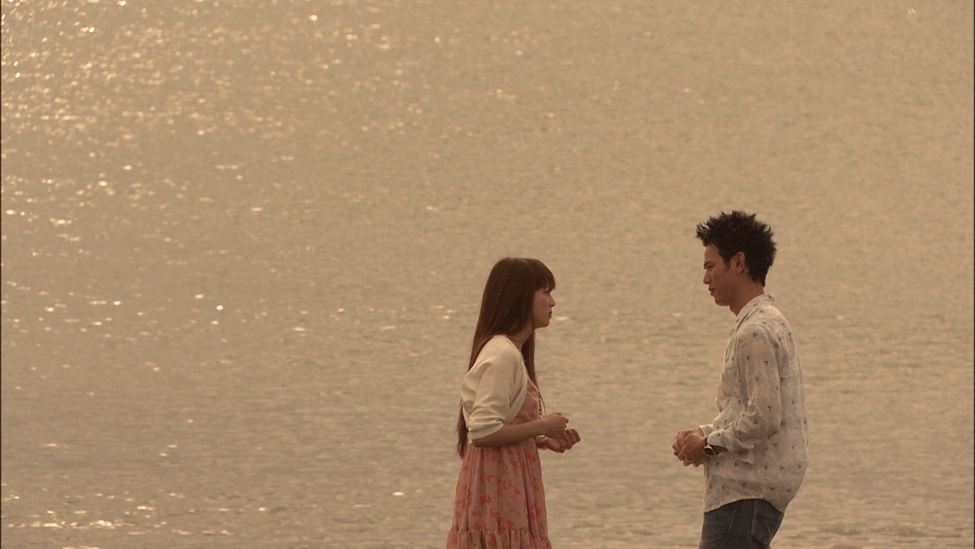
It’s hard to imagine a more moving moment than in episode 8 when Kai screams his love so passionately and loudly at the beach that Sae notices the reactions of those around her and runs toward him, crazed, embarrassed, in love. The sound of the waves around them, the swelling of the sentimental score, the two-shot which finds them face to face, embracing, kissing, the camera closing in on them until they’re united, the shot of the waves – there’s no need to show the act, every emotion has been purged from this encounter. In these moments, young love is too much; it overpowers the world of the characters, makes them go against their families, change careers paths, alters lives forevers. When Kai and Sae are in bed, we’re attuned to every moment, the intimacy is astounding, the microphones picking up each and every slight shift of their bodies against the sheets, the way their breaths linger in the air, how their fingers feel against the skin of the other. “I’m so glad I’m alive. I’m so glad I was born. I got to find you.” What can you do but be too much? What else can you do but honor this feeling?
Orange Days is about the impossible nature of this love, about its goodness, about how it can expand forever. So youth is idealized, the beauty of the characters is emphasized, nothing is allowed to get too dark. But we mustn’t forget the perspective that was set up in the opening minutes of the show. The opening narration spoken by Kai, where he openly reminisces about this time in his life, when “everyone was bathed in that orange light” of the setting sun. Now he’s “usually still at work at 6pm, so the sun sets before I can see it.” From youth in bloom, to the dull world of the adult world – I always forget about that opening narration but it’s clear that from the beginning Orange Days knows it is representing a beautiful memory of those days. Not as they were, but as Kai chooses to remember them.
While re-watching Orange Days I thought about a 2003 film called Josee, The Tiger and the Fish, directed by Ishiin Inudo, an adaptation of a Seiko Tanabe story. It’s about a young man named Tsuneo (also played by Satoshi Tsumabuki) and his relationship with Kumiko (Chizuru Ikewaki), a strong-willed girl who lives with her grandmother and cannot walk. On its face, the relationship and its potential depiction is situated in a minefield. We could be on our way to a horribly manipulative weepie that uses the character’s disability for cheap emotional points. But Inudo’s film is ugly in a way that’s refreshing. Ugly, not just in its textures, but also in the sentiments it brings up. Tsumabuki’s character is an unsentimental creation who, yes, loves this girl, but also lusts after her. The emotional development of the relationship is inextricable from its sexual development. And our understanding of this aspect is key to its emotional effects. Because if we are after the emotional maturation (and freedom) of Kumiko’s character, then this also encompasses an acknowledgement of her sexual agency. By the time the characters find themselves at a love hotel late in the film, after doing what Kumiko dubs the dirtiest things in the world, we understand how far we’ve come. The film’s ending is a recognition of the finite limits of this relationship and the callousness of being a young man (when an anime film was made in 2020 of the original story, it struck a much more uplifting chord). I bring this film up because it helped me understand Orange Days more. This is a film that tries to see its characters clearly, not so much through realism, but rather by acknowledging the darkness that lies at the heart of its relationship. And Orange Days is the opposite – it affirms over and over the beauty of its characters. It’s a fantasy, yes, but that doesn’t mean that its sense of beauty is lesser or fake. Because it arrives via the form of a TV drama, playing by its codes and conventions, it must work harder to earn its emotions, it must work past our defenses and assert its artistry. When we hear Sae’s voice near the end of the show it is a moment so dazzling that we finally understand the path we’ve travelled – it all led to this moment. The love between these young people was so powerful that it reshaped the world in its vision. When Kai hears Sae’s voice even he is overwhelmed. Life can’t be this beautiful. Orange Days asks us to believe…
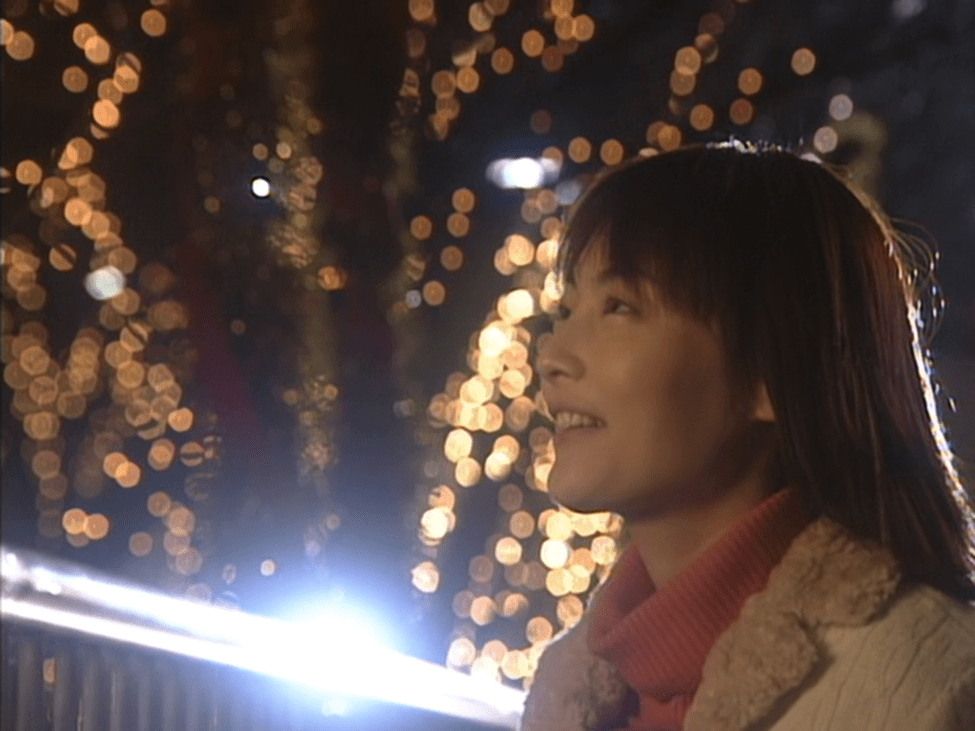
But all these emotions and life-affirming themes are nothing without understanding how they come about, how they are invoked in the viewer. It is through form, to the careful attention paid to the performance, the sensitivity of the compositions, the exact rhythms of the decoupage… In the case of Orange Days I always go to the scene halfway through episode 5 where Sae comforts a crying Kai in an empty classroom. It’s late afternoon, the sun is setting through the blinds outside. Then there is a cut to a low angle shot when Sae leaves her desk to go give Kai a hug, where we see the sun’s glare and the camera moves closer and closer to them before ultimately centering them in the frame – it’s in moments like this where you can see the intelligence and the craft that go into a work like this. The scene is carefully constructed, there is a journey in the interaction between the characters, which is reflected in the staging, in the dialogue, in the music. In short, it is not a miracle, it is not an accident, it is thoughtful work. It could even be called cinema.
The World I See
Originally I did not think to write about these series together, but it made sense as they were done by the same creative team (Eriko Kitagawa as screenwriter, Nobuhiro Doi and Shono Jiro as co-directors). The romantic aspect of both series is important, but their aims are different. In Orange Days we are after the beauty of youth, its blossoming, thus the light is warm and bathes the characters in its glow. The friendship of the characters, the group portrait, is essential to its effects – youth is cherished, protected, and glorified. The romance in Orange Days requires a certain youthful extravagance, a naivete.
Beautiful Life is after something much different, and the tenor of the romance follows suit. When Kimura Takuya’s Shuji first sees Takako Tokiwa’s Kyoko get out from her car and on to her wheelchair, following the opening moments where he had openly feuded with her while out in traffic, he’s stopped dead in his tracks. He can only watch. She goes up the ramp into the library, while he takes the stairs – the goal of the series is to unite both of their worlds, if only for a brief moment. And the genius of the series is that it does this by taking the path of the TV romance, by filling in the lives of both characters with anxieties, goals, rivals, jealousies, miscommunications.
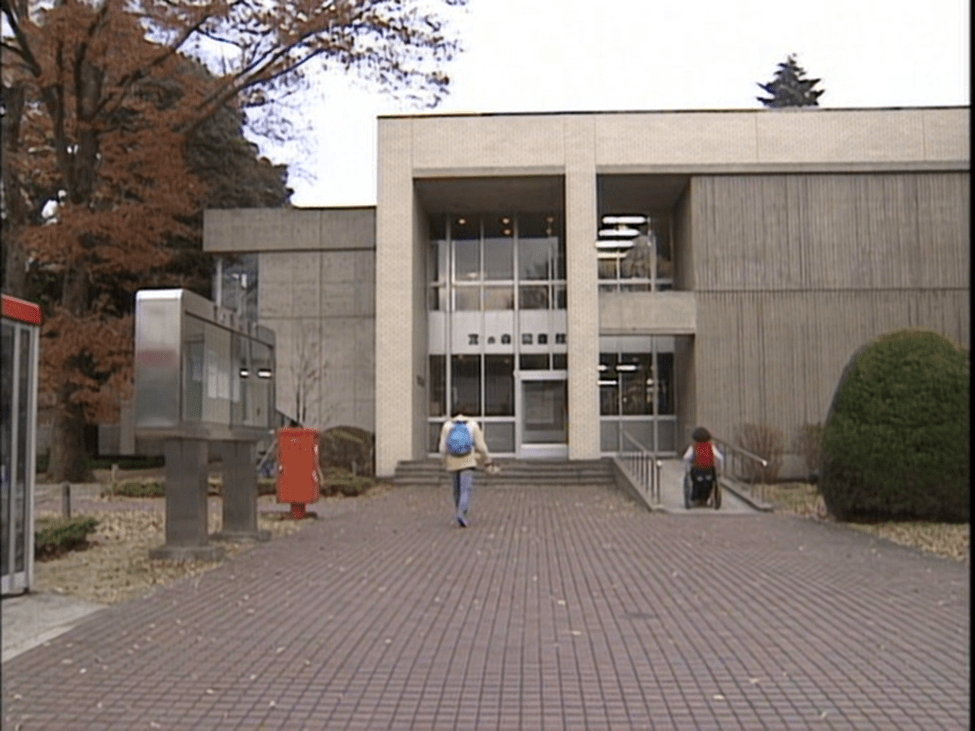
Something which I adore about these early 2000’s Japanese TV shows is the off-handed nature of their realism, where every shot easily registers its environment, whether it’s a city street or a set. Everyday interactions are handled with panache and wit. Witness the scene in the first episode where Kyoko and Shuji have a conversation in the library where he calls her out for treating a volunteer badly, the camera effortlessly tracking past the aisles to follow the action, or the following conversation where her brother teases her after correctly guessing that the person she was talking about is a man. These small interactions, throwaway scenes really, are essential to understanding the world of Beautiful Life. Because, later, when Shuji visits Kyoko’s home for the first time, we have to understand the geometry of their living room, how her brother inhabits the space and why he’s uncomfortable with Shuji’s presence. Of the directors listed for the shows, I’m much more well-versed in the works of Nobuhiro Doi. He’s a consummate professional, as comfortable in the world of romances as adapting Keigo Higashino’s series of Kaga Kyoichiro detective novels with Hiroshi Abe. In other words, he’s a steady hand who you feel could probably film anything. The emotional worlds of Beautiful Life and Orange Days are fairly ordinary and recognizable. But he retains control even when he’s been handed fairly dicey scripts (such as one of his last theatrical features, Unreachable). We’ll return to Doi in another column later this year.
I often default into writing about the journeys of a film or show – how we must start at one place and then make our way to another. This “another” is hard to define, but let’s say that it’s the true world of a work, and once we see it then it haunts the rest. When thinking about Beautiful Life I always think about the last 20 minutes or so of the final episode, a death scene which is crushing in its sadness, in its beauty. It is difficult to talk about, even when I want to approach it from the side of aesthetics. Because we can say that the framing is perfect and the rhythm of the shots is exact at every moment and that the construction of these scenes is a marvel – I do not say this lightly but it is better than most films – but we must also mention that what is being shown in close-up is a face struggling not to cry, and another face, silent and pale. I link this moment back to that scene of Sae and Kai in bed together in Orange Days, a moment of complete intimacy, but there the moment was full of the potential of a love in bloom. In Beautiful Life, the directors take the same approach with their sound design – we will hear every shift of clothing, every movement against the tatami mat, every careful application of the makeup – and it is done for the same reason, it brings these two bodies closer to each other than they’ve ever been (is it ridiculous to compare it to the words of the characters from Ordet, “I loved her body too”?). The difference here is that something is ending, not beginning. I find the final moments of this show shattering not just because of what happens, but also because of certain compositions and camera movements that I can’t believe exist – the short track to Shuji’s legs, and the cut to the profile of his face against the sky, the shot of the single balloon shooting up toward the sky. I sometimes wonder if the mystery of melodrama lies in the cut to a shot of an ambulance siren, bringing us to the outside world, after seeing a character’s final smile. Late in the first episode Shuji and Kyoko see a sunset while crossing the bridge. He lowers himself next to her and says, “the world looks different from here.” Beautiful Life links these two characters, after 11 episodes, through a short, nervy tracking shot – in episode 1, the shot tracks toward Kyoko; in the final episode, the shot tracks toward Shuji. The journey of the show, the “another,” lives in the difference between these two shots.
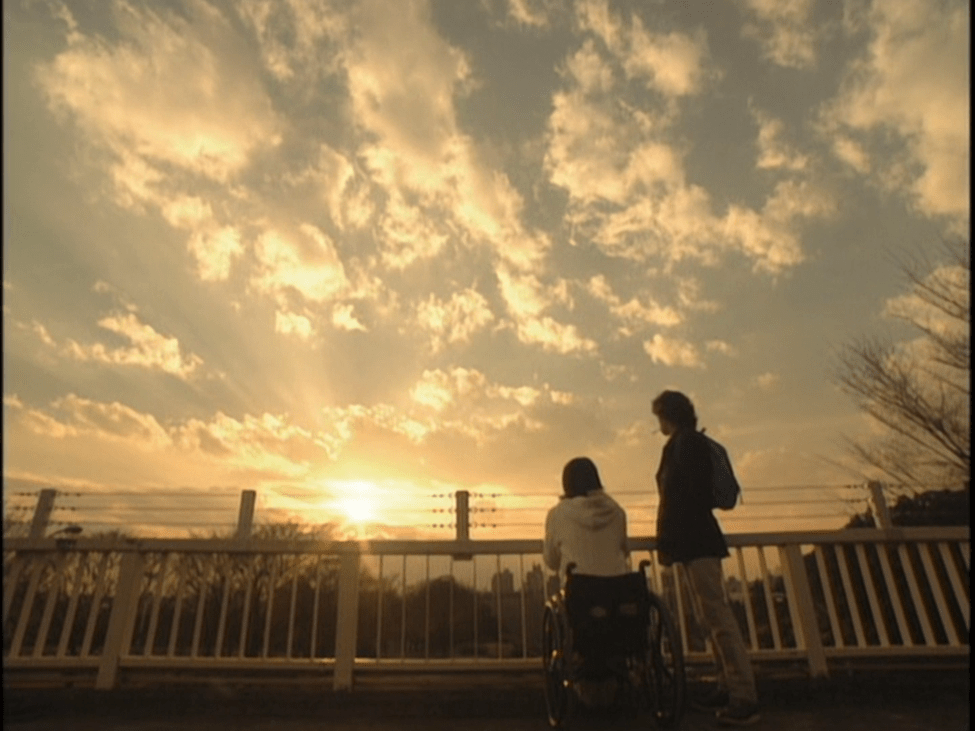
But this “another” lives in my mind after I’ve seen the show, it’s my memory of it. The experience of watching Beautiful Life is different. It’s much more mundane. Shuji and Kyoko fight and bicker, they misunderstand each other, they attend haircut competitions at fancy nightclubs (!). In short, they pass through the path of J-Drama. And it’s this experience which makes the “another” meaningful. And it’s this experience that I often seek to reclaim. It’s in the small moments between characters that lay the foundation – there’s a wonderful scene where her best friend, Sachi, grows frustrated at the way Kyoko bottles up her feelings, in order to not get hurt; or where Shuji and Kyoko run into each other at the ramen stand and then later she sees a pair of red shoes (“I always look when I pass by,” they only become a possibility when she’s fallen in love). That’s where J-Drama lives.
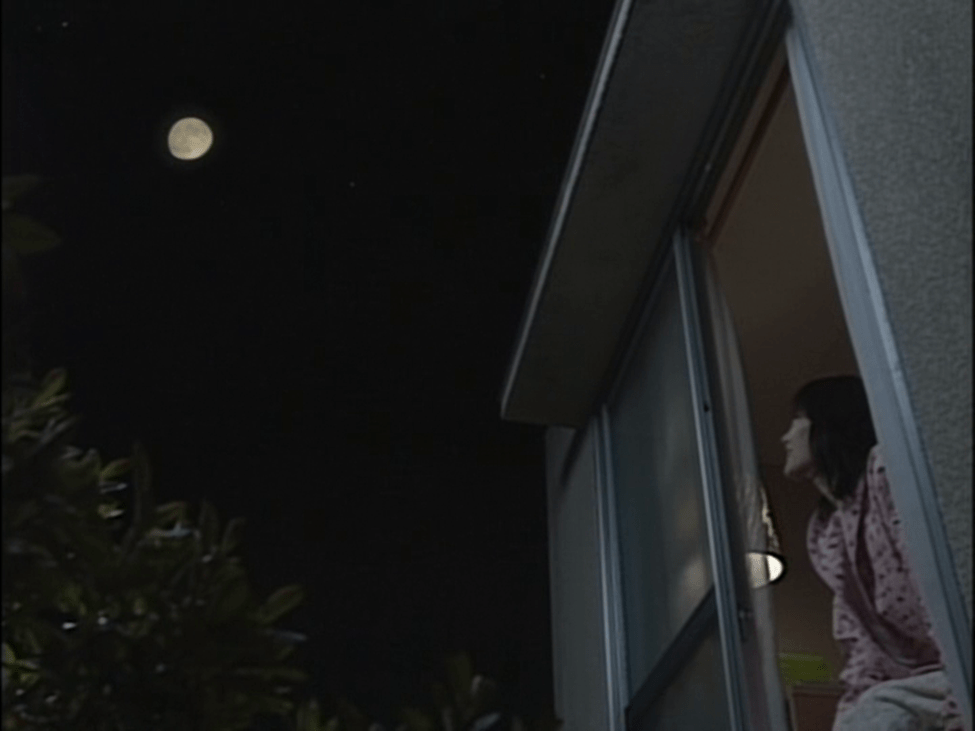
Late in episode 9 there’s a break in the form of the show. Or, rather, we leave the world of the drama behind and enter a pure psychological state. Kyoko escapes from her house and goes to a place deep in the woods where she once went with Shuji. The close-up of Kyoko is bathed in moonlight, all while the reflections of the water ripple across her face… The sudden wide shot of Kyoko slowly moving closer to the water proves to me that we are in the hands of masters – because it’s the awkward, sudden nature of the act that renders it human. It’s miles away from One Perfect Shot formulas. It must be a violation because the contemplation of suicide in the show’s universe is a rupture. So Beautiful Life takes us to the edge of what its universe will allow.
What are the limits? And how to get there? In shows like Orange Days and Beautiful Life, we are prompted to ask ourselves this question and think about how much we will accept. These are works that build believable worlds for their characters. They invest time in the psychology of the characters, in relationships. There is a baseline realism achieved. All of this is necessary for the series’ true goal – to reach that ‘another,’ our emotions must soar, the world must become greater than what we can understand, we must feel the tears rolling down our cheeks. Or, perhaps we can laugh, and reject what these works propose to us. We won’t know if the limit has been reached until we barrel right through it.

 Lucky Star