During the last month of 2025 cinephiles were inundated with year end lists from every single possible source – from the most legendary publications to dudes posting their Letterboxd lists. Film publications and their polls frequently turn toward consensus. The opening salvo of the Screen Slate poll described the situation: “The common gripe is that most end-of-year lists are an arbitrary reshuffling of the same titles. It is common because it is based in truth.” If this is the case, why run a poll at all? Why is it necessary? More than anything else, the question an outlet should ask themselves is – does this list fit the character of our site? Does it reflect our cinephilia? You could always look at the extreme example of Eiga Geijutsu editor Haruhiko Arai who banned animated films from consideration for year-end lists in order to block films like Your Name and In This Corner of the World from making the final list. What’s to stop an outlet from saying they will not consider mentions of Weapons or Sinners or Afternoons of Solitude, if the editorial team feels strongly enough about it? Frankly, it would just be very amusing to see it.
In the case of Lucky Star, we forbid nothing. But it’s also not a poll. And we only invite those who we have a relationship with – those who we’ve written about, or who have helped us in some way. Their lists are places for discovery. They embody the restless cinephile spirit which seeks the new, the undiscovered. They resist consensus and follow their own curiosity. I’m happy we can host them. There are no rules about which films are eligible and which films are not. There’s no requirement that films have theatrical distribution in the United States. A filmmaker like Akiko Ohku, to name an example who will be represented in our list, premiered She Taught Me Serendipity in late 2024 in Tokyo, and got some scattered festival engagements this year. But unless you saw this film in Japan (or were lucky enough to catch it at a festival), there was no way to see it until it was subtitled and uploaded online. If we did not include such a film, it would be a lie. It would be against our cinephilia. This way of doing things can make things a bit of a mess, but we submit that this is probably truer to the experience of how we actually watch films, and how these films actually reach us. Each year we ask ourselves what is at the center of our cinephile culture. Perhaps simply to fight for a cinephilia where milet vehicles are not ignored… Each year we renew our vows.
Jhon Hernandez (Lucky Star editor)
Top 2025
Boy and Dog (Takahisa Zeze, Japan)
She Taught Me Serendipity (Akiko Ohku, Japan)
My Beloved Stranger (Takahiro Miki, Japan)
The Currents (Milagros Mumenthaler, Argentina/Switzerland)
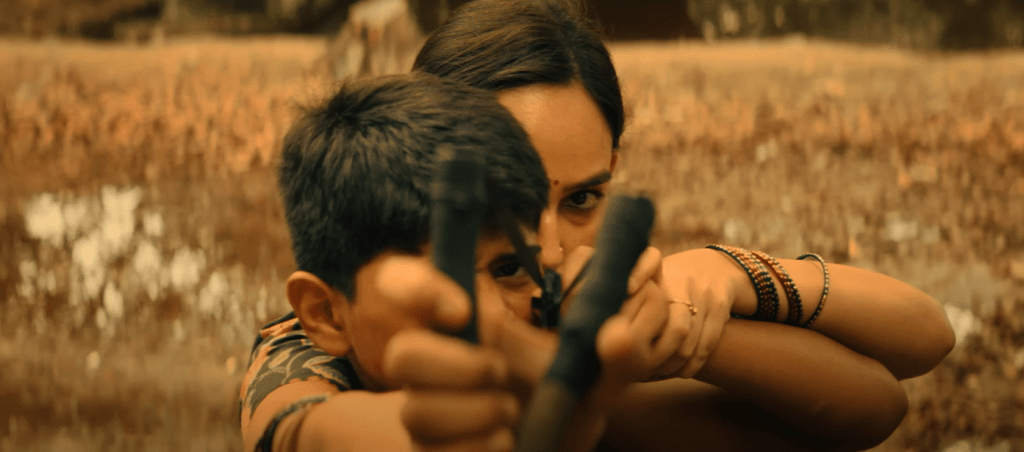
Bad Girl (Varsha Bharath, India)
Three Friends (Emmanuel Mouret, France)
Ella McCay (James L. Brooks, USA)
Saiyaara (Mohit Suri, India)
En el cine / Las reglas del juego (Matias Szulanski, Argentina)
Free Drum Kit (Carmen Leroi, France)
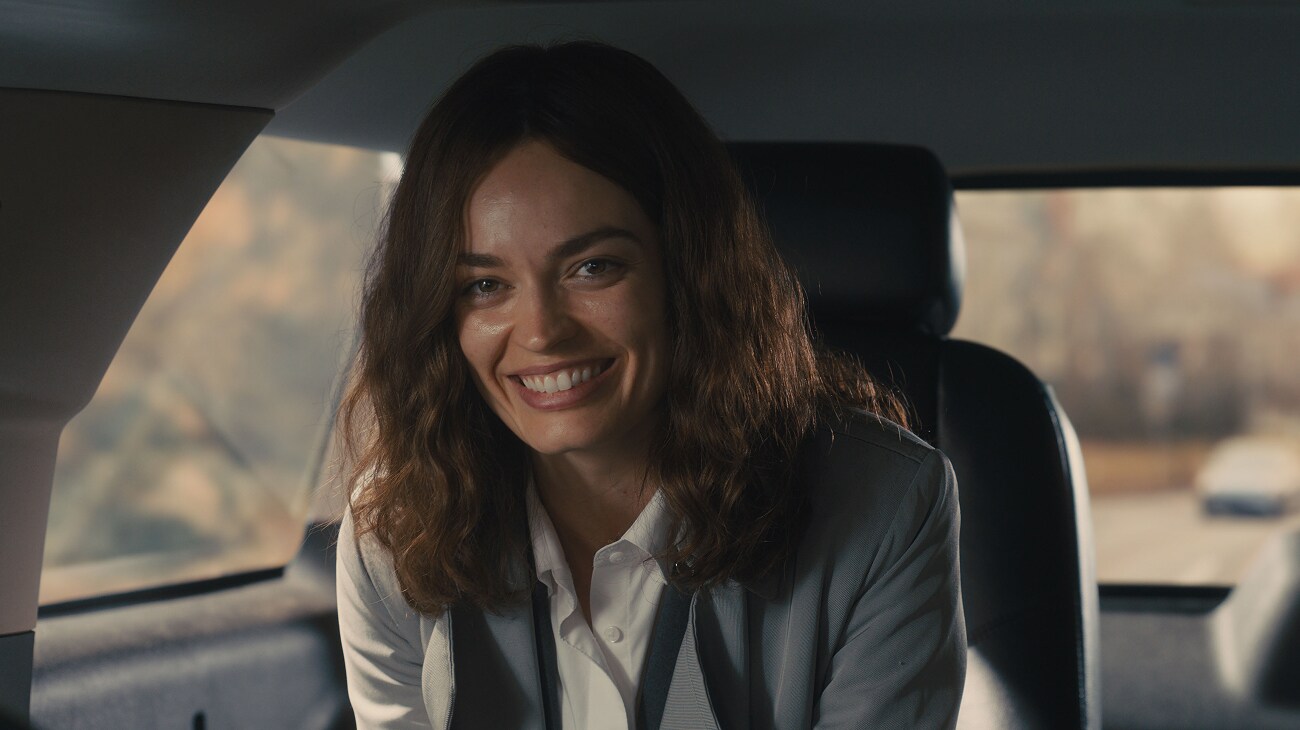
The verdict is out. Ella McCay is a flop. It seems like its fate was already predetermined – from meme to misunderstood auteurist triumph. What is this film exactly? In How Do You Know Brooks mapped the dilemmas of his characters onto the body of a romantic body – the romcom veneer served to mask the existential crisis at the film’s center. With Ella McCay there’s no longer any pretense. There’s no need to assume any particular genre or bring up any of its codes, everything is laid bare. I find Brooks to be a figure similar to Cameron Crowe. They both filmed their own fantasies of human behavior, but at some point those same fantasies became unrecognizable and left the audience behind. So, the dramatic structure’s compactness sends the film toward abstraction, Ella bouncing from character to character like a pinball, each interaction further disappointing her, but also bringing clarity to her life. There’s a moment late in the film when her husband gives her an ultimatum, and Ella looks down at the floor while swaying slightly from side to side, her eyes finally coming up with a renewed focus before ultimately answering him with complete resignation. What Brooks is after is this gesture, over and over, this crystallization of character, where the mystery of human behavior overrides the Brooksian fantasy, dazzling us. Watching this film I was frequently confronted with scenes that quite simply do not exist any longer in American cinema. Think of the sensitivity with which Brooks films the early scene where Ella’s younger brother stands guard at the door while Ella cries – how Brooks holds on the brother standing alone there in the hallway in his military school uniform, holding back tears, before finally allowing himself to join her (and notice that Brooks does not enter the room but rather only films the door closing, respecting their privacy in this most harrowing of moments). When was the last time I saw a scene like that? In order for a scene like that to exist, you have to be interested in people and try to film them with generosity, curiosity and warmth. You have to believe in hope, even if you acknowledge the failure of that hope. What does the complete rejection of a film like this tell us about the state of American film culture? They’d have rejected Cluny Brown, too.
Top Discoveries
Shanghai Express (Josef von Sternberg, 1932, USA)
Sound of the Mountain (Mikio Naruse, 1954, Japan)
7 Women (John Ford, 1966, USA)
Futari (Nobuhiko Obayashi, 1991, Japan)
Brooks, Meadows, and Lovely Faces (Yousry Nasrallah, 2016, Egypt)
Seema Pai (Lucky Star Editor)
Top 2025
Caught By The Tides (Jia Zhangke, China)
Cloud (Kiyoshi Kurosawa, Japan)
Misericordia (Alain Guiraudie, France)
Bad Girl (Varsha Bharath, India)
7 Walks with Mark Brown (Pierre Creton + Vincent Barré, France)
Tere Ishk Mein (Aanand L Rai, India)
The Boy and The Dog (Takahisa Zeze, Japan)
The Shrouds (David Cronenberg, Canada)
Ponman (Jotish Shankar, India)
Nishaanchi 1 & 2 (Anurag Kashyap, India)
As I sit down to make this list I wonder what the point of this exercise even is. Don’t get me wrong, lists are fun and I’m vain enough to believe that someone, somewhere is interested in knowing what 10 films that came out this year made the biggest impression on me, personally. But, simultaneously, I am well aware of my own anonymity and irrelevance. I am no longer on forums and I skipped the transition to Discord. I am not young enough for films or any pop culture I consume to feel like a key part of my public identity. Films are largely a private pleasure for me.
I think the only thing that makes sense about this exercise, then, is as an attempt at giving some kind of spotlight, no matter how small, to films that seem to run the risk of getting completely lost. A film that could have made either of the two lists I submitted to this roundup is Agra by Kanu Behl. Despite getting selected for Cannes Directors’ Fortnight in 2023 and Behl having writing credits on Dibakar Banerjee’s 2010 cult favorite Love Sex Aur Dhokha, the film vanished for years in the black hole that is India’s CBFC censor board, without whose blessing films can’t be theatrically released in the country. The film finally got official certification, albeit in a compromised edit in late November of 2025, but despite a healthy amount of interest from audience and critics alike, got shunted to impossibly inconvenient showtimes at a smattering of movie theaters, making the victory tepid at best. And yet, while it is a film that is inarguably somewhat hard to watch (about the claustrophobia caused by the lack of private domestic space and sexual repression), it also happens to be the most singular and perfectly realized film I’ve watched from a relatively (his feature debut was in 2015) young Indian filmmaker over the past few years.
Watching it made me go back to rewatch Titli and Despatch, and while neither film is as coherent a vision as Agra, you can’t really argue against them as being real propositions from a filmmaker with a genuine sensibility and a goldmine of stories that capture a set of maladies affecting a nation that seems no longer young, and either on a downward spiral or at least in the throes of a rather bleak midlife crisis. Both Titli and Agra are just darker siblings to a beloved comedy of social striving like Khosla ka Ghosla and, if you ask me, the films didn’t get darker, the world we live in did.
2025 was a rough year overall, and if you left it with any sense of hope or optimism, I wish I could see what you do. Under the circumstances, the mere existence of films and filmmaking feels miraculous to me. They are absurdly costly to make, in every sense of the word, and most people I meet don’t even look to films for pleasure anymore. There are other, more immediate highs available that mold better to a world increasingly razor focused on profit and efficiency in all things. Maybe this is why as I hurtle irrevocably towards middle age (or older), I carefully hunt for, collect and preserve these experiences and feel compelled to share them in some form, even if it’s just me mumbling into a void.
Top Discoveries
A Bride for Rip Van Winkle (Shunji Iwai, 2016, Japan)
Insiang (Lino Brocka, 1976, Philippines)
Naufragio (Jaime Humberto Hermosillo, 1978, Mexico)
Kinara (Gulzar, 1977, India)
Cafe Noir (Jung Sung-il, 2009, Korea)
Nathan Rogers Hancock (Lucky Star Editor)
1.
Let’s take a moment to commit this to writing before it is lost to memory, as these things so often are. In June of 2025 Brooklyn’s BAM cinema, along with friend of Lucky Star Graham Carter’s Several Futures, curated a retrospective dedicated to the films of Pierre Creton and his partner Vincent Barré, timed to the release of their deceptively modest 2024 feature 7 Walks with Mark Brown; the series was called “Erotic Nature” and, for several happy weeks pride month in BAM’s Fort Greene neighborhood was presided over by a billboard sized image of a passionate kiss in a fog enshrouded forest from Creton’s unsettling 2023 feature Un Prince. This was not the first time these films had been presented to the New York art film circuit – both 7 Walks and Un Prince had screened in the New York Film Festival’s amorphous Currents side bar, and Un Prince had an apparently desultory run at Manhattan’s IFC center. But it was, crucially, the first time this work had been presented as a whole, the newest features presented alongside everything that had come before, where we could apprehend a vital, coherent practice, carried out across the unexpected contours of a landscape and a life, by living and working filmmakers, a crucial distinction in a year where so much of the city’s most vital programming seemed committed to the past. They are films that deserve to be addressed at length, with care, and one of my regrets, after a year where our already sluggish publishing schedule trickled away to almost nothing, is not doing so here.
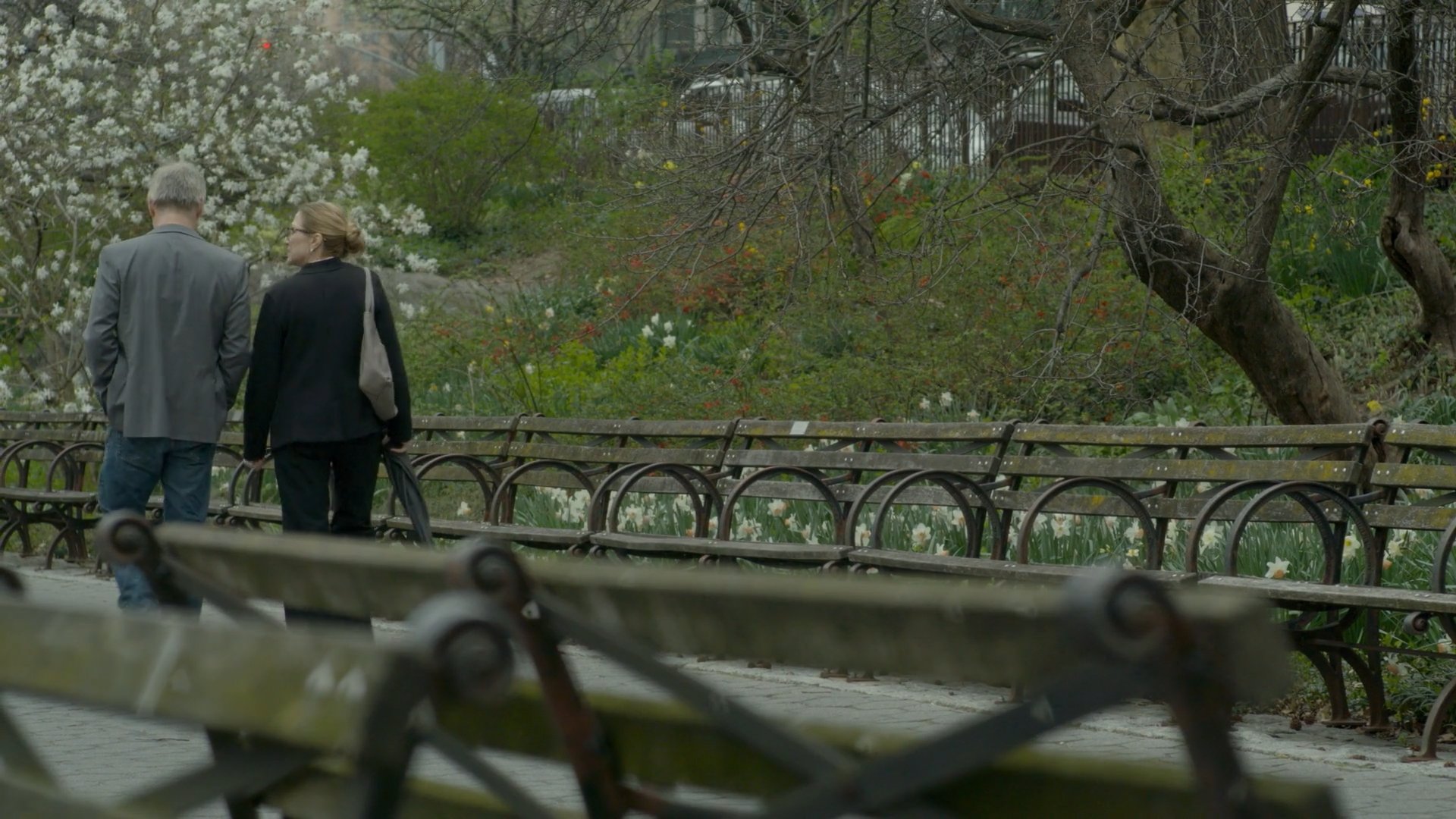
On the last weekend of the series, in sweltering Summer heat, a free nature walk was scheduled in Brooklyn’s Prospect Park, the most substantial “green space” within easy traveling distance to the theater where the films were screening. The idea was to connect some of the ideas expressed by the paleobotanist Mark Brown, and some of the specific foliage from the Normandy region explored in the film, to the local landscape. The usual hierarchy of a “filmmaker in person” film event was reversed – Creton and Barré became part of a small crowd following the New York based botanist Marielle Anzelone as she delivered a winding lecture on the park and its ecology, from glacial roots to the mistakes of mid-century urban planning. Barré, who speaks English, asked questions, translated for his partner, made jokes; Creton watched, filming continuously on his iPhone – the speaker, the crowd, the foliage, the landscape. It seems that the park, for all of its beauty, is a kind of Potemkin village, an act of environmental engineering rather than an ecosystem; we are far from the wild growth explored in 7 Walks. Non-native trees, chosen for somewhat arbitrary aesthetic qualities, do not become part of the ecosystem – if insect life can’t feed, an entire food chain unravels. This may be a remedial level of knowledge for anyone more connected to the world than someone like me, who can’t even identify the trees outside the window he stares out of every day, but it is a useful reminder that it takes knowledge to understand what it is you see. Take a leaf in your hands, look for the holes, the ravaged parts – these are the signs of health, where insects have fed, the signs of being part of an ecosystem rather than an ornament, and object.
2.
Lucky Star has, in its first few years, published its year end content, the usual lists and retrospective writing, around the middle or end of January, at least a month later than many other publications. It would be nice to say this is out of a feeling of diligence or care – it was strange this year to see publications rush their lists out the door before the release of Avatar or Ella McCay, two of the only notable American films of 2025 – but the simple reason is that we move slowly, out of necessity, and try to make a virtue out of this where we can.
The practical effect of this is that we see the lists, critics circle awards, and we see the various reflections and reactions to those lists, those awards. The Golden Globes have come and gone, I guess, the Museum of Modern Art rolls out its baffling “Contenders” series, the Museum of the Moving Image slogs through its marginally better Curators Choice series, I’m reminded the zombie corpse of Film Comment still exists from the trickle of paid “For Your Consideration” emails advertising films (Rental Family, Guillero Del Toro’s Frankenstein) whose existence I had genuinely forgotten about. It becomes tempting to mistake the map for the territory, to try to draw some kind of meaning from the map.
So I am going to do my best not to make this mistake, to try and draw too much insight from the films I have selected, to compare this small archive of what I found precious in cinema in 2025 to a ‘big picture’ that is a chimera anyway. Instead, I can say…Hal Hartley, one of the few vital artists to emerge from the North American “independent cinema” boom of the late 80s and 90s, has spent the late stages of his career tending to his body of work like a garden patch or a graveyard plot – collecting old screenplays, soundtracks, consolidating the older films to physical media sets, moving them all to his own streaming sites through Vimeo hosting. The new film, Where to Land, dramatizes this process, so common to the moment where middle age starts to slide towards whatever comes next. It looks back to old faces, old themes, while never losing the almost geometric clarity that is the constant of his staging, his dialogue, the guitar playing that has become so familiar over so many years, the resonant clarity of shape that gives his feature length work its meaning. The film is crowd funded, budgeted at less than $400,000; it falls into the strange category of being both a “home production” in the most literal sense – much of the film is set in Hartley’s own apartment, something he never tries to disguise – and a classically professional production – in a message to his Kickstarter backers Hartley mentions renting out production offices! – made along as many of the traditional production hierarchies as this modest budget (still enough money to buy a more than modest home, to pay for years of a higher than average full time salary, or a single destination wedding) allows for. The film plays at none of the major festivals, including NYFF, has a brief run at the Roxy in lower Manhattan, is not reviewed by the New York Times or the New Yorker or Reverse Shot or whatever else passes for New York institutional writing these days, there’s not even a Richard Brody tweet to roll our eyes at. Hartley, in one of several interviews conducted around the movies release (that there seemed to be more interviews than sustained critical writing may say something essential about current state of English language film writing), said that at his age this mode of film production was simply too demanding to consider doing again. Motherless Children, the semi-autobiographical screenplay he self-published as a book, would be too expensive to ever, realistically, hope for funding. Where to Land ends with its aging filmmaker at his desk, energized by the prospect of working on a film again, but that is just one of many places where this fiction and reality diverge – Hartley already made his film, after all, and it seems more like a farewell than a new beginning.
This is just one film, from a director too singular to be reduced to the symptomatic, at least beyond the fact that even the late work of a major local figure will be ignored by what remains of our more centrist institutions without the right degree of PR machinery. It is out there, it has appeared on scattered year end lists. Rodrigo Moreno, one of the the few working directors who seems to have learned something from Hartley’s rarest virtues, wrote some moving lines on it in the La Internacional Cinéfila survey, one way that these end of year exercises are not entirely worthless. Still, it is difficult to look at this evidence and draw optimistic conclusions. A film like Varsha Bharath’s ferociously committed debut Bad Girl, which resembles Where to Land in featuring extended sequences filmed in the director’s own apartment, makes no impression on the major institutional lists, despite winning a prize at Rotterdam and being available on a major streaming service since November. In an interview earlier this year, Varsha Bharath and her lead actress Anjali Sivaraman described the strangeness of attending the film’s premiere in Rotterdam, of feeling both at home among all these films and filmmaker and surprise that her film should be accepted by the festival audience, at the same time that their film’s trailer was the target of a semi-organized hate campaign back home for alleged discrimination against their home state’s privileged Brahmin minority. She would later wonder if this film, which can lay the rare claim to have genuinely ventured into social and emotional territory never depicted in the tradition it belongs to, faltered due to women having ceded the movie theater, like so much of public space in her country, almost entirely to men. Vetrimaaran, the film’s producer and one of the more significant figures in Tamil cinema’s still flourishing new wave, and who had spent much of the year waging an intractable court battle with the nation’s censor board over another production, announced he would be stepping away from production altogether. These are considerations that must seem strange in a culture where “foreign films” can seem to be mostly conceived for and sold to a festival market, a dwindling art house circuit, a “curated” streaming service. It’s probably stupid to wonder if even a fraction of the support given to Payal Kapadia’s largely European funded All We Imagine as Light would have impacted Bad Girl’s domestic reach, could have had some meaning for Varsha Bharath’s career, for good or for ill, but I can’t help wondering anyway.
3.
Two lists, meant to be read side by side, with no hierarchy of value implied, an “Inside” and an “Outside” rather than an “A Side” and a “B Side.” If there is something that unites these films I think it is a certain urgency, close to but not exactly desperation.
7 Walks with Mark Brown / Still Life Primavera (Pierre Creton & Vincent Barré, France)
Tere Ishk Mein (Aanand L. Rai, India)
Ponman (Jotish Shankar, India)
Nishaanchi / Nishaanchi 2 / Kennedy (Anurag Kashyap, India)
Free Drum Kit (Carmen Leroi, France)
Bad Girl (Varsha Bharath, India)
Desert of Namibia (Yoko Yamanaka, Japan)
Where to Land (Hal Hartley, USA)
Parandhu Po (Ram, India)
The Colors Within (Naoko Yamada, Japan)
Top Discoveries
Naufragio (Jaime Humberto Hermosillo, 1978, Mexico)
Palombella rossa (Nanni Moretti, 1989, Italy)
Kasba (Kumar Shahani, 1991, India)A)
Cafe Noir (Jung Sung-il, 2009, Korea)
We Have a Pope (Nanni Moretti, 2011, Italy)
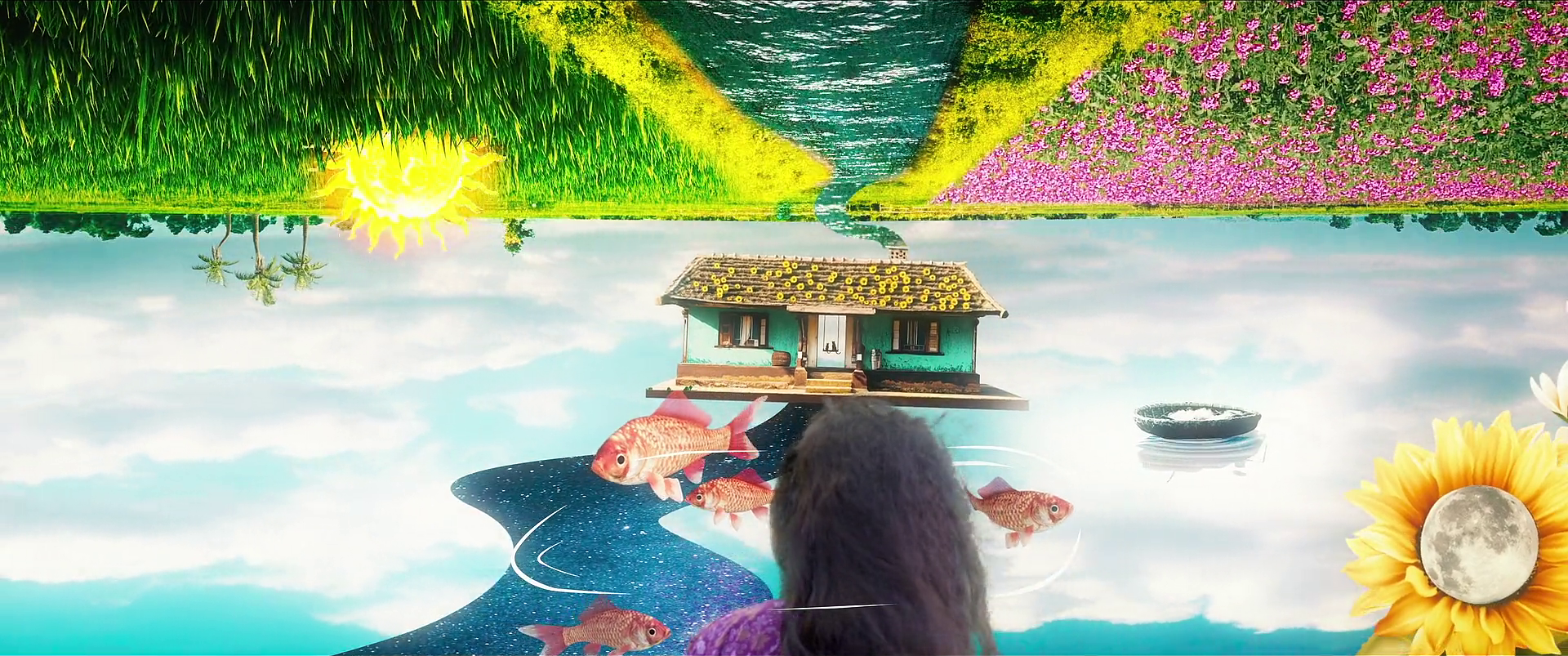
Graham L. Carter (Filmmaker and Distributor)
Top 2025 (World Premieres)
Two Seasons, Two Strangers (Sho Miyake, Japan)
Where to Land (Hal Hartley, USA)
Bad Girl (Varsha Bharath, India)
Nuestra Tierra (Lucrecia Martel, Argentina)
Escape (Masao Adachi, Japan)
Ella McCay (James L. Brooks, USA)
What Does That Nature Say to You (Hong Sangsoo, South Korea)
Yasuko, Songs of Days Past (Kichitaro Negishi, Japan)
Revelations of Divine Love (Caroline Golum, USA)
FUCK THE POLIS (Rita Azevedo Gomes, Portugal)
Honorable Mentions: Boy and Dog (Takahisa Zeze), With Hasan in Gaza (Kamal Aljafari), La Dolce Villa (Mark Waters), Palimpsest: The Story of a Name (Mary Stephen), Pin de fartie (Alejo Moguillansky), The Life List (Adam Brooks) / My Oxford Year (Iain Morris), The Tree of Authenticity (Sammy Baloji), Materialists (Celine Song)
Best 2024 Films I Saw in 2025
La limace et l’escargot (Anne Benhaïem, France)
Across the Sea (Saïd Hamich, France)
She Taught Me Serendipity (Akiko Ohku, Japan)
Top Discoveries
Dying (Michael Roemer, 1976, USA)
Living on the River Agano (Makoto Sato, 1992, Japan)
7 Women (John Ford, 1965, USA)
They Do Not Exist (Mustafa Abu Ali, 1974, Palestine)
Yaaba (Idrissa Ouedraogo, 1989, Burkina Faso)
Lightning / Untamed / Flowing (Mikio Naruse, 1952/1957/1956, Japan)
Siméon (Euzhan Palcy, 1992, France)
Kid Galahad / Four Daughters (Michael Curtiz, 1937/1938, USA)
Jaime / Ana (António Reis & Margarida Cordeiro, 1974/1982, Portugal)
Maria Zef / Il Taglio del Bosco / Traviata 53 (Vittorio Cottafavi, 1981/1963/1953, Italy)

Lautaro García Candela (Filmmaker, Critic and Teacher)
Top 2025
Afternoons of Solitude (Albert Serra, Spain)
The Prince of Nanawa (Clarisa Navas, Argentina/Paraguay)
Dice que… (Alejandro Fernández Mouján, Argentina)
Blue Moon (Richard Linklater, USA)
Avenida Saenz 1073 -video dedicado a la enfermeda de mi padre- (Lucía Seles, Argentina)
Better Man (Michael Gracey, UK)
Un techo sin cielo (Diego Hernández, México)
A House of Dynamite (Kathryn Bigelow, USA)
Weapons (Zach Cregger, USA)
The Mondongo Trilogy (Mariano Llinás, Argentina)
Top Discoveries
Home for Christmas (Rick Hancox, 1978, Canada)
I’m Hungry, I’m Cold (Chantal Akerman, 1984, France)
Familia rodante (Pablo Trapero, 2004, Argentina)
20th Century Girl (Bang Woo-ri, 2022, South Korea)
Mary Jane’s Not a Virgin Anymore (Sarah Jacobson, 1997, USA)
Marin Gérard (Filmmaker and Critic)
Top 2025
Dry Leaf (Alexandre Koberidze, Georgia/Germany)
Lost, lost, lost.
Mektoub, My Love: Canto Due (Abdellatif Kechiche, France)
Summer does in fact end.
The Mastermind (Kelly Reichardt, USA)
Funny title, sad film.
Ella McCay (James L. Brooks, USA)
Yes, la bonté.
Youth (Hard Times) + Youth (Homecoming) (Wang Bing, China/France)
Do Americans watch Wang Bing films? I never see him in lists. He’s one of the best.
I Only Rest in the Storm (Pedro Pinho, Portugal)
White guy wants to do some good. Oh well.
One Battle After Another (Paul Thomas Anderson, USA)
Euphoria & paranoia – perhaps not Vineland but a Pynchon film for sure.
Sirāt (Oliver Laxe, Spain)
Death is sideration (see also: Jacques Tourneur’s Wichita, David Lynch’s Twin Peaks: The Return, Part 6: “Don’t die.”)
L’Aventura (Sophie Letourneur, France)
The sun sets on the couple. It smells like shit.
Mon Noël anticapitaliste (Valentine Guégan + Hugo Lemaire, France) A great Christmas special, all the way from Paris, France.
Top Discoveries
Belfast, Maine (Frederick Wiseman, 1999, USA)
America’s eeriness captured so well – very moving stuff.
Four Nights of a Dreamer (Robert Bresson, 1971, France)
The great Robert Bresson musical.
Stella Dallas (King Vidor, 1937, USA)
Stanwyck’s little eyes glowing.
The Secret of the Grain (Abdellatif Kechiche, 2007, France)
That first Sunday lunch.
Yi Yi (Edward Yang, 2000, Taiwan)
Saudade in the big city.
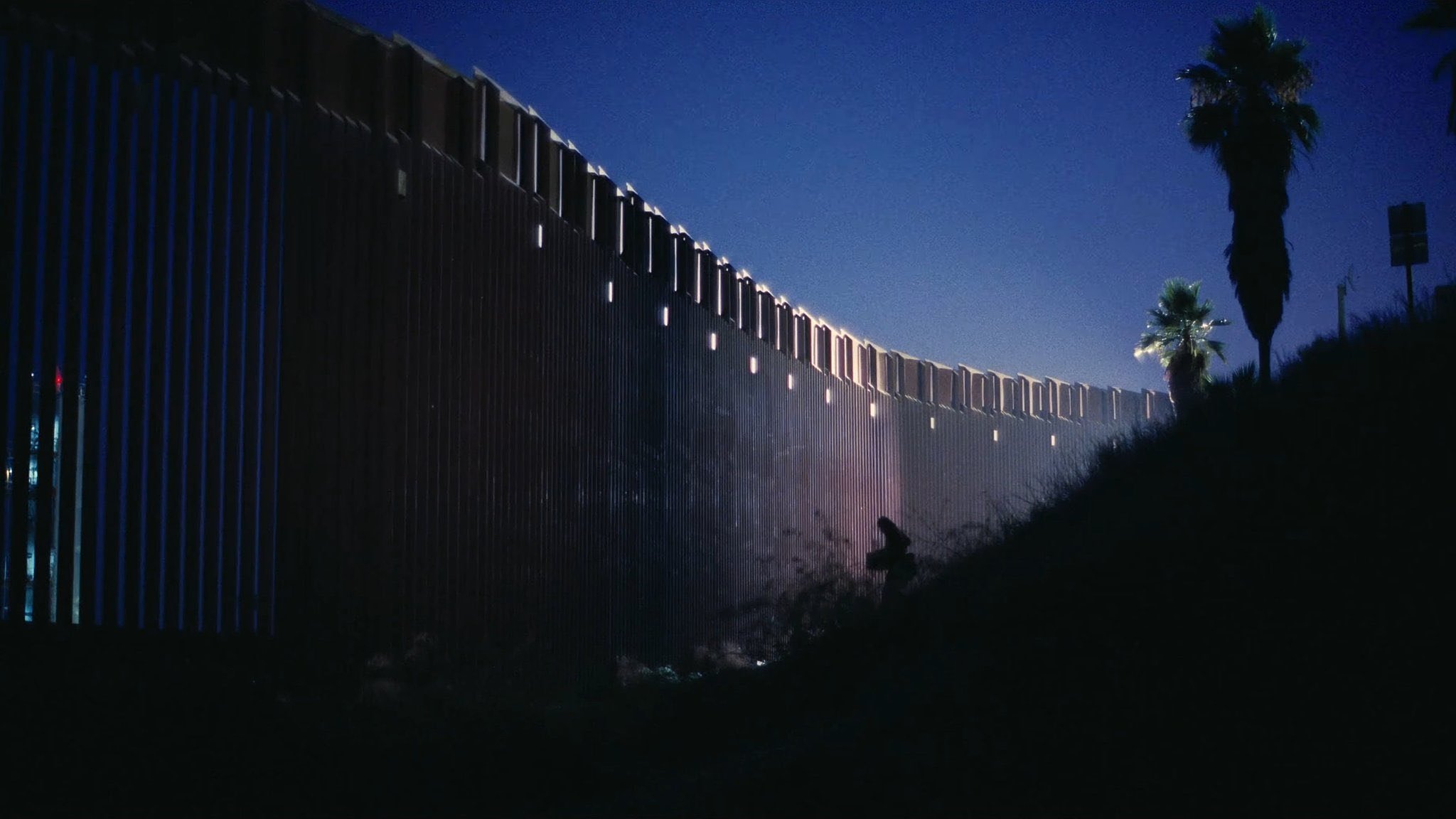
Jaime Grijalba (Critic and Translator)
Top 2025
One Battle After Another (Paul Thomas Anderson, USA)
The House Was Not Hungry Then (Harry Aspinwall, Scotland)
Adolescence (Philip Barantini, UK)
Weapons (Zach Cregger, USA)
Birdsong (Renso Amariz, USA)
The Mastermind (Kelly Reichardt, USA)
Reflection in a Dead Diamond (Hélène Cattet + Bruno Forzani, Belgium)
Revelations of Divine Love (Caroline Golum, USA)
Wormtown (Sergio Pinheiro, USA)
Landlord (Remington Smith, USA)
Top Discoveries
He Who Gets Slapped (Victor Sjöström, 1924, USA)
A Fish Called Wanda (Charles Crichton, UK/USA)
Moonstruck (Norman Jewison, 1987, USA)
Parallel Mothers (Pedro Almodóvar, 2021, Spain)
The Dark Mirror (Robert Siodmak, 1946, USA)

Nicolas Leblanc (Cinephile)
This is about a few, five, rather good movies. Everyone shouts about masterpieces from the belfries of every town across the land, but the miracle occurs so seldom. “The maestro says it’s Mozart, but it sounds like bubblegum:” if you don’t feel it, you cannot take anyone’s word for it. Then the frost sets in: no one can be trusted anymore, you feel isolated, the world is atomized, in smithereens. The worst thing is that nobody else sees it, untold millions walk contentedly to the slop trough. What Bernard Stiegler wrote is true, to a point: a sizeable contingent of the population have lost their old aesthesis, and this is a political catastrophe that stems from the age of recordings, it simply accelerated with systematic use of algorithms. Where was I? Where am I? How do I get out? It’s so ugly and gross here!
Top 2025
7 Walks with Mark Brown (Pierre Creton + Vincent Barré, France)
So, people can still do beautiful things that unfold in their own time. It documents the process and then the memory of the process. Of course, flowers are beautiful, but one forgot that people could be, too. All of which has to do with time: plant time, human time. What differentiated this from piffle like that Overstory book is a sort of serenity at play, probably coming from the fact that this film, while a work, seems completely alien to capitalistic time and its childish ideas of profit at all costs. Perhaps this capitalistic time idea is what grinds me down the most.
Cloud (Kiyoshi Kurosawa, Japan)
I could think of numerous works that treated this manic search for $ as infantile, but few as the delirious neurosis that it is: Cloud. Granted he could not be called an outspoken defender of Kiyoshi Kurosawa, but this comedic jeu de massacre was one of the rare items that tickled him in a while. The mental derangement it had in common with Chime, but without the arty structural pretensions and amping up the absurdity with gusto, until everything gets consumed by it.
The Mastermind (Kelly Reichardt, USA)
The Mastermind also has its set up geared toward the enactment of delusions: that of the misunderstood genius. From the jazzy score accompanying the protagonist’s every move to the blocking that emphasize him, while making his spouse disappear, to the complete change of pace when a relative confounds him, seeing through him and his silly ambitions.
Misericordia (Alain Guiraudie, France)
In Misericordia, everyone knows the score or at least suspects it, a tight-knit community acts dynamically, and the intruder is welcomed in. Or is it incarcerated? Everything spells rot in this one: mushrooms, dead leaves and For Sale signs. What’s left? Perhaps we can take solace in the idea that nothing lasts, cold comfort.
Conditio Humana (Friedl vom Gröller, Austria)
Conditio Humana takes just three minutes of your time on the subject: people depicted in stone in churches (now decrepit, badly needing restoration), captured on celluloid (we know how that goes), human bonds fade in a tuft of smoke. Everything goes the way of all flesh.

Carmen Leroi (Filmmaker)
I tried to make a list, but I missed a lot of films this year I’m afraid. And I am quite picky. Also choosing is quite difficult for me. There are less than 10 films and there is no special order, apart from the first three.
Top 2025
A Poet (Simón Mesa Soto, Colombia)
Sirāt (Oliver Laxe, Spain)
Kontinental ’25 (Radu Jude, Romania)
L’Aventura (Sophie Letourneur, France)
Un pincement au coeur / Ce n’est qu’un au revoir (Guillaume Brac, France)
Afternoons of Solitude (Albert Serra, Spain)
Apprendre (Claire Simon, France)
The Great Arch (Stéphane Demoustier, France)
Top Discoveries
Julieta (Pedro Almodóvar, 2016, Spain)
The Chapman Report (George Cukor, 1962, USA)
I Was Born, But… (Yasujiro Ozu, 1932, Japan)
Misunderstood (Luigi Comencini, 1966, Italy)
Fear (Roberto Rossellini, 1954, Italy/Germany)
A Room with a View (James Ivory, 1985, UK)
So Big (William A. Wellman, 1932, USA)
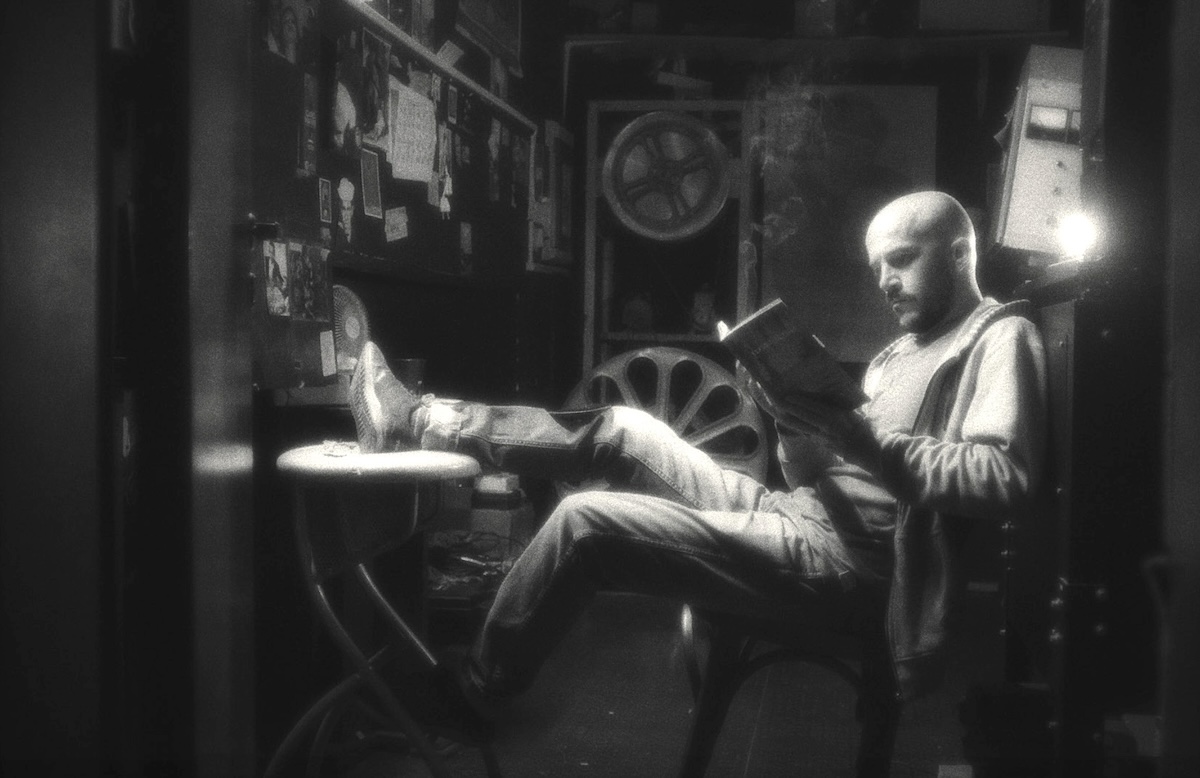
José Miccio (Critic and Teacher)
I’ll take the liberty of reversing the criteria and choose five films released in 2025 and ten films that I saw for the first time in 2025.
Top 2025
Dice que… (Alejandro Fernández Mouján, Argentina)
La noche está marchándose ya (Ezequiel Salinas + Ramiro Sonzini, Argentina)
Miroirs No. 3 (Christian Petzold, Germany)
One Battle After Another (Paul Thomas Anderson, USA)
Sinners (Ryan Coogler, USA)
Top Discoveries
Westward the Women (William A. Wellman, 1951, USA)
Un temoin dans la ville (Edward Molinaro, 1959, France)
El chacal de Nahueltoro (Miguel Littin, 1969, Chile)
Vampire Circus (Robert Young, 1972, UK)
Deux Hommes dans la ville (Jose Giovanni, 1973, France/Italy)
Delitto d’amore (Luigi Comencini, 1974, Italy)
La criatura (Eloy de la Iglesia, 1977, Spain)
A Moment of Romance (Benny Chan, 1990, Hong Kong)
Sale comme un ange (Catherine Breillat, 1991, France)
Más que el mundo (Lautaro Núñez de Arco, 2004, Argentina)
Jorge Negrete (Critic and Programmer)
Top 2025
Un techo sin cielo (Diego Hernández, México)
Magellan (Lav Diaz, Philippines)
Hard Truths (Mike Leigh, UK)
Dry Leaf (Alexandre Koberidze, Georgia/Germany)
The Mastermind (Kelly Reichardt, USA)
Blue Moon (Richard Linklater, USA)
A Private Life (Rebecca Zlotowski, France)
The Phoenician Scheme (Wes Anderson, USA)
The Secret Agent (Kleber Mendonça Filho, Brazil)
Adios Amor (Indra Villaseñor, México)
Top Mexico
Autos, mota y rocanrol (José Manuel Cravioto)
Say Goodbye (Paloma López Carrillo)
El Guardían (Nuria Ibáñez)
Los amantes se despiden con la mirada (Rigoberto Perezcano)
Que huevos Sofía! (Carlos Santos)
Top Discoveries
The Song of Bernadette (Henry King, 1943, USA)
Daughter of the Nile (Hou Hsiao Hsien, 1987, Taiwan)
Bronco Billy (Clint Eastwood, 1980, USA)
Revolver (Sergio Sollima, 1973, Italy)
El malogrado amor de Sebastián (Jaime Humberto Hermosillo, 2006, México)
Tony Nguyen (Programmer and Distributor)
Top 2025
Castration Movie Anthology ii. The Best of Both Worlds (Louise Weard, Canada/USA)
Debut, or Objects of the Field of Debris as Currently Catalogued (Julian Castronovo, USA)
Desire Lines (Dane Komljen, Bosnia-Herzegovina)
Gangsterism (Isiah Medina, Canada)
Room Temperature (Zac Farley + Dennis Cooper, USA)
Top Discoveries
Ash is Purest White (Jia Zhangke, 2018, China)
A Camel (Ibrahim Shaddad, 1981, Sudan)
Elixir (Tsuneo Nakai, 1974, Japan)
Remains to Be Seen (Phil Solomon, 1989, USA)
Waterwork (James Cagle, 1973, USA)
Roberta Pedrosa (Critic and Artist)
Top 2025
Where to Land (Hal Hartley, USA)
Silent Friend (Ildikó Enyedi, Hungary/France)
What Does That Nature Say to You (Hong Sang-Soo, South Korea)
El día Interrompido (Maria Villar, Argentina)
Lover, Lovers, Loving, Love (Jodie Mack, USA)
Razeh-del (Maryam Tafakory, Iran)
Gavagai (Ulrich Köhler, Germany)
Nouvelle Vague (Richard Linklater, France/USA)
Hard Truths (Mike Leigh, UK)
Top Discoveries
Nothing But a Man (Michael Roemer, 1964, USA)
The Earrings of Madame de… (Max Ophüls, 1953, France)
The Girl with the Hat Box (Boris Barnet, 1928, Soviet Union)
Something Different (Věra Chytilová, 1963, Czech Republic)
Crimson Gold (Jafar Panahi, 2003, Iran)
+ The Case of Lena Smith [Fragment] (Josef von Sternberg, 1929, USA)
+

Olaf Möller (Critic and Programmer)
OLAF MÖLLER’S ELEVEN FRIENDS 2025
Team Manager Team (Films of the Year)
– Good Bad Ugly (Ātik Raviccantiraṉ)
– Reflet dans un diamant mort (Reflection in a Dead Diamond; Hélène Cattet & Bruno Forzani)
First Team (Line-up in strictly alphabetical order)
– Boşluğa xütbǝ (Sermon to the Void; Hilal Baydarov)
– Gekijō-ban Chainsaw Man: Reze-hen (Chainsaw Man – The Movie: Reze Arc; Yoshihara Tatsuya)
– Hargūši Siëḩ, Hargūši Safed (Black Rabbit, White Rabbit; Šahrām Mokrī)
– Iû tó chì tó (From Island to Island, 2024; Liāu Khek-hoat)
– La Mort n’existe pas (Death Does Not Exist; Félix Dufour-Laperrière)
– Motor City (Potsy Ponciroli)
– Paris 75 – The Final Football Tried To Forget (Harvey Marcus)
– Planeta (The Planet; Mihail Arhipov)
– S̄eụ̄x (4 Tigers, K̂xngkeīyrti K̄homṣ̄iri)
– as-Sit (The Lady; Marwān Ḥāmed)
– The Testament of Ann Lee or The Woman Clothed by The Sun With The Moon Under Her Feet (Mona Fastvold)
+ Mein Land will nicht verschwinden (The Land that Wouldn’t Die; Andreas Goldstein)
+ Nihon tōitsu 70 (Tsuji Hiroyuki)
+ Bastion 36 (Squad 36; Olivier Marchal)
Substitutes
A House of Dynamite (Kathryn Bigelow) // I diari di Angela / Noi due cineasti. Capitolo terzo (Yervant Gianikian & Angela Ricci Lucchi) // Ella McCay (James Lawrence Brooks) // Honey Don’t! (Ethan Coen) // Kaneko Fumiko: Nani ga watashi o kō saseta ka (Kaneko Fumiko; Hamano Sachi) // Leibniz – Chronik eines verschollenen Bildes (Leibniz – Chronicle of a Lost Painting; Edgar Reitz & Anatol Schuster) // Magalhães (Magellan; Lav Diaz) // Palimpsest: the Story of a Name (Mary Stephen) // Restitucija, ili, San i java stare garde (Eighty Plus; Želimir Žilnik) // Shè diāo yīngxióng chuán: Xiá zhī dà zhě (Legends of the Condor Heroes: The Gallants; Ceoi4 Hak1)// Spın̈al Tap II: The End Continues (Rob Reiner) // Tōkyō Taxi (Yamada Yōji) // The Wizard of the Kremlin (Olivier Assayas)
+ The American Revolution [Miniseries] (Ken Burns & Sarah Botstein & David Schmidt)
+ Nihon tōitsu 71 (Tsuji Hiroyuki)
+ lahjan osa (Mox Mäkelä)
Extended Team
Ancestral Visions of the Future (Lemohang Jeremiah Mosese) // Bad Painter (Albert Oehlen) // Bison Kāḷamāṭaṉ (Māri Celvarāj) // Blood Brothers: Bara Naga (Syafiq Yusof & Abhilash Chandra) // Bugonia (Giṓrgos Lánthimos) // La città proibita (Forbidden City; Gabriele Mainetti) // Dai3 neoi5 faa1 (Soeng6) (The Flower Princess (Part 1);Wu4 Sing1 Zung1 & Zhāng Jiāhuá & Cuī Wěiquán) // Diablo (Ernesto Díaz Espinoza) // Dieva suns (Dog of God; Lauris & Raitis Ābele) // Dom dobry (Home Sweet Home; Wojciech Smarzowski) // Dracula: A Love Tale (Luc Besson) // Isho, kōkai (Suicide Notes Laid on the Table; Hanabusa Tsutomu) // Kaettekita Abunai deka (Abudeka Is Back, 2024; Hara Hiroto) // Khmeli potoli(Dry Leaf; Alek̕sandre Koberiżis) // Long Shadows (William Shockley) // Marching Powder (Nick Love) // Mu. Po. Bōmbilvāḍī (Parēś Mōkāśī) // Nuremberg (James Vanderbilt) // Odnaždy v Leningrade (Once Upon a Time in Leningrad; Mihail Arhipov) // Pombam (Spring Night, 2024; Kang Mija)// Saṅkrāntiki Vastunnāṁ(Anil Rāvipūḍi)// Shake, Rattle & Roll – Evil Origins (Shugo Praico, Joey de Guzman, Ian Loreños) // Shattered Ice (Alex Ranarivelo) // Shēnghuán (Survival; Gāo Qúnshū & Xiào Yīfán) // Volja sinovljeva (Son’s Will, 2024; Nemanja Ćeranić) // We Are Storror (Michael Bay)
+ Bartender – Kami no Glass [Miniseries] (Bartender: Glass of God, 2024; JOL-chan, Kahora Hidehiko, Kuratani Ryōichi, Miyata Ryō, Mizuno Kentarō, Nakano Keita, Nakano Keita, Satō Fumikazu, Tonomizu Atsuko) // Ķazaķtyņ ķorķynyšty ertegìlerì [Miniseries] (Kazakh Scary Tales; A̋dìlhan Eržanov)
+ Breaking the Codes (David McGillivray) // The Tulsa Terrors-Story of the Made-For-Home Video Movie Business (2024; Bryan Crain)
+ American Primeval [Miniseries] (Peter Berg) // Predator: Killer of Killers (Dan Trachtenberg & Joshua Wassung)
Eleven Friends 2025 Medical Staff
(film/video-based/related installations, film/video art projects, films seen in exhibitions, and various other film related works in radio, literature etc.)
The Birth of a Nation [Multiscreen Installation] (Stan Douglas) // Cezanne über die Kunst(2026; Albert Oehlen & Oliver Hirschbiegel) // Distorted Echoes [Multiscreen Installation] (Evamaria Schaller) // If You See a Cat [VR Film] (Wada Atsushi) // Ihmisiä sunnuntaina (People on Sunday; Milja Viita) // “The Midnight Walk” [VR Game] (Klaus Lyngeled & Olov Redmalm)
OLAF MÖLLER’S ELEVEN VETERANS 2025
Team Manager Team (Revelation of the Year)
– Soldat Bom (Private Bom, 1948; Lars-Eric Kjellgren)
– Pappa Bom (Father Bom, 1949; Lars-Eric Kjellgren)
– Greven från gränden (The Lord from the Lane, 1949; Lars-Eric Kjellgren)
– Medan staden sover (While the City Sleeps, 1950; Lars-Eric Kjellgren)
– I dimma dold (Hidden in the Fog,1953; Lars-Eric Kjellgren)
– Staden vid vattnen. Bilder från Stockholm (The City By the Waters, 1955; Lars-Eric Kjellgren)
– Nattens ljus (Night Light, 1957; Lars-Eric Kjellgren)
First Team (Line-Up in strictly alphabetical order)
– The Smallest Show on Earth (1957; Basil Dearden)
– Danshichi chijiregumo (Danshichi the Wanderer, 1938; Nakajima Hōzō)
– Desk Set (1957; Walter Lang)
– Michel Strogoff (1956; Carmine Gallone)
– Miting u Odjelu IV F (A Meeting in Department IV F, 1972; Aleksandar Fjodorovič Stasenko)
– Miwŏdo tasi hanbŏn (Love Me Once Again, 1968; Chŏng Soyŏng)
– Necropolis (1986; Bruce Hickey)
– Nghệ thuật tuổi thơ (Young Puppeteers of Vietnam, 1969; Nguyễn Hồng Sến)
– Shin Sado jōwa (1936; Kiyose Eijirō)
– Wien 1910… (1943; Emerich Wojtek Emo)
– Yù hǎi qíng mó (Madam Slender Plum, 1967; Luó Wéi)
+ Bartender [Anime TV-Series] (2006; Watanabe Masaki)
+ Sodbuster! (1990; Jack Fritscher)
+ Bau Kēna Psycho [Miniseries] (2019; Dēbālaẏ Bhaṭṭācāryya)
Substitutes
Bikini Drive-In (1995; Fred Olen Ray) // Escapement (1958; Montgomery Tully) // Flame Of Barbary Coast (1945; Joseph Kane) // Four’s a Crowd (1938; Michael Curtiz) // Kagamiyama kyōenroku (Competing for Glamour in the Kagamiyama Domain, 1938; Susukita Rokuhei) // Kaisers Karussell in Kronberg (1905; Julius Neubronner) // Kamishibai Shōwa-shi. Ōgon Bat ga yattekuru (The Golden Bat Shows Up, 1972; Ishida Katsumune) // Klockorna i Gamla Sta’n (The Bells in Old Town, 1946; Ragnar Hyltén-Cavallius) // Les Misérables. Prologue & 1ère époque – 4ème époque(1925; Henri Fescourt) // Now and Forever (1953, Rolando del Mar) // Onda Nova (New Wave, 1983; José Antônio Garcia & Ícaro Martins) // Ōtate: Orochi (The Betrayal, 1966; Tanaka Tokuzō) // Pagar Kawat Berduri (Barbed-wire Fence, 1961; Asrul Sani) // Paris, à l’exposition des Arts décoratifs. M. Paul Léon Directeur des Beaux-Arts inaugure le pavillon des parfums Fontanis (1925; Journal Actualité Gaumont) // Plunder Road (1957; Hubert Cornfield) // Quel ragazzo della curva B (That Guy from the Stands, 1986; Romano Scandariato) // Razumov (“Sous les yeux d’Occident”) (Under Western Eyes, 1936; Marc Allégret) // Sprechende Hände. Das Taubstummblinden-Heim in Nowawes bei Potsdam (1925; Gertrud David) // Struga – Wobrazy našeje krajiny (1972; Konrad Herrmann) // To the Shores of Tripoli (1942; Harry Bruce Humberstone) // Tre uomini e una gamba (Three Men and a Leg, 1997; Aldo Baglio & Giovanni Storti & Giacomino Poretti & Massimo Venier) // Tropiafric – Grüße aus der Wildnis(1983; Maria Fisahn & Karol Schneeweiss) // The Vampire (1913; Robert Giuseppe Vignola) // Winds of the Wasteland (1936; Mack Vaughn Wright) // Ystävykset (1969; Anssi Mänttäri) // Zangiku monogatari (1956; Shima Kōji)
+ [Minister für Wehrpropaganda] in Aktuelle Stunde, 18.1.1989 (1989; Hans-Rüdiger Minow) // Nürnberger Resumé. Wer Macht gewinnt – Wer den Nutzen hat – Wer ist das? (1966; Lothar Bellag)
+ Derek and Clive Get the Horn (1979; Russell Mulcahy) // Itoshī on’na (1985; Sōmai Shinji)
+ conform! (2017; Aleksandr Bobenko & Charles Gunn) // Stefan Staudinger – Mauerblümchen (2001; Bernhard Marsch)
Eleven Veterans 2025 Medical Staff
(film/video-based/related installations, film/video art projects, films/videos seen in exhibitions, and other creations and happenings such as these)
I know you (2010; Gudrun Krebitz) // Jungfer, Matrose und Student (1989; Linda Bilda) // Kubistisia vittu saatana (2003; Sami Sänpäkkilä) // Kreuzberg von 8–10 (2002; Ariane Mueller & Deborah Schamoni)

 Lucky Star