
The Indecision of Authorship: Mexican Cinema 2024–2025
by Jorge Negrete
There are many dilemmas currently facing contemporary Mexican cinema, several of them shared by other national cinemas, but in the Mexican context, where the act of going to the movies still enjoys robust health, this doesn’t necessarily reflect a healthy overall landscape. A considerable number of people go to the movies in Mexico, even for films considered “niche” or “artistic” (labels that continue to limit consumption and segregate audiences) but making a film is becoming increasingly difficult within the national scene, both in terms of securing funding and, even more so, in getting it shown and receiving proper distribution.
Looking at the films that make up the official selections of the Morelia International Film Festival and the UNAM International Film Festival (FICUNAM), not the only festivals in Mexico but perhaps the most representative, it becomes clear that, just as there are strengths and promising directions, there are also considerable limitations. These limitations may not necessarily reflect a state of crisis (a recurring narrative in recent decades not just regarding cinema but national politics as well), but they do point to a stagnation that demands new critical approaches.
The melodramatic imposition, which in the case of Mexican cinema, oscillates between artificiality and a certain televisual stiffness, becomes evident in films that lean more toward social realism. In Fine Young Men (Hombres íntegros) by Alejandro Andrade Pease, a Francoist legacy is revealed (stemming, it should be noted, from filmmaker Michel Franco) that aims for didacticism rather than artistry, using shock value as its cinematic signature. Like many similar films, and as if cinema were a branch of the public prosecutor’s office or a moral or ethical governing institution, Fine Young Men sets out to “denounce” the hypocrisy of elite religious educational institutions and the values they preach, using an accidental crime as a catalyst. But any genuine interest is lost in a flat and merely functional visual style, as antiseptic and sterile as its main characters.
A similar problem affects Sujo by Fernanda Valadez and Astrid Rondero, which follows the well-worn tropes of the coming-of-age genre, and Violentas mariposas by Adolfo Dávila, a film in which a graffiti artist and a punk singer meet and begin a passionate romance that is abruptly cut short by the intrusion of the capital’s police and their corrupt and criminal practices. Dávila imbues his protagonists with a rage that either propels them, like Alejandro Porter’s character, or paralyzes them, like Diana Laura Di’s, who deservedly won the Best Actress award at the Morelia Festival, but he fails to channel that same intensity into the rest of the film’s elements. The film commits to an idea of realism that leaves no room for invention or genuine rupture, allowing only for the expression of a dutiful, obedient kind of anger.
On the other hand, in Sujo by Astrid Rondero and Fernanda Valadez, the life of a young man is followed over the course of a decade after his father, a hitman, is murdered. Set across three different time periods, Sujo clearly situates itself on the border between politically/socially engaged cinema and a more intimate, personal kind that suffers from its own internal unrest. Rondero and Valadez attempt to balance these disparate dimensions, but do so by starting from the extremes of each rather than finding the points where they connect. Unlike Identifying Features (Sin señas particulares, 2020), where the linearity of the narrative allowed the intrusion of the everyday to feel organic, in Sujo there is an atmosphere of hesitation about what matters more: the message or the characters, who seem to get in each other’s way more than support one another. Where the messages are clear, the films often begin to fade.
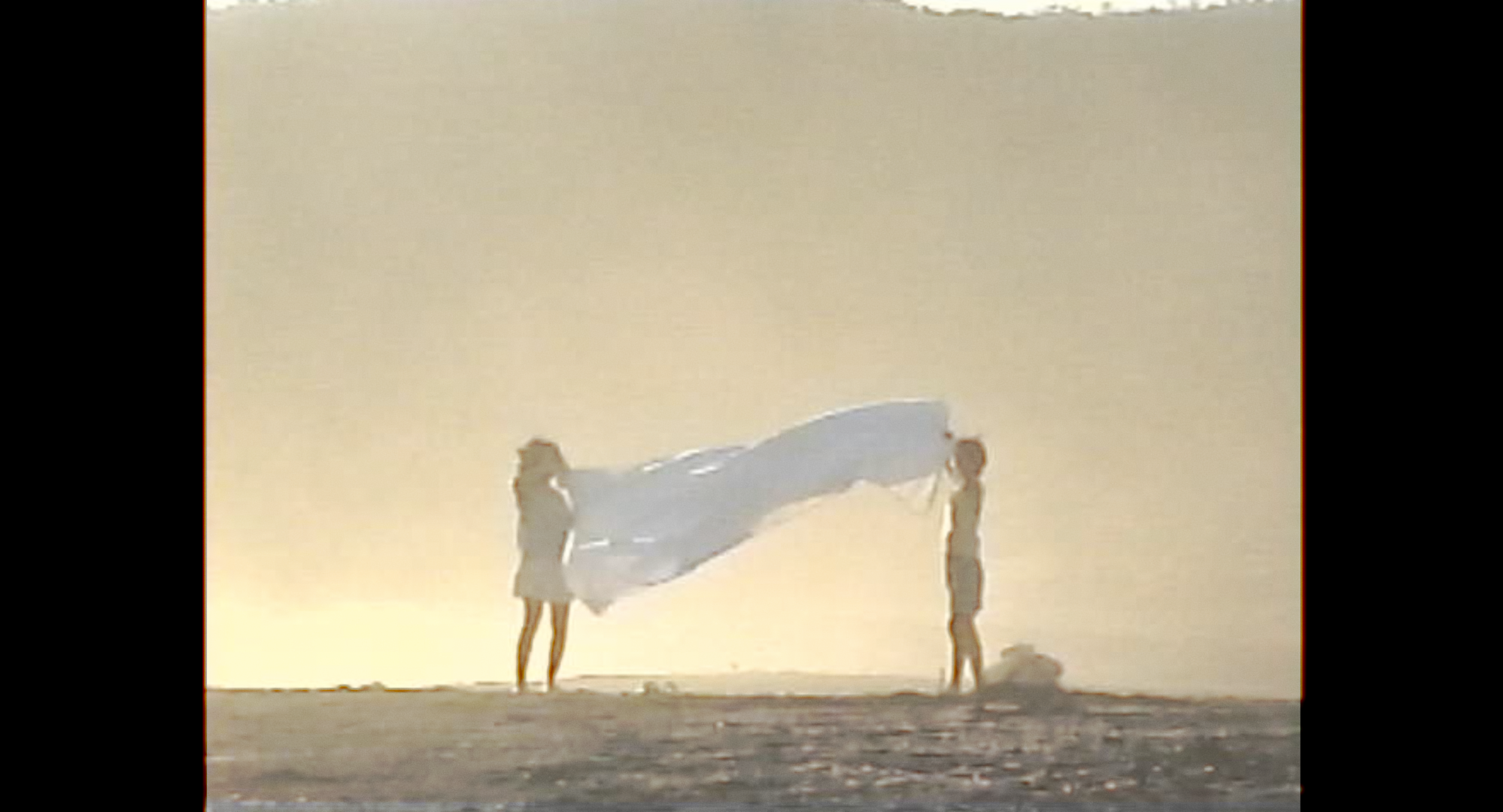
In a similar vein, the short film Elevación by Gabriel Esdras, part of the Fiction Short Film Competition in Morelia, filmed in an alarmingly dystopian Guadalajara, sets its story in a futuristic Mexico that reflects the most latent fears of its present: a country fully militarized and enveloped by a fascist state. Esdras uses elements of science fiction and a remarkable economy of means to demonstrate that current social issues can be tackled with the most effective tools of cinema – those that don’t rely on pedagogy but on the rebelliousness of risk, even if it is not entirely successful.
However, there are also works that do not require a transcendent or “important” political or social message to justify their existence, based on an idea of humanism that centers on human interaction, something perhaps more essential to rebuilding the social fabric. For example, in El hijo de su padre, filmmaker Aarón Fernández explores the difficulties of fatherhood in a modest tone, presumably close to his own reality. In a neat and austere manner, Fernández presents a man (Daniel Damuzi) literally caught between two forms of fatherhood: one seeking reconciliation with a painful past and the other attempting to close the generational gap with his young son.
If Fernández’s film is structured around fatherhood, FICUNAM premiere La eterna adolescente, by Guadalajaran director Eduardo Esquivel, is structured around motherhood. In this case, a family gathering on Christmas Eve is used as a catalyst in which family bonds are repaired within the tradition of the classic Mexican family melodrama, but with contemporary variations and adaptations that give it a distinctive identity. Esquivel sees in photographs, videos, and songs (“the little things in life,” as the Amanda Miguel song that resonates throughout the film says) a form of connection that maintains family cohesion, even when its members have grown distant both physically and emotionally, as is the case with Gema’s family (Magdalena Caraballo).
La eterna adolescente features a plurality in its characterizations that modernizes the family image inherited from the classics built by Ismael Rodríguez, Alejandro Galindo, or Juan Bustillo Oro. The same image that Felipe Cazals, Arturo Ripstein, Jorge Fons, or Jaime Humberto Hermosillo dissected, or even destroyed, so that later filmmakers like Maryse Sistach or Benjamín Cann tried to piece it back together, leading up to the image of the contemporary Mexican family seen in films like Tótem (2023) by Lila Avilés or Sobreviviendo a mis XV (2023) by Chava Cartas. With an Almodóvarian flair, Esquivel expands the family album of Mexican cinema.
The almost documentary-like everyday life seen in Fernández’s films and the colorful realism of Esquivel’s work tap into a subtle yet persistent tradition among several contemporary filmmakers such as Claudia Sainte-Luce, Fernando Eimbcke, and Samuel Kishi. Despite its intrinsic value, this everydayness rarely finds appreciation among mass audiences, who seek in fiction “things happening,” or in other words, situations beyond the ordinary. Whether it’s a caretaker who finds refuge in dance sessions in Hasta que el alma baile by Karla Oceguera, a brief summer encounter in the province in Aguacuario by José Eduardo Castilla Ponce, the birth of envy in Viaje de negocios by Gerardo Coello Escalante, or the tense and enigmatic drama separating two young siblings in Intentos fallidos para abrazarse by Sergio Díaz Ochoa, it’s not uncommon to hear emphatic claims that “nothing happens” in these short films, when in reality what unfolds in all of them is none other than life itself. Now, is there cinematic merit in such an endeavor?
As an example of such merit, it is worth mentioning what is presented in Say Goodbye by editor Paloma López Portillo, who in her feature debut follows the members of the Vargas Carrillo family living in Salt Lake City. López Portillo structures her film as a succession of small episodes, rigorously filmed and composed, some of which could very well have come from the pages of Raymond Carver, particularly the sequences in which Sol, the family’s daughter, connects to her virtual psychotherapy sessions. In Say Goodbye, the ominous ghost of disappearances in Mexico appears subtly; not explicitly stated like in the works of other filmmakers and documentarians, but rather manifesting the idea of absence in every sequence of the film. What disrupts the family’s life is the disappearance of the father, whose ghostly presence powerfully fills the silences.
If the absence of the father is palpable in Say Goodbye, in Deshilando luz by Valentina Pelayo, the aim is to make amends for the physical absence of a mother by using memories contained in objects and images to explore her identity and, perhaps, to get to know her better through the traces left by death. Deshilando luz is a film essay that seeks to be assembled like a garment. That is, by carefully stitching together each vignette that intertwines the filmmaker with her mother, the textile artist Elsa Atilano. If the mother works with thread, the daughter works with the frame, a tactile idea of the image that revives the absent and tries to give meaning to loss. Deshilando luz has conceptually ambitious ideas aimed at freeing cinema that relies on archival images and family environments from paralysis and formal laziness, embarking on a search not so much for authorship but for a new methodology to approach the image.
We could say that cinematic merit is not granted by the response of audiences or critics (a sector increasingly difficult to identify) but rather by the reach these explorations have in creating a work that grows to become personal and distinctive without needing to resort to the traps of artifice or fall into the seduction of aesthetic standardization to define what is “authorship.” For example, in Chicharras, the second feature film by the Oaxaca-born filmmaker Luna Marán, a “collective authorship” is proposed over an individual one. In that sense, Chicharras belongs not so much to its filmmaker as to its community. With a certain spirit reminiscent of the French filmmaker and anthropologist Jean Rouch (Chronique d’un été, 1959), Marán lets members of the community act out before the camera a situation that affects the entire population of San Pablo Begu, who must decide whether to accept a project that could impact the life of the whole town. Although of a choral nature, Chicharras focuses its attention on two municipal workers, the councilwoman and the topila, whom we approach in their different facets.

In Chicharras, the lack of a certain formal rigor is sought to be compensated by a unique sense of familiarity and warmth, where dramatic tension is resolved through camaraderie, such as in the opening scene where a group of villagers block the passage of construction workers. Marán and her community seem to refuse to create a violent situation that would feed any kind of morbid fascination. On the contrary, each of the people (not characters) in the film weaves a network of family members and other community members, which is well illustrated in scenes like the one where a teacher explains the menstrual cycle to her students. There is, then, a specific point of view from which the film positions itself, combined with brief interludes that, for lack of a better word, we might call “experimental,” in which the filmmaker’s decision inevitably emerges.
In the most classical tradition of direct cinema, Un lugar más grande by documentarian Nicolás Défossé takes us into the town of Tila, in the southeast of Chiapas, to show the difficulties faced by villages that adopted self-governance after expelling local police and municipal authorities. With a more academic than artistic approach, Défossé focuses on conveying a sense of collectivity based on the identity of the inhabitants of the Maya Ch’ol region, exposing not only a political aspect but also a concern to present beliefs and worldviews without the aim of folklorizing or exoticizing. The documentary primarily has a social interest, even if from time to time it presents certain interludes that could be called “lyrical,” thanks to the notable work of Chiapas cinematographer Xun Sero.
Both Chicharras and Un lugar más grande try to position themselves in a space where authorship is ceded to the groups presenting their self-managed struggles, but inevitably there is intervention – from the decision to film at a specific place and time to the selection of what remains in the final cut. Can a genuinely collective film then truly exist, or at least one that completely dispenses with a personal vision?

A tentative answer is outlined in Sex Panchitos by the “resurrected” documentarian Gustavo Gamou, who, after eleven years of absence following the well-received El regreso del muerto (2014), delves into the neighborhoods and colonies of Tacubaya in Mexico City to show that rebellion and danger also face the harsh onslaughts of time. Without any condescension, cynicism, or irony, Gamou structures the documentary around three members of the gang Los Panchitos, who in the 1980s terrorized the city by committing various acts of vandalism and crime.
Declared enemies of then-president José López Portillo, Los Panchitos became urban icons with a mythology that had already been explored during their heyday by filmmakers like Gregorio Rocha, Sarah Minter, and Andrea Gentile in countercultural cinematic milestones such as Sábado de mierda (1988), Nadie es inocente (1986), and La neta, no hay futuro (1987). Gamou shows how, nearly forty years after their peak, Los Panchitos are now family men, grandfathers, or reformed members of civil society and active participants in a vibrant community. In one of the most moving sequences of the documentary, one of the gang members breaks down in front of a Christ figure, imploring for forgiveness. “Forgive me, papacito!” he says through tears while the camera watches him almost as impassively as the Christian image that looms above him. The camera becomes invisible to everyone appearing in the documentary, and it is this discreet presence that allows something more real to emerge. Or perhaps it is merely part of the act of an urban group accustomed to a specific kind of performativity. Where once there was criminality, now there is civility, community integration, and living off the fiction they themselves created.
Meanwhile, in the well-trodden borderland between documentary and fiction, La raya by Oaxacan filmmaker Yolanda Cruz presents the arrival of a refrigerator, an external element, as a catalyst that triggers various storylines. Cruz seeks to replicate an experience that could take place in any of the many towns known as “la raya”: the impossibility of seeing a future in community life, the deception of promises of prosperity that never arrive, and the lives of parents, wives, and children unfolding without the presence of many of the working-age men.
Working with the community of Cieneguillas under a cooperative scheme, La raya uses fiction as a sort of talisman that attracts the inhabitants by offering them the opportunity to portray versions of themselves or of others they know. La raya maintains a familiar and pure spirit that is, to some extent, naive – judging by the amazement with which it observes a strange element like a refrigerator, not because of its mechanism or appearance, but because it allows the characters to reflect themselves and thereby gives rise to the intrusion of fiction’s own mechanisms, such as the presence of professional actresses like Mónica del Carmen, or the fact that it follows the guidelines set by a script and a director.
Fiction seems inseparable from a certain sense of centralized control in a single person, from which the documentary genre is not exempt either; however, there are certain examples in which “authorship” can be genuinely shared by a group of people, beyond their concrete contributions, in the creation of a work that belongs to no one. Lázaro de noche, which competes in both film festivals, joins the rest of Nicolás Pereda’s filmography, in which, together with his group of actors, he works on the increasingly nonexistent boundary between the real and the fictitious, where the notion of authorship also becomes blurred. In one of the opening sequences, Gabriel Nuncio plays an alter ego of Pereda himself who, pompously, tells the actors that the audition for a role begins the moment they “cross the street to reach the meeting point,” and that their process consists of allowing the character to become the actor. With a certain touch of self-irony, after a decade Pereda continues to maintain a playful nature that, although scattered, hardly ever repeats itself, despite regularly working with the same ensemble of actors.
Starting from a “plagiarism” of Aladdin (and perhaps a bit of Macario (Gavaldón, 1960) and some of his previous films), Pereda’s cinema is a youthful one that is becoming aware of its own maturation, with which an inevitable metamorphosis arrives. This transformation materialized in the figure of the actor Lázaro Gabino Rodríguez, who has written extensively about acting and has practiced it critically and playfully in the works of his group Lagartijas tiradas al sol. Both the filmmaker and the actor go through a process of perpetual rehearsal, an endless sketch that finds its concreteness in its apparent lack, which makes one think that Pereda’s cinema is deficient when, in reality, his “improvisation” is the result of a rigorous process of planning and reflection that wishes to go unnoticed.

In a similar vein, the Mexican artist Miguel Calderón creates a peculiar playful exercise with Ajuste de pérdidas, where we meet Pedro, an insurance adjuster who decides to abandon that profession and dedicate himself to the contemporary art market. Equating the worlds of art and insurance, Calderón finds a very pertinent similarity: the estimation of value in that which cannot be calculated by well-defined parameters. It is precisely in speculation that Ajuste de pérdidas articulates its discourse, which also touches on the violence that has plagued the country for decades. Invoking Orson Welles’s dialogue on truth and lies in F for Fake (1974), Calderón’s film plays with notions of reality and fiction until the very last moment, leading the viewer to question whether everything they have seen and heard during the previous hour was a rehearsal for a film – a perfectly calculated risk by someone who thinks more like an adjuster than an artist.
Where Pereda and Calderón explore the real and the fictitious, as well as the acting process, the Tijuana filmmaker Diego Hernández shows that this boundary is broad enough to contain entire pieces of life. After Los fundadores (2021) and Agua caliente (2022), Hernández continues working on a slightly fictionalized version of himself, in the manner of filmmakers like the Italian Nanni Moretti, in Un techo sin cielo (A Skyless Roof). The film presents the filmmaker living with hypersomnia, which he incessantly seeks to cure with the help of a friend who is staging a play and who, in turn, cannot sleep. From these sleep-related conditions (which subtly evoke Apichatpong Weerasethakul’s Cemetery of Splendor) Hernández creates a personal imagery using clouds, dogs, plants, and various other seemingly meaningless things, as Diego’s friend puts it, to pose a legitimate question: why do we consider ourselves so irrelevant? Hernández’s work may seem austere and even solipsistic to some, but here there is no ego or pretension of grandeur, only honesty and transparency capable of permeating any false dichotomy between reality and fiction. It is a matter of naturalness. As the painter Paul Cézanne famously said, painting is more than slavishly copying the object represented; it is capturing harmonies among various relationships, and Un techo sin cielo is nothing more than that: the harmony that unites life and cinema.
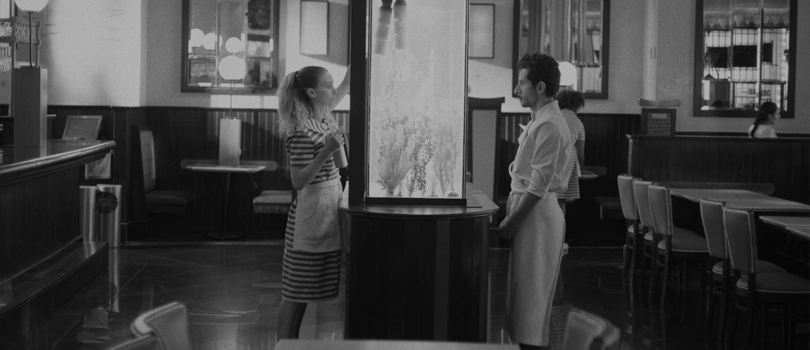
At the opposite end of the spectrum, it seems that filmmaker Alonso Ruizpalacios fervently wishes not only for his creative process to be seen but also celebrated and praised for its overflowing displays of virtuosity and precision in La cocina, a film in which it is tempting to think that the protagonist, an impulsive chef at a New York restaurant (played with a flourish of neurosis by Raúl Briones), functions as an alter ego of the filmmaker himself, sharing with him several dilemmas and conditions.
In La cocina, Ruizpalacios employs pristine black-and-white cinematography, stages two long takes that vividly convey the stress of chaotic days in a kitchen, and adds to his list of collaborators actress Rooney Mara, who plays a merely functional role with little room to maneuver, because the main star, before the film or any of its elements, is the filmmaker himself. At least there is some sensibility in not choosing a high-end restaurant and instead opting for an ordinary one to develop the story, which makes the aspirations of the chef played by Briones even more pathetic. However, La cocina is a film of tantrums, outbursts, and impulses that behind its visual and narrative stridency hides the insecurity of a filmmaker overly concerned with proving his abilities. Here, “authorship” becomes a yoke of excessive and frustrating self-indulgence.
It is worth mentioning a middle ground between the stylized histrionics, both actorly and visual, of La cocina and the naturalistic fiction of Lázaro de noche or Un techo sin cielo. In the short film Spiritum, filmmaker Adolfo Margulis returns to the rehabilitation center where he was hospitalized to fictionalize his own experiences using both professional actors and real patients. The distortion in perception and the disorienting environment of the rehab center is sharply constructed by Margulis, who, together with his actors Andrés Delgado, Noé Hernández, and particularly Juan Luis Medina, and filming in 35mm format, creates a distinctive vision of a personal experience. Here, authorship does not function as a predetermined search but as an incidental discovery.
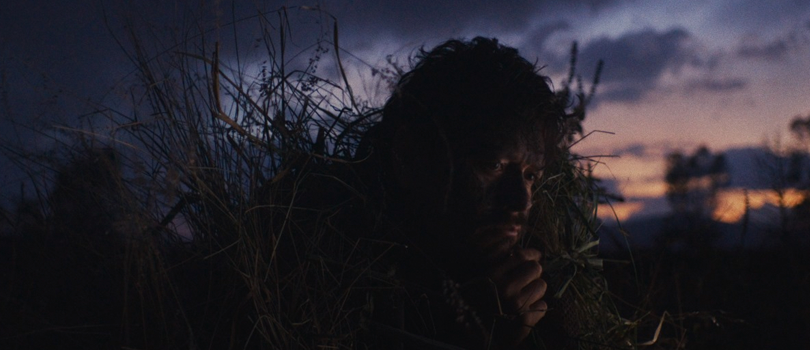
There is a final group of films that, rather than focusing on the possibilities of personal authorship, consider that “authorial” freedom is exercised within, and beyond, the confines of diverse cinematic genres. For example, in Cuento de pescadores by Edgar Nito, there is a highly volatile mix of elements, creating a singular work that struggles to maintain cohesion but that, despite its excess, produces an atmosphere and rhythm rarely achieved in contemporary Mexican cinema.
Nito draws from local folklore and mythology to construct a mosaic of stories set around Lake Pátzcuaro in Michoacán, where the presence of a malevolent entity of Purépecha origin known as La Miringua materializes humanity’s darkest impulses, associated with lust, desire, death, and fear. Nito co-writes the script with Alfredo Mendoza and reimagines a popular legend using specific traits from both the horror genre and the most extravagant melodrama (in the manner of La noche de los mayas (1939) by the great Chano Urueta) as well as horror rooted in myths and folklore, such as Muñecos Infernales (1961) by Benito Alazraki. Showing an ambition fueled by the success of his previous film Huachicolero (2019), Nito sharply oscillates between genres and stories with the same passion and impulsiveness as his characters, making Cuento de pescadores a story with rough but singular strokes that do not seek to incorporate contemporary genre trends but rather to integrate into well-established narrative and cinematic traditions.
A similar sense of integration permeates two films that incorporate local and, to some extent, “ordinary” settings and characters, openly using fantastic elements to amplify their narratives beyond any overt message. In the short film Impronta, by the young filmmaker Rafael Martínez García, a futuristic Mexico is presented where a service allows people to relive three minutes of their lives up to three times, and this device is used by a woman to remember the last time she had contact with her daughter before her disappearance. Despite its limitations, the short fictionalizes a topic sensitive to a painful and current affliction of the country from a place that doesn’t come off as opportunistic, balancing its cinematic device with a certain political resonance. Impronta places its characters at the center rather than its message. Fiction serves reality and empowers it instead of merely reproducing it.
Finally, in Gizmo, by filmmaker Everardo Felipe who is from Guanajuato, a multi-referential mythology is created that ranges from Mexican writers and filmmakers such as Guillermo Fadanelli and Amat Escalante to True Detective and Thomas Pynchon, while retaining its own uniqueness. Shot in different formats, and being a film that grows with each viewing, Gizmo is more than the sum of its references and, like Impronta or Cuento de pescadores, does not seek a mere imitation of the styles or tropes of its inescapable influences but rather starts from them and organically assimilates those local forms and gestures.
Perhaps it is from that assimilation rather than mere imitation that we can think about expanding possibilities for a cinema that seems stagnant if we only pay attention to its biggest or most widely seen productions, but that finds authorship in the smallest places, where everything excluded by money and visibility fits; a cinema that defends itself and exists on its own terms and not from an external, commercial, or political demand, though indecisive between the hunger for recognition and the defense of a personal vision. A dilemma in which many films succumb and few emerge unscathed.
“Cine mexicano 2024-2025: La indecisión de la autoría” was originally published in Revista Taipei. Original text by Jorge Javier Negrete Camacho.
Jorge Javier Negrete (Mexico City, 1989). Clinical Psychologist. Currently studying Social Anthropology. Co-founder of the website Butaca Ancha, co-editor of the print magazine El Cine Probablemente and of the book Espectáculo a diario, which accompanied the Mexican popular cinema retrospective at the 2023 Locarno Festival. Co-host of the radio program Derretinas on Radio UNAM. Contributor to various print and digital media. Video essayist.
Translation by Jhon Hernandez. Thanks to Jorge Negrete and the Taipei editorial team for their permission to publish this translation.

 Lucky Star