
Here at Lucky Star, we are always on the lookout for points of contact with other cinephile cultures. We are hoping with this column, Encounters, to establish a dialogue, a line of communication. We get to know interesting cinephiles, critics, directors, etc., all as a way to interrogate our own positions, our own cinephilia.
In this installment, we speak with Carmen Leroi, a young French filmmaker, who we just wrote about in our What is the Modern Cinema column, about the her career so far, her short films, her collaborations with Emmanuel Mouret, and the difficulty of making a feature in France.
How did you get interested in cinema?
I got interested in cinema when I was a child, as I watched a lot of movies on TV at home. There was not one particular film. I remember during my childhood strong emotions in front of very different movies, and lots of American films that were shown on French TV like The Godfather. But I remember strong emotions when I discovered Pagnol’s movies, or Youssef Chahine’s Destiny. But I only realized that cinema could be a job when I was in high school, as we were asked to think about our professional choices. I started to go to arthouse cinemas. I had the chance that in the city where I lived (Caen in Normandy) there are two very good arthouse cinemas.
What was your path toward making films?
The path toward making films has been a little bit tortuous and uncertain at the beginning. At University (still in Caen), I studied film and also law. I didn’t really know what I wanted to do and hesitated between the two curriculum. At the beginning of my professional life, I worked for film festivals, then a production company (bathysphere).
What sort of work did you do for film festivals?
Different kinds of work. Film selection, yes, but also organization, and even photo reporting… We even organized and programmed with Vincent Poli, a film critic and programmer, a film festival in Normandy for 3 editions between 2019 and 2021. It was very interesting but quite ungrateful regarding the quantity of work. It was demanding.
You did all your studies in Caen? We often hear of the film scene in Paris, but curious what in Caen led to your formation?
I started my studies in Caen, but actually finished it in Paris, and started my professional life there. There is no special cinema scene in Caen that I know of, even if there are a few people doing interesting work. But, yes, it’s more in Paris that things happened for me (and for lots of people, even if there are incentives to produce films elsewhere). In France, compared to most countries, we have still public policies to support cinema and culture in general, so there’s a territorial network of arthouses cinemas all over France, as well as film festivals, film education programs, universities, etc. (but like everywhere else, these are sadly under threat nowadays). So it makes it maybe easier when you’re young to hear about film, to build a film culture or consider a career in film industry if you’re a provincial.
How did Les belles portes come about?
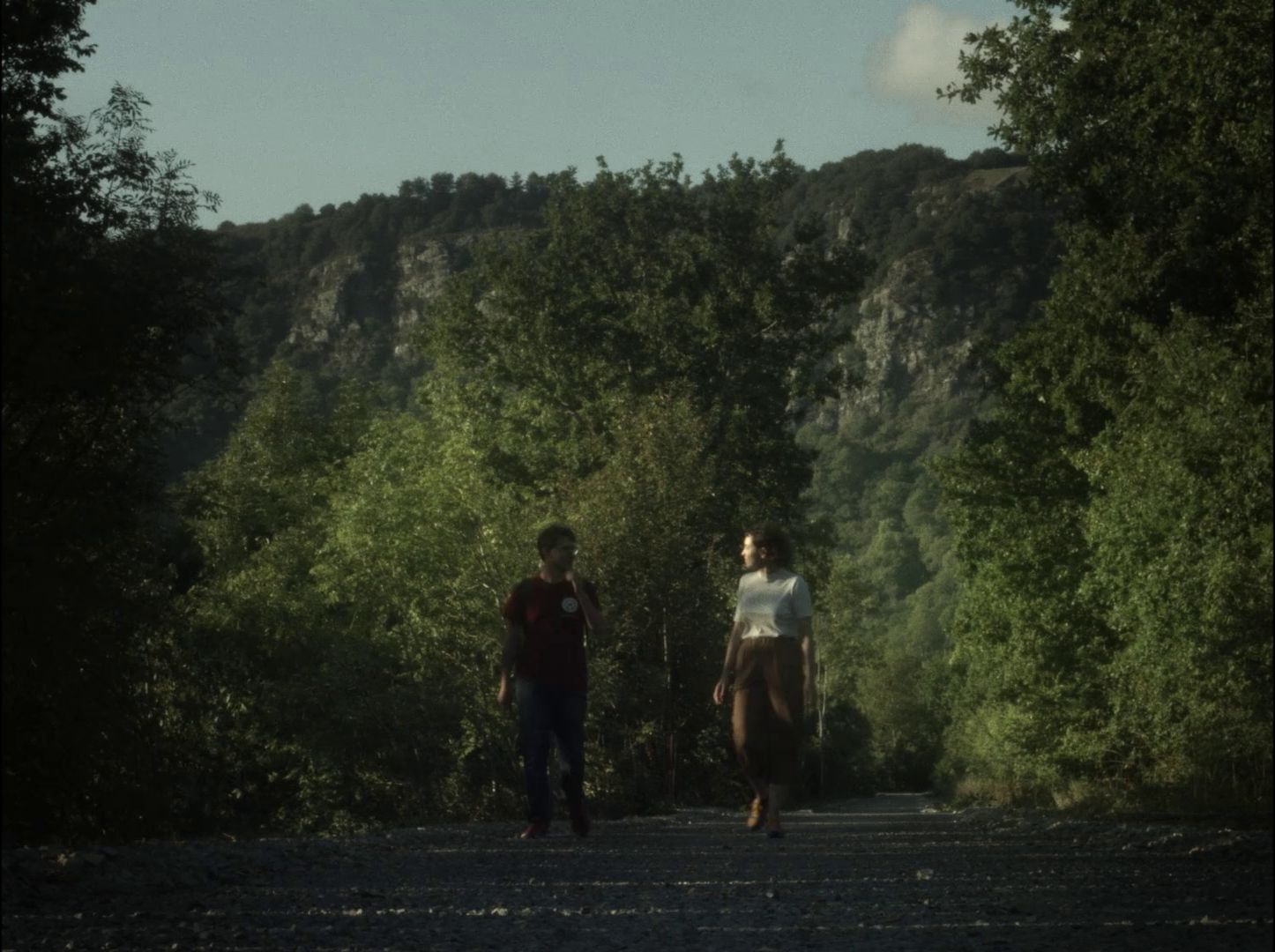
I was happy to meet very interesting people at this time, but also unhappy and unsatisfied of what I did so I started to write screenplays. Then in bathysphere, I had the chance to meet important people to me, as Léa Baggi who is my producer now. And I could borrow cameras. And as I also had done a little bit of photography, I had an interest for making images. That’s how I made my first short film, Les Belles Portes which is very improvised (no screenplay), that I filmed myself during a summer, with my relatives and friends in it. It was shown at Belfort film festival and Côté court film festival, two important film festivals in France, so it helped me for what follows.
Was there a specific image that drove the conception of the film? It is a family portrait, but it’s a bit elusive.
There wasn’t a specific image. I borrowed a camera because I wanted to do location scouting for another project, that I finally gave up.
That was during a week of vacation that I spend at my father’s place, as we really had to take care his neighbor’s cat (with Vincent Poli, who was by boyfriend at this time). I imagined a thin canvas about a relationship between a brother and a sister. Maybe it sounds a little bit weird that a couple plays a brother and a sister, but I think I wanted to do a fiction, not a documentary, even if lots of situations in the film are almost documentary. I first had in mind some scenes that I filmed myself, with the help of Vincent (the arrival of the brother at the station, for example). I also brought the camera when we were taking a walk in the countryside (I made a lot of images actually), and filmed situations of our daily life but asking ourselves to act as the characters.
Weeks later I started to edit it, without knowing if it would be a proper film. I am glad Louis Séguin offered me to help me with the editing. We first edited a film with holes in it, then I returned in Normandy to shot missing scenes I imagined while editing. I also asked my piano teacher at the time to write a tune. For this film I think I was driven by the desire to make a film without really knowing what to film… There was no plan.
What were some of the shots you went back for?
I don’t remember everything, but for sure the haircut scene, the Chinese lesson scene, the scenes with my father and the teenage girls.
From Les belles portes to Pour Elsa, there is a leap in production level. The scope is larger, the crew involved is larger (you’re no longer doing the cinematography on your own). Can you talk a bit about how you navigated this larger production?
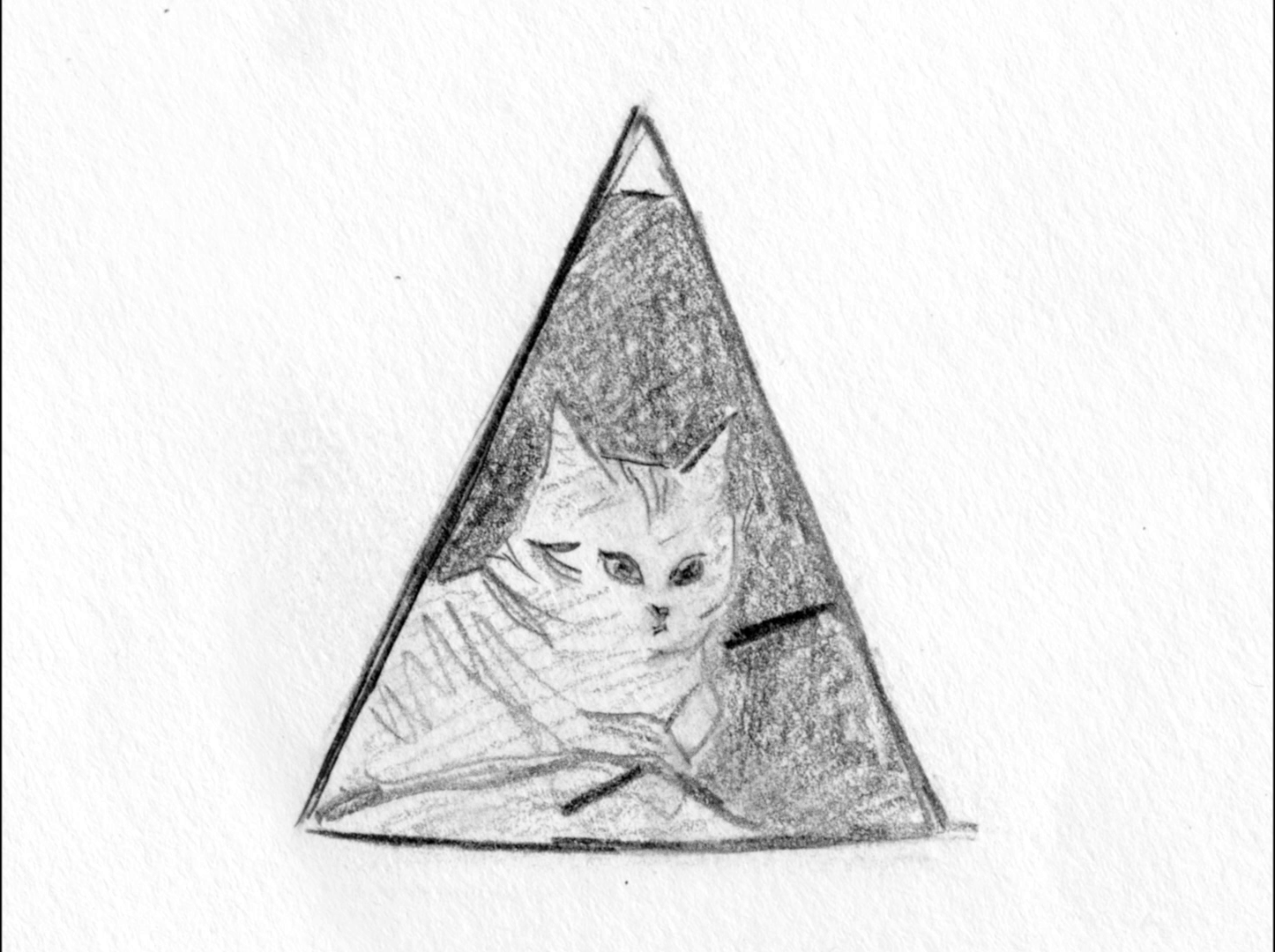
Nothing was very planned or thought out. As Las belles portes was selected in festivals, this gave me confidence to consider a “bigger film.” It was mainly a self-produced, though we did get a few funds from the university that Léa Baggi (the current producer I work with) was studying in. At this time, I just gave up another project that had been in my thoughts for a while, trying in vain to get funds. With the encouragements of Louis Séguin, I imagined a simplest story than the one I had just abandoned. At that time I was taking both piano and yoga lessons and this gave me some ideas.
Both films deal with disappearances, both films have characters named Elsa. I theorized that the Elsa in Pour Elsa was an older version of your character in Les belles portes… and when Vincent Poli’s mysterious young man appears he could’ve been the Jacques of the earlier film! Why does the idea of the disappearance dominate these two films? Why two Elsas?
Thank you for your theory, it’s pretty and interesting indeed. I think the idea and mystery of disappearance interested and questioned me at this time and I remember indeed having a bit of fun making bridges between the two films, but not really knowing what they meant. Elsa is also a name close to Elise from Beethoven’s Letter to Elise.
For this film, I started with a situation : a girl hears her neighbor playing piano and it gives her the desire to play it too. The neighbor opens her door for her to use her piano, so she opens another world for her, before disappearing mysteriously. What interested me also was to represent an idea and feeling that in big buildings, different lives coexist very closely but with few interactions. And to show a kind of relationships to others. How finally you can be linked, and grateful to people you barely know. The film is narrated in the present but I think I imagined it as it was a souvenir… with gaps and blurred lines. I also wanted to film a neighborhood with its own special atmosphere. The film is shot at my place (also for budget reasons but not only). This is in the 13th arrondissement of Paris, where I’ve been living for several years, a quite densely populated district with a particular atmosphere.
At one point, Alice reads Riad Sattouf’s Les cahiers d’Esther which are books done in collaboration with the unknown Esther… First, how did you find the girl who plays Alice? But more importantly how did you approach the question of how to film childhood?
I asked a piano teacher to spread my casting announcement looking for a child playing piano amongst his pupils, and I actually saw both boys and girls for the role. I didn’t ask myself the question of how to film childhood (I don’t have a precise idea about what is childhood actually) but more how to portray and stage this specific character of a 10-year-old girl that I imagined. So it was more a simple and concrete question of placing the camera to be at her size. But maybe if I have to think of it today, I could say that there is a quality of observation with childhood. I guess that this could be an idea of what I remember as a child, observing a lot, having lot of time to be bored and observe.

What were some of the considerations of working with this young girl? Where there any particular challenges of mise en scene? Most of the film is very composed, the images are very still, but there’s a shot late in the film where Alice and her cousin are talking about Elsa’s disappearance where you switch to a handheld camera…
I said before that I imagined Pour Elsa as a quite simple story. But fortunately, I didn’t realize that shooting within this small economy with a young girl (and also a dog) was not that simple. For this not to prevent her to go to school, or be tiring for her, the shooting was very fragmented. We shot maybe eight days in total, only when she could be free. So the first day was in April and the last one in July!
It was possible to do it that way because it was my place. In a way, it was good that I could think of the film between the different sessions, but in another way it was quite heavy… So, as the only scene which wasn’t precisely written in the script was this scene of a little debrief in the park, we improvised it while doing a picnic to celebrate the end of the shoot. I wasn’t even sure we could use it… but we did. Regarding the mise en scene, this was my second short film, but the first with a proper screenplay and a team. I was learning a lot, it was quite instinctive. I don’t remember all the thoughts I had… except maybe that I indeed had a taste for composing frames.
You’ve made a few short films now, but can you tell me about the life of a short film in France? I’ve noticed, quite anecdotally, that there seems to be much more freedom in making longer shorts, or even mid-length films in France. In the United States, festival programmers always advise ‘shorter is better!’ Have you noticed that there’s a greater acceptance for these longer shorts in France? What are the avenues for short films and mid-length films to be supported and exhibited? Festivals? Streaming?
Maybe it’s a little bit more welcoming in France than in the States for mid-length films, I don’t know. But the same rule about the shorter the better works. TV channels that buy short films prefers shorter films, film festivals also. But we have for example Festival du cinéma de Brive, a very good festival dedicated to medium films. Actually other good film festivals accept mid-length films. But it still is hard, as when they take a medium film, maybe it’s in the place of two or three shorts.
I feel like you’re surrounded by a small of group of interesting filmmakers yourself that embody this trend, people such as your editor Louis Séguin (Marinaleda), Laura Tuillier (Le coeur ailleurs), Hugues Perrot, Quentin Papapietro… I also remember several years ago an interview with the former editor of Cahiers that bemoaned that young people were unable to make films until they were closer to 40. Do you find that your generation is more agnostic regarding making feature length films, or that it is just simply too hard to make one these days? What do you make of this current situation?
No, we are not. We all have feature films in production, for some for several years. But it’s a very hard and long way even if it’s maybe easier than in the United States. It’s very competitive, and hard to get funds especially if your film is not about a social subject easily « pitchable » and digestible.
With every film you’ve leveled up in terms of length and production and ambition (maybe you don’t see it that way)…
Sans regret was obviously a “bigger” short, regarding to its duration, locations, the team size, the story and its stakes, and because it was the first time I worked with professional comedians that long. It was bigger regarding the budget also. Then with La Réputation and also a new one which is currently in post-production, I got back to “smaller” stories (and budgets…), which doesn’t mean it’s less ambitious.
How did you come across the Lisa Tuttle story? What made you want to do an adaptation?
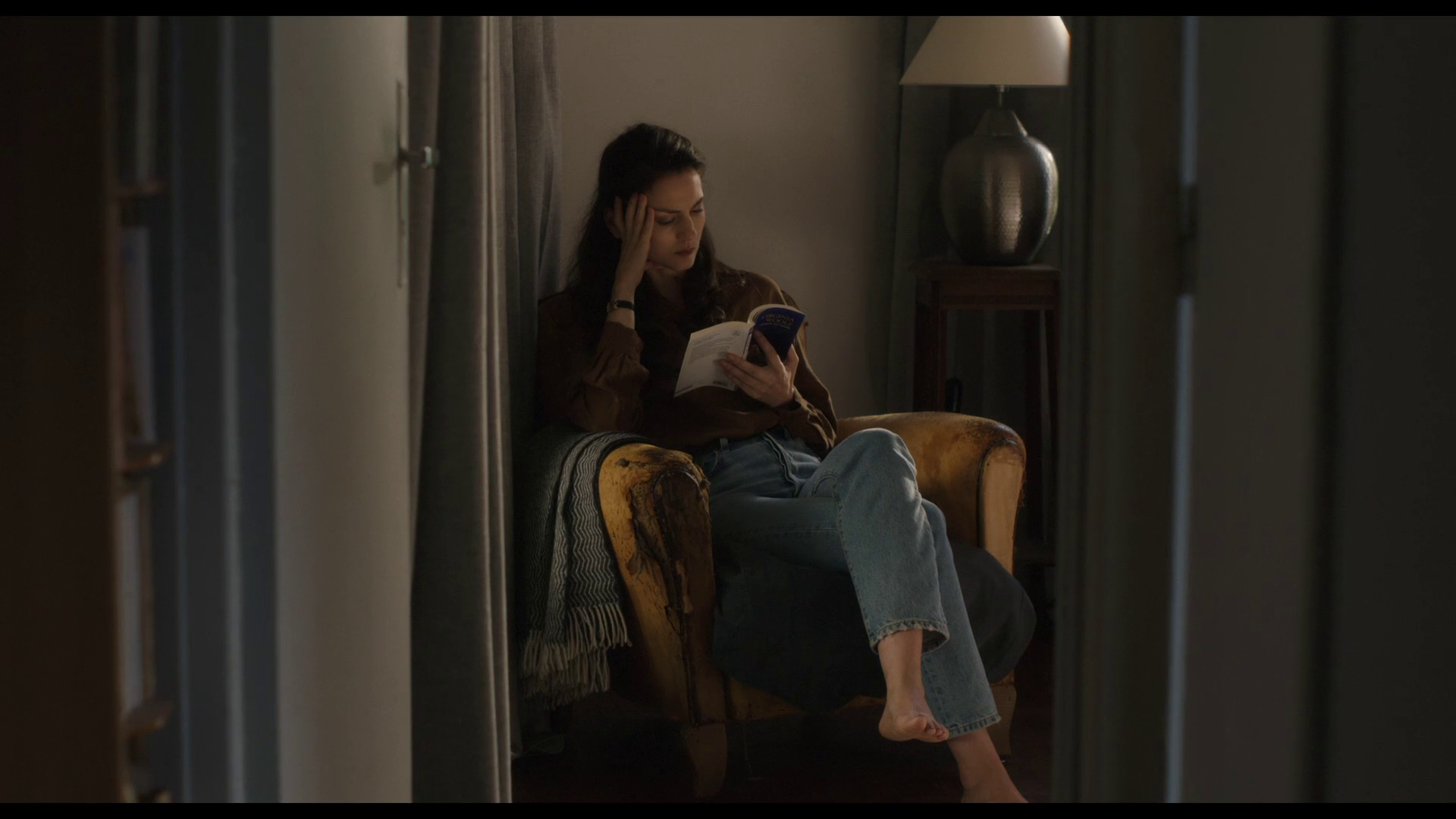
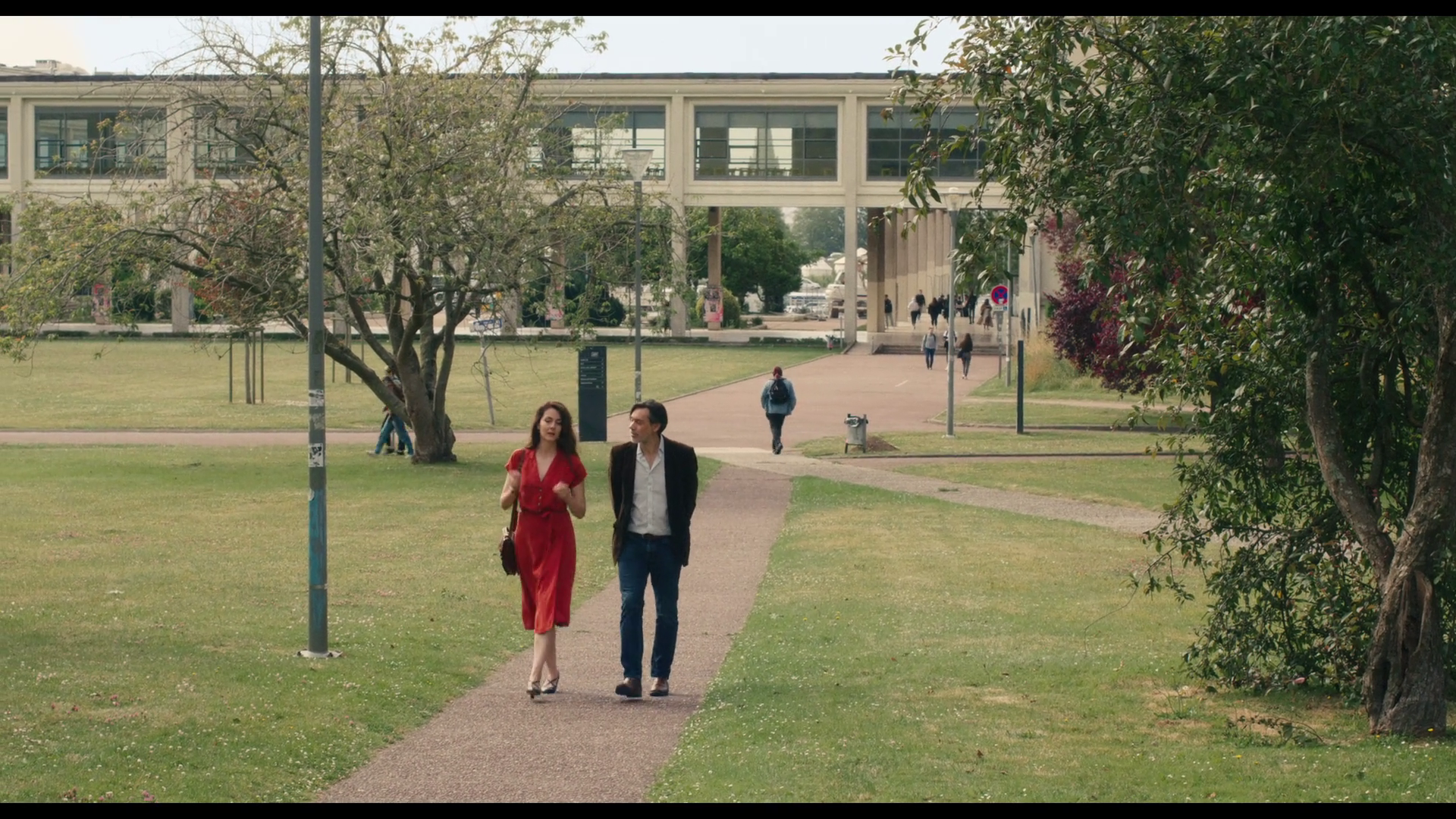
The Lisa Tuttle short stories (a lot deal with women’s issues) were recommended to me by my ex-boyfriend Vincent, and I really loved this one “No regrets,” which had less fantasy and horror than the others. The fantasy in “No regrets” is more metaphorical than physical or really weird. Also I had seen a few years before a film that I really liked, Suite armoricaine, by Pascale Breton, that took place in a university in Rennes, French Brittany, showing similar (but also very different) issues. So maybe, I loved the perspective of filming the atmosphere of a campus myself. And I really loved this university in Caen I’ve studied in. It doesn’t look like a typical (and Parisian) French university like the Sorbonne, but more like a smaller American campus (at least those I see in movies), with concrete buildings and lots of green spaces. As the short story originally takes place in America, that made sense…
But the main reason about what I wanted to adapt the story is because of what it tells, that existential questions of choices… And how it’s told, in the point of view of a woman who gets overwhelmed by what happens to her because she is someone who moves forward and never really realized before she could have had another life, or regrets. This is not, in the end, that she has regrets she denies (like having or not having children), it’s just that she is gripped by an existential vertigo… And it is also about the difficulty for a woman to have both an ambitious artistic career and a family project. Which I feel a lot.
How did Emmanuel Mouret get involved? He hasn’t acted in several years and the Richard on the page seems far away from Mouret’s screen persona…
I had just discovered his films a few months before and loved them. Indeed the character of Richard is more secure than the clumsy ones he has played… but I was looking for someone with charm and sensibility. This character could have been more ambiguous, more mean… but I didn’t want it that way. I wanted that we could really believe that they have been a couple in the past, and that they could have still tenderness between one another, in order to add a little melodramatic touch. I am not sure how well I succeeded in representing this idea that she’s afraid of being taken over by him, and she (and we) is (are) suspecting that he could be at the origin of these visions, like a sorcerer somehow… but that this sorcerer doesn’t look like one seemed to me more troubling. Also because how men can be “bewitching” to women in everyday life, arrange for women to be there for them, and this doesn’t take the form of malice… I don’t know if that’s clear…
Mouret’s casting makes more invisible the insidiousness of the character. In the short story, Miranda’s running monologue suggests that Richard has orchestrated all the things that are happening to her, from being offered the residency to the specific house, etc. But because Mouret’s presence is so affable, Richard becomes a more complicated character. However, what you say is true – his insistence that she could’ve had the baby and still done artistic work is a version of “bewitching” as you say, to get what he wants, while still presenting a sort of respectability. The casting of Mouret seems crucial to me in this sense. Perhaps from 1985 to 2023, the facade of this trap for a woman looks a little different.
Yes, the tone of the short story is quite different to my film. I re-read it after finishing the editing and was quite surprised, because the last time I read it was just before writing the script. When I wrote the script I closed the book to forget it, and reappropriated the story. The short story is darker and the relationships between the characters are harder… I wanted to make more tender, and in a way more subtle.

I also wanted to ask about the addition of the other echoes that are added to the film – we have the expansion of the student chaperone (and her own love story), as well as the clip from Satyajit Ray’s The Coward. Why were these inclusions necessary to your design?
In film it’s more difficult to express an inner voice like in a book, so I think I tried to express some of this inner voice and some of the ideas of this narrative voice by associating Miranda’s story with other characters, like the student, and other events, like The Coward screening. I imagined the student character like a mirror to Miranda. Developing this character was a way to express some ideas, associations, comparisons, and to confront Miranda with it. And it was also a pleasure to enlarge this character, to make the campus live through a student character. With the clip from The Coward, it is another association. It was a way to talk about Miranda’s past with Richard. And it is an accumulation. It’s like she’s being harassed by things happening by weird chance. Seeing Richard again, plus seeing the ghosts and stumbling across the screening which seems talk about their past lives… But I found The Coward quite by chance. I had imagined another film in the script (Young Mr. Lincoln, a scene where Lincoln speaks at his dead fiancé’s grave), but you have to get the rights and it’s often hard and expensive. I actually discovered The Coward a few weeks before shooting and the rights holders very nicely allowed us to use it. I also wrote a dream sequence that’s not in the book, but we cut it.
You cast Mouret in Sans regret but how do you from that to writing and directing together in La Réputation ? I hope this does not offend you but the idea of the film does seem like an elaboration of some of his preferred themes of desire, etc. (at the very least we have 25 years of films to make that association)… So I was curious where you saw yourself in this collaboration. How did the set work? What was the partnership like?
Indeed. It does look more like a typical Mouret story than my previous shorts. But I wouldn’t have written it without knowing him. And I guess he wouldn’t have either, or at least he wouldn’t have written it that way.
I think the fact that that I cast him and then wrote and worked with him are related. I cast him because I liked his presence, but also because I loved his films. And I think I was attracted by the kind of stories he wrote, the spirit and the thought of his films, and lots of things regarding his mise en scène. I found a funny note in my journal that I wrote maybe a year before meeting him, saying “I want to write a love story” (but Emmanuel’s films are not really love stories…).
When we met, we discovered that we had similar ways of thinking – about films, art, relationships, working methods. That’s why he asked me very simply to work with him on this script. We also discovered that we shared a pleasure of imagining and telling stories to each other. We actually spent a lot of time doing this: telling each other scenes that could be the departure of scenes or scripts, imagining characters. La Réputation is one of those situations. It turns out what we had both been told a film set story that inspired both of us… We loved the ideas it allowed us to explore: the importance of stories on relationships and desire, the influence of others on our choices. The story was really born of a discussion between us. I don’t believe the film would be the same if it were only his or mine.
But the question of collaboration and co-directing is interesting. We spent a lot of time questioning it. Because there is a suffocating myth around the figure of the auteur. And as I am debuting, trying to make so called “auteur films,” I was a little bit afraid for my ego and career. I know this sounds stupid… but there could be a fear of being seen as someone who follows, who copies, who does have her own regard, all the more so by staging a story that does indeed belong to Emmanuel’s favorite themes. In a way, this fear was ridiculous: it’s only a short film after all. I hate taking myself too seriously. At the same time, these are legitimate questions, all the more so when you’re a young woman debuting, working with a recognized and much more experienced filmmaker. So, a big part of our work for this short was to question that, to sort out the egos on both sides, and to relax. But it’s also true that acting in the film also allowed me to take my place in a way.
Also, I have assumed something; since I have much less experience than he does, I like to think of myself as a pupil. I think that’s nothing to be ashamed of (in the history of painting, there are masters and pupils), on the contrary. Some people for Sans regret told me, “you have to be careful with him on the set, he’s a director, he could tell you how to do things.” But, I felt myself confident enough that nobody could impose on me what to do and, on the contrary, that he could give me advice or ideas is very welcome! As it is for everyone you’re working with on the set. To conclude, I really feel lucky that I’ve met him.
And just a passing thought: Bach learnt music by copying and reinterpreting other’s works. I think it’s too bad that, because the cinema is too big a machine, that it is too difficult to copy films. Only Gus Van Sant really did it with Psycho.
Something which struck me as interesting about La Réputation is the mixture between the world of work, and the world of desire and imagination. In Mouret’s work there usually is not in a focus in these spaces, everything happens when work is over. So I thought your presence in front and behind the camera brings more of the everyday quotidian world to the equation – is this something you thought about?
I don’t know if this is systematic about Emmanuel’s films (in The Things We Say, The Things We Do, there is this story between a film director and his editor, and I love this part), but indeed I think I was much more keen than he was to film the sound editor at work, to represent an idea of what this job is, to give this fiction a little documentary aspect. This was a discussion between us. I think I wanted even more, but in this small economy we were in, this was too complicated…
What were some of the challenges of the film for you, as an actress?
It was very challenging but exciting. I am not an actress, and there was a lot of dialogue… That was the big challenge. But the fact we were both directing the film made it easier. I wouldn’t have done it alone, not with long shots like that … And we did prepare it well, so that big questions were thought in advance.
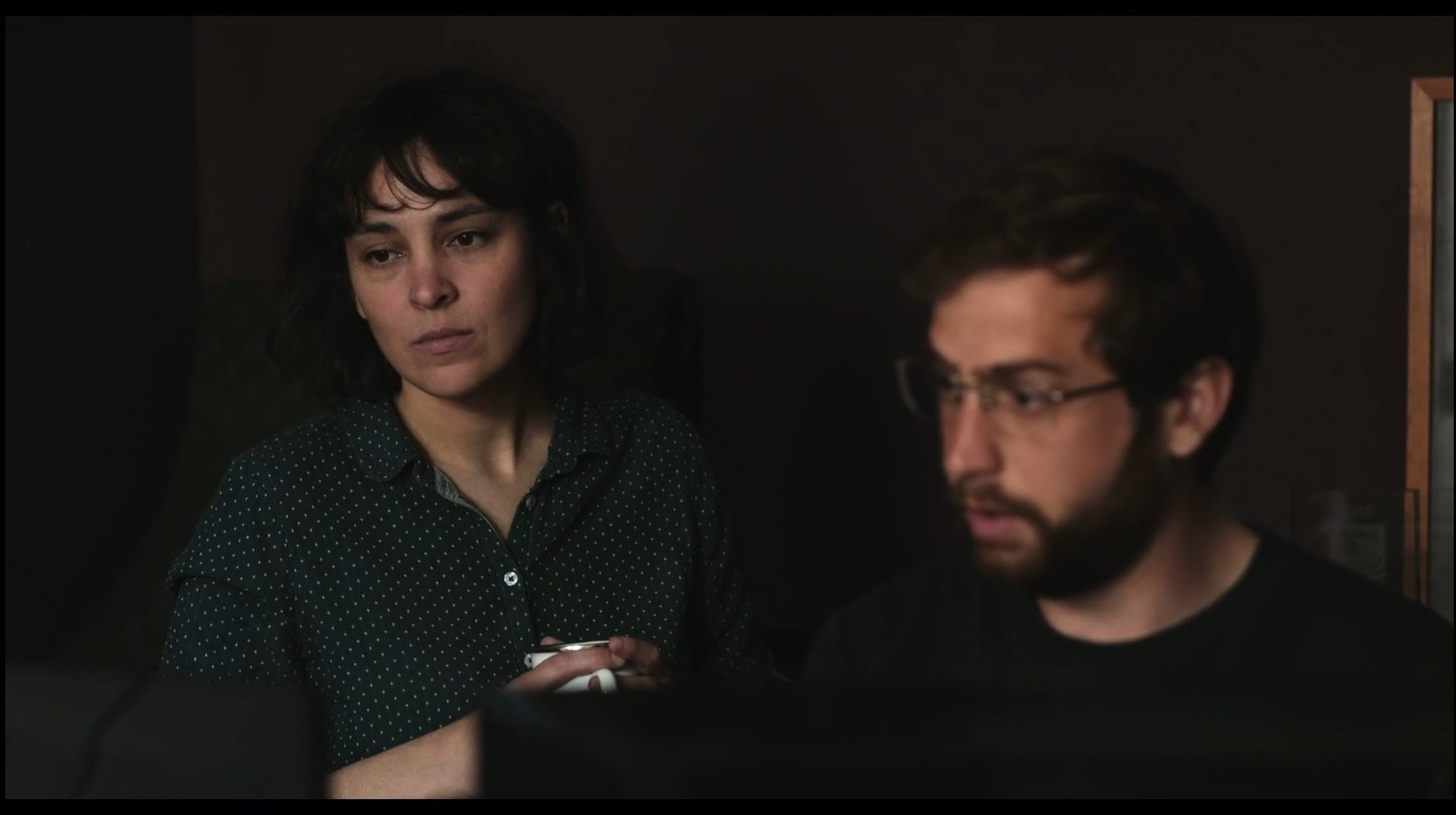
Can you walk me through the timeline of these collaborations? Did you two make the short film first and then wrote feature together? I joked to a friend that Mouret must have brought you in to write all the ghost scenes! Can you talk a little about the writing of this film? Were there any models (I thought perhaps Hannah and Her Sisters)?
Co-writing the feature came first. He didn’t bring me in because of the ghost. When he called on me, he already had a starting point and the main line of the story, which was Joan’s story (who feels very bad because she isn’t in love anymore and doesn’t feel honest with her partner). At the beginning this line was even more tragic for her (but less for him… He didn’t die, just disappeared, so there were no ghosts). As I said before, we enjoyed talking about stories together, and he wanted to try co-writing (he had already co-written Diary of a Fleeting Affair… but quite differently: he adapted a screenplay written by someone else, Pierre Giraud). That’s why he brought me in, and at the time he did it, he wanted to develop parallel lines to contrast with Joan. Contrast in terms of ideas (her two friends have opposite ideas about love and honesty), and in terms of tones also. We worked together on that.
Hannah and Her Sisters was indeed a model. There are parallel stories of three women, and questions of loyal between loved ones (in Allen’s films, sisters, here friends). Regarding the ghost presence, I did encourage him in this direction, but I don’t remember exactly whose idea it was. It’s the result of many discussions we had, and one of them actually took place after we rewatched another Woody Allen film, Alice, where there is also some fantasy/supernatural elements. The ghost is also a way to be deep and light at the same time. The conversation with the dead is very moving for me, but it is also a way to play down, to lighten, as well as a fantasy as in the film, the dead is the narrator, and a quite joyful one.
You spoke earlier about seeing yourself as a pupil. You have a cameo in Three Friends, but were you on the set at all? And, more to the point, what do you feel you’ve learned from your collaborations from Mouret that you want to take back to your own work (from how he works with actors, runs his film set, etc.)?
I can’t answer this question precisely. I don’t know what I want to take back. But, for example, what I enjoy a lot in his approach is how he harness/exploits the kinetic dimension of staging. This speaks to me a lot. In this perspective, how he stages actors in space, how he directs their actions, how he build frames and long or sequence shots. How, as a spectator, we have a lot of things to watch in the frame, and the fact that, not being only focused on faces and dialogues, we really listen to them. Maybe what interests me in our exchanges are also theoretical questions – the question of form, of the relationship between abstraction/fiction/artificiality/naturalism…
I am learning also a lot in writing.
Congratulations on your latest short film which will premiere at the Cannes critics week. What can you tell us about this film? And what can you tell us about the development of your debut feature?
The short film, called Donne batterie (Free Drum Kit), is a moral tale or comedy, about a girl who wants to give away her ex boyfriend’s drum kit that is still at her place. With her new roommate and friend, they have debate about it, about if she should give it or sell it, what is the best way to be generous. They ask themselves moral questions. I have written the story after I gave away something myself, and ask myself quite similar questions… I have written it also with a direct inspiration in mind : Quatre aventures de Reinette et Mirabelle by Rohmer. A film made with four tales involving two friends.
And about my debut feature… I have written a comedy with time travel. A young man, who dates a woman twenty years older, is desperate because she falls very ill. A strange doctor sends him back in time 20 years, so he can meet her when she’s about the same age. But, of course, when he goes in the past and meets her, love at first sight doesn’t work anymore with her…
Interview conducted by Jhon Hernandez via email between March and April 2025.

 Lucky Star
1 comment