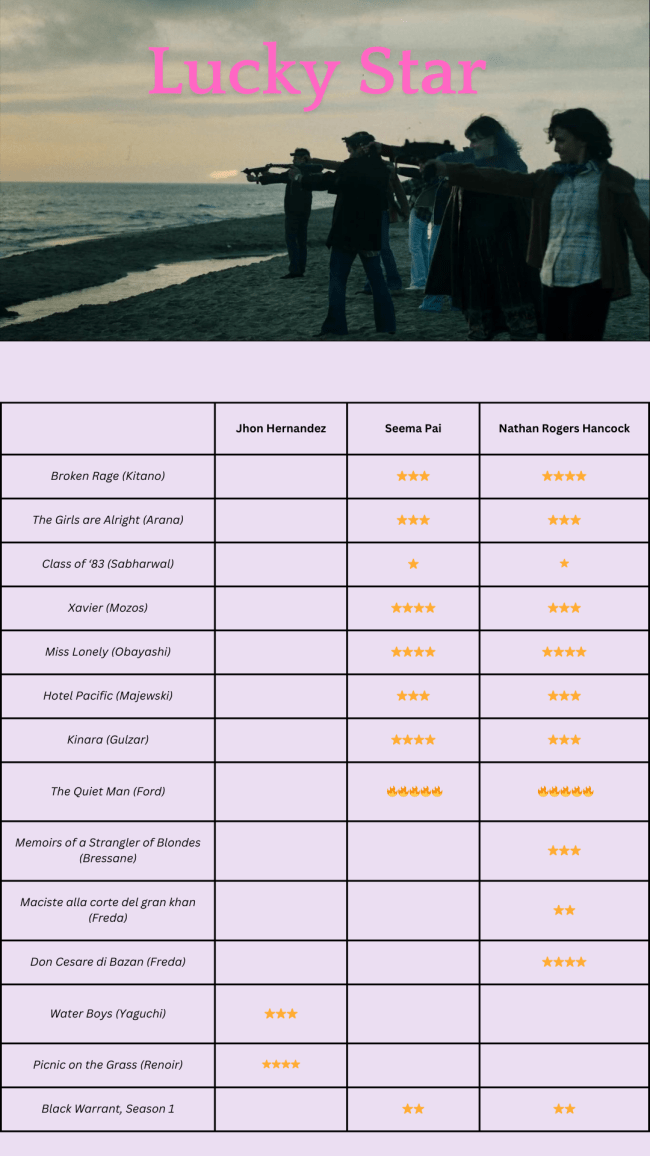
There is a rare pleasure to be found when encountering work that, after an unassuming first impression, reveals a center of gravity strong enough to draw other work into its orbit, even more the case when that influence is subtle, at the edge of description. I’ve been spending the weeks represented by this grid in the company of Second Hand Love, the collection of comics by Yamada Murasaki presented by the Montreal-based publisher Drawn & Quarterly and the translator, editor and historian Ryan Holmberg, following Talk to My Back in 2022. That book collected a novel length work comprised of brief (around 10 pages each) chapters, originally serialized in the landmark alternative comics magazine Garo across the first half of the 1980s, centered on a middle class housewife’s growing apprehension of her own life in relation to the repeated absence of her husband, the growing independence of her children and the constraints of her domestic world. A narrative arch accrues across a series of vignettes and asides, a movement towards the establishment of a more independent sense of the self through finding work outside of the home, but what carries the most weight is the drama, acted out on the surface of the page, of finding a form that can express this life of thought and sensation that is at once deeply constrained and as large as any life must be.
The Blue Flame, the novella length work that comprises most of Second Hand Love was published in 1983 to 1984, the final year of Talk to My Back’s serialization. It is at once the earlier work’s mirror image – the focus is on the “other woman,” a fashionable young professional in an affair with a married man – and the culmination of its most exciting formal tendencies.

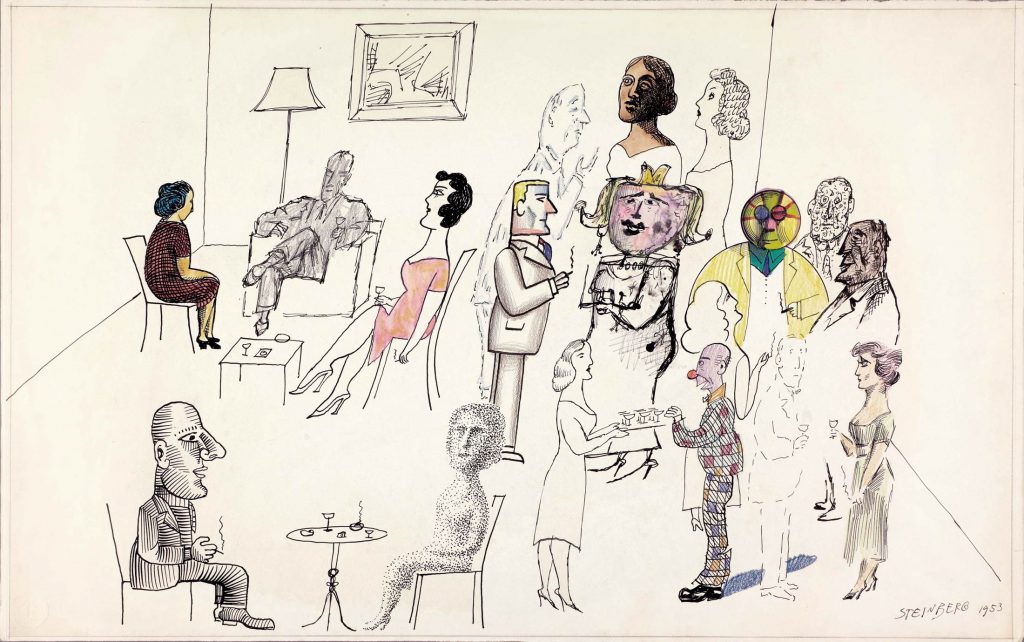
The workplace, which carries such a significant emotional and narrative weight in Talk to My Back, is almost an afterthought, the children and animals that were either the most densely rendered or the most classically cartooned figures are all but absent; the domestic space, home to sex and romance and (increasingly) its absence, is still the primary place where life happens, its boundaries still the boundaries of the self. The rendering of this space, and of the figures within it, keeps slipping, between solidity and fragile gesture; the heterogenous mix of lines and strategies for delineating form seems less connected to the analytical line of Saul Steinberg, or of Manet’s picnic, than to a synthesis of artist and character and line, and between perception and memory.
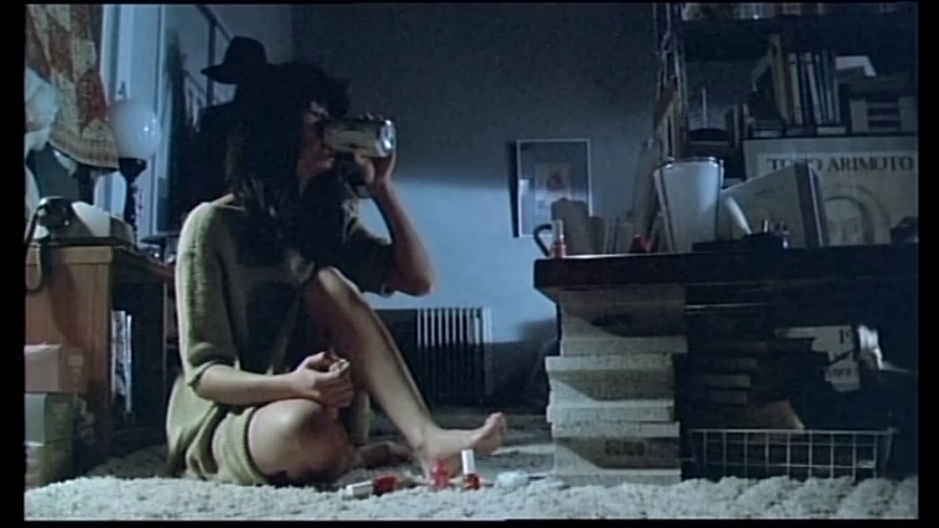

There is, curiously, a 1986 pink film adaptation. The director is Masaru Konuma, most famous for movies on the crueler, more s&m adjacent end of the genre’s spectrum (Wife to be Sacrificed, Flower & Snake), although the movie may skew closer to the interests of writer Haruhiko Arai, once one of the principle architects of the genre in its prime, now, with movies like It Feels So Good and last year’s A Spoiling Rain, one of the more significant practitioners in its ruins. The pink film as vector for a specific kind of domestic minimalism in an interesting subject, but here it’s best kept as a curiosity, an aside. What’s worth noting is that the film is too cluttered, both in narrative terms – all those extended sex scenes of course, the dog yapping outside, the comedy neighbor looking for his cat, so much time spent in the workplace – and in mise en scene, which in its urge to fill the domestic space with the clutter of life and the signifiers of culture and character ends up feeling busy in a way that feels at odds with the spaces we inhabit.
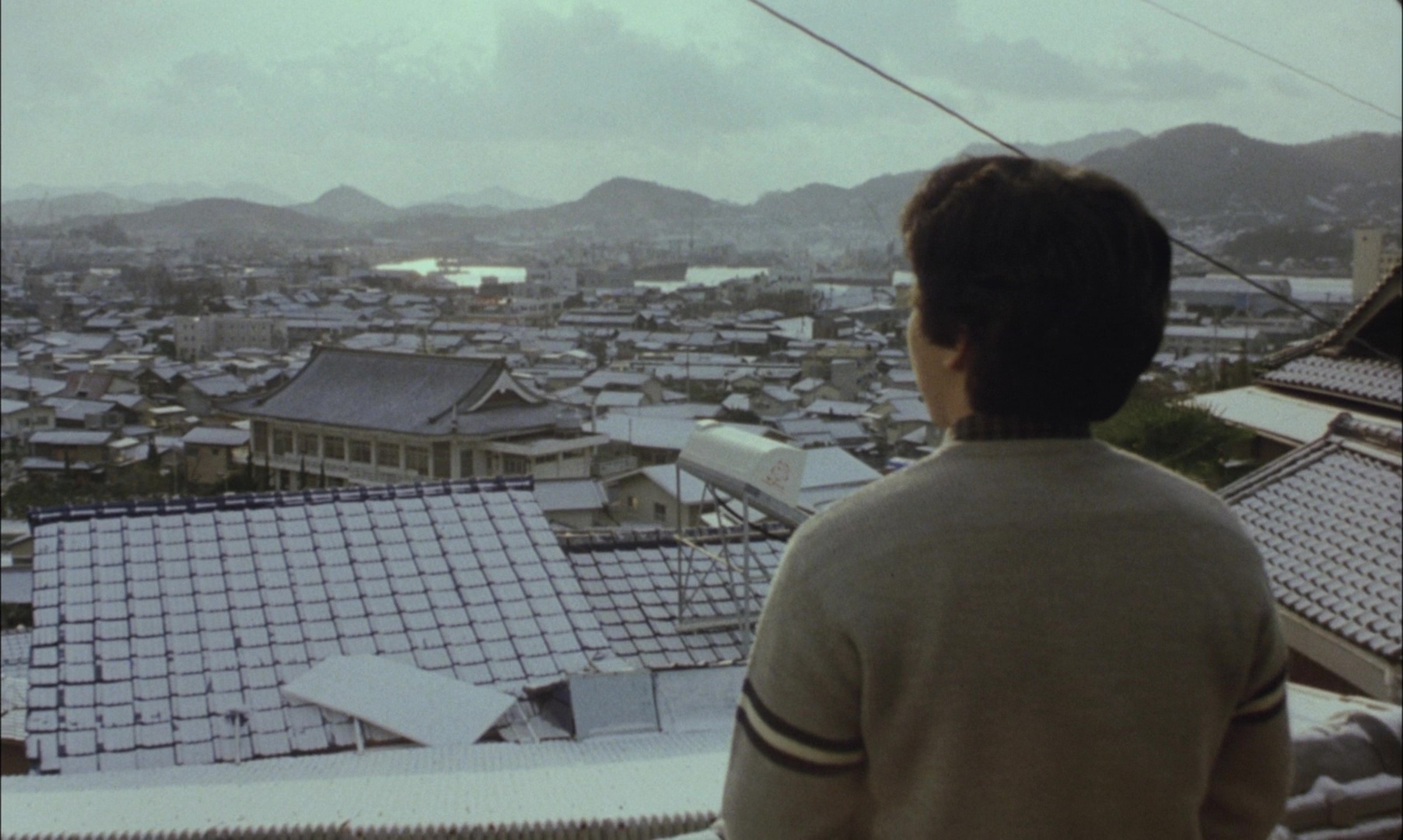
The real reason I’m spending time with this is that the presence of Yamada’s work throughout these weeks helped me with a train of thought. Walking out of Nobuhiko Obayashi’s 1985 film Miss Lonely into the snow, a friend made a statement about something that I had remembered puzzling me ever since encountering the director’s 1982 film I Are You, You Am Me almost a decade ago – that the space afforded to the city of Onomichi was in some way significantly other than I had imagined it would be in a movie famously described as being part of the “Onomichi Trilogy,” especially considering any number of movies by the same filmmaker – The Deserted City, The Island Closest to Paradise, or Haruka, Nostalgia, to pick just a few – where place takes on an almost mythic quality. The answer I realized only now is simple – those films approach memory, the desire for a past, through a novelistic sense of fiction. The ‘80s Onomichi films are the memory of adolescence for a man who is only entering his middle years. This world of Onomichi is the childhood home on a hill, the steps that take you down from the hill to the school, the view of the harbor seen from the childhood window. Miss Lonely is fiction, we cannot take its protagonist staring through the view finder of a camera without film to be a moment of origin the same way we can consider Hou Hsiao-Hsien’s story of climbing a tree and looking down on the world in Assayas’ 1997 documentary, to pick just one possible example, but it is nonetheless a clue to the impulse that drives these films, to the restrictions that ground a film in memory rather than the merely fictional.
 Lucky Star