
Here at Lucky Star, we are always on the lookout for points of contact with other cinephile cultures. We are hoping with this column, Encounters, to establish a dialogue, a line of communication. We get to know interesting cinephiles, critics, directors, etc., all as a way to interrogate our own positions, our own cinephilia.
In this installment, we speak with Paul Theiss, the lead programmer of the Asian Film Festival of Dallas, about the challenges of programming for a regional film festival, the festival’s relationship to its audience and more. Read our festival report here.
How did you get interested in Asian cinema?
I have always watched a ton of movies. In high school, college, graduate school, post-graduate school, I focused a lot on older movies. In doing that I got really interested in older Japanese movies, classic movies like stuff by Mizoguchi, Ozu or Kurosawa. It just kind of built from there. You get interested in the older stuff and then you get interested in the newer stuff. I was looking to get involved in something related to film and given that I had some knowledge about older Asian films, that’s how I connected with the Asian Film Festival of Dallas (AFFD) to start programming their repertory films. That’s how I got involved and then it broadened out from older repertory stuff.
I read that AFFD has a revolving board structure. How does that work as it relates to the programming? Does that mean every couple of years someone new becomes the lead programmer? I’m curious as to how that works?
No, I will stay lead programmer indefinitely. I don’t plan to step down, and I don’t think they plan to ask me to step down. The only reason we’ve had some turnover is that our founder, Steve Carlton, he retired and moved out of Dallas to the Pacific Northwest. So he couldn’t devote time to the festival anymore. And he had been the one who had always programmed the festival. And from there, David Gibson took over as lead programmer. He devoted a lot of time to it and he just wanted to move on and do something different with his time. So then they needed someone to step in and do it. That’s how I got involved and ended up programming the whole thing.
Logistically, how does the programming process look like throughout the year? When does your call for submissions open up on Film Freeway? When do you start watching things?
We kick off Film Freeway November 1st typically. That’s when we’ll start getting submissions online and that’s when I email production companies, distributors, folks we’ve worked with in the past, and say hey, we’re open for submissions. Some distributors will send us films at that point. But I kind of use the first couple of months to survey what’s out there. That’s just doing research. Reading a lot about other festivals, like the Busan festival. A lot of those films aren’t going to have a US release before our festival. It’s looking at stuff like that, what’s playing out there overseas, and starting to build the relationships with the distributors. In terms of actually watching the movies, if stuff comes in I’ll watch it if I’m specially interested in it. But usually I don’t start watching a ton of stuff until the March timeframe.
Is it very important for a film to have a distributor already attached? I know the festival has a good partnership with WellGo USA – are you more likely to prioritize what they have coming out versus a film that comes in with no connections? What’s the calculus that you sometimes have to do to balance the relationship with the distributor versus the desire to have something new?
I don’t really care whether the film has a distributor or not. I’m glad when films have distributors because that’s good for the filmmakers. That’s one of their targets. But otherwise, no, I don’t care. In many cases, it’s easier to work with filmmakers who don’t yet have a distributor because they’re not subject to any restrictions, and oftentimes distributors will have their eyes on a different film festival to have a North American premiere. But I’ve never had a situation with a distributor where they’ve made any kind of demands of me. Where they said you have to show this. Frankly, my relationships with the distributors who we’ve worked with in the past have been very positive. At the end of the day, these distributors are trying to find access to the US market and we can help them with that. So it’s a mutually beneficial relationship. There’s a particular distributor I work with in South Korea that’s been really great to deal with. They always have really exciting films. So I’m always going to reach out to them and say, hey, what do you guys have this year? They’ve worked with us enough now that I think they know our reputation and they know that we’re going to treat their films well, promote their films properly, and so they’re eager work with me.
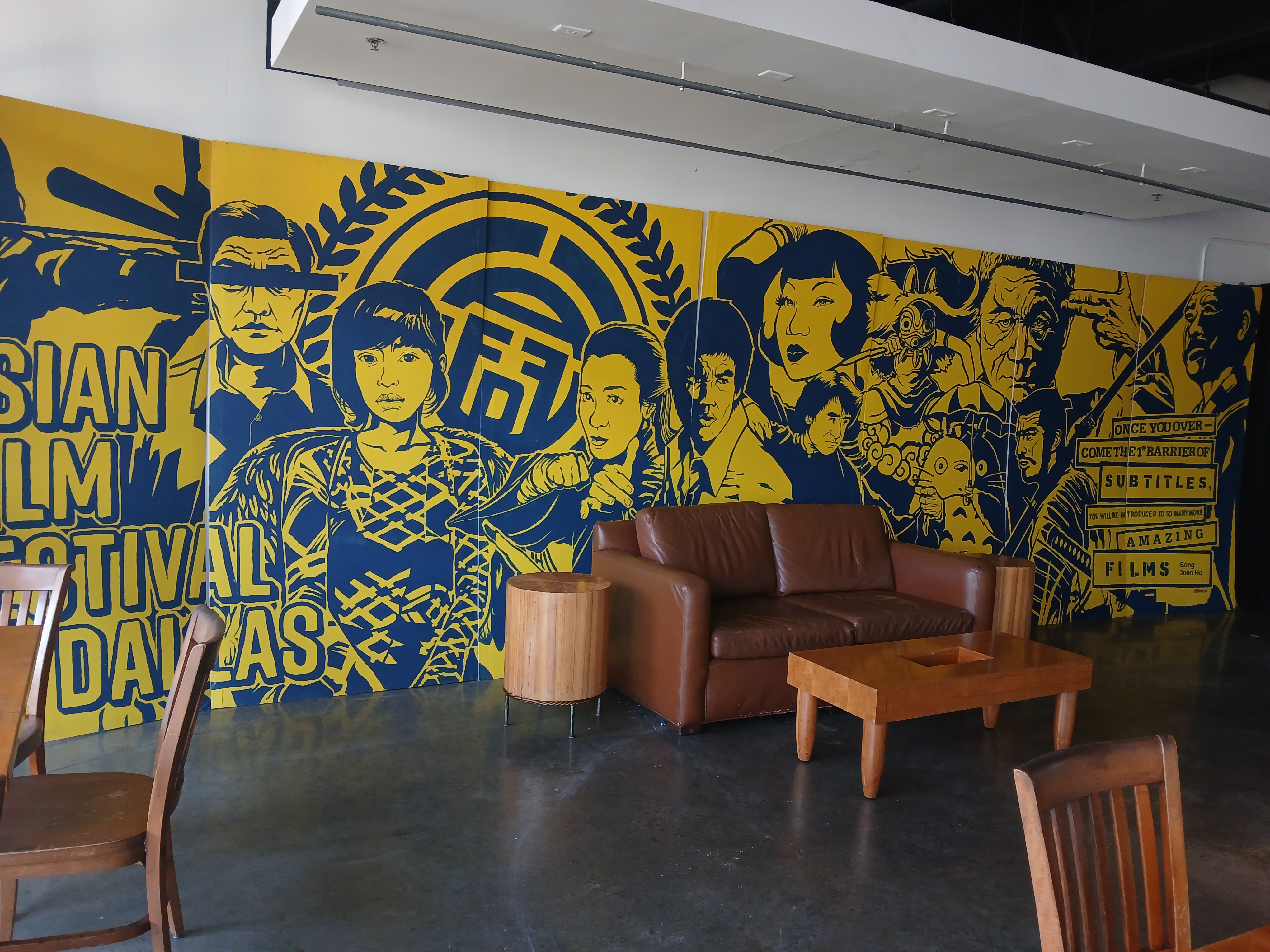
You brought up the idea that you haven’t really had restrictions. I noticed this year, because you brought it up during the introduction, that Twilight of the Warriors would have its second theatrical screening in the US right after the New York Asian Film Festival played it. Was it the closing night film because the New York Asian Film Festival had to have the North American premiere?
I wanted it out be our closing night film because it’s the perfect type of film to close your festival on. That’s exactly the type of film we look for: a big and exciting film. That’s what I like to close the festival on. The only thing that New York affected was the exact time we could screen it. Typically we show our closing night films around 7pm or 7:30pm. But we couldn’t do that because we didn’t want to overlap with the North American Premiere in New York so that’s why we pushed it back to 9pm. It wasn’t a case when I would’ve showed it on Friday night or Saturday night instead. I always wanted to that to be our closing night film.
Are there specific festivals that you really pay attention to? Where you trust what they’re doing and always getting something from there?
No, there hasn’t been a particular film festival that I’m always checking. It kind of changes every year. Really it just depends on kind of what’s out there. Busan is obviously great because one, it’s a great festival, and two, they just have really great programming. But I don’t necessarily get stuff that played there all the time. Some years I’ve found films that played the Berlin Film Festival, some years I’ve found stuff at Venice. It really just depends on the year and what’s available. Some festivals trend more toward dramatic films versus action films. Berlin, I wouldn’t expect to find a big Asian action film there.
What do you think makes a AFFD film? What do you think would be something that unites the films that are programmed?
I don’t know that I can describe it. I kind of know it when I see it. Our audience is pretty varied in what they like. If I were programming for myself, I would have a lot more arthouse films. That’s kind of my cup of tea. But our audience doesn’t love that. I mean, sometimes they do. There’s more challenging films that we’ve programmed that have been successful but other times they haven’t been well-received. I don’t know that I could say. I know particular audience members, people who have come back year after year that I’ve gotten to know, they only come to our action films. And I know that’s a huge part of our festival, I love action films too. So I’m always going to look for a big, fun action film that people are going to enjoy. But then there’s people who love dramatic films, or melodramatic films. We had one this year, Ms. Apocalypse, that was fantastic, a Korean melodrama. It’s completely different than the action films that we’re showing and it was very well received. I guess I can’t really say for sure what the formula is. I definitely know when I see one that’s not for our festival.
What would that be like?
More of the arthouse stuff. Not that we can’t do it, or we don’t do it. I’ll use one example from a film I programmed in 2023 called Stone Turtle, a Malaysian film. It was kind of a folk fantasy/sci-fi film that was told in three different parts, kind of like alternate histories. I loved the film, I thought it was a fantastic film. But our audience just didn’t vibe with it. It was just a little weird. Often that kind of stuff, the weirder stuff, folks don’t like.

One reason I’ve gone back to the festival over the years is that sometimes it does take risks like that. AFFD played Visage and Stray Dogs, the Tsai Ming Liang films, films that would never come to Dallas otherwise. I appreciate those risks when they’re taken. This year I didn’t see one that was quite like that. But I can imagine it’s hard to find a balance what you think the audience wants to see versus your particular taste.
I kind of thought there were a couple of this year. Like The Tenants. It wasn’t your typical horror film. Or maybe even Namesake. I wasn’t sure how people were going to react to it. They loved it, but it was a more challenging, confusing film.
What are some of the challenges of actually put together your program? What are some of the roadblocks that might stop you from getting a film, or would stop you from putting together a coherent program?
The number one thing is the desire to have a North American premiere for the distributor. At the end of the day, we are a smaller festival. We’re not as big as the New York Asian Film Festival. We’re not as big as Sundance. There wasn’t a film that I couldn’t get because of them. Although that’s happened in past years. But there were still films where I saw the film, I loved the film, I made an offer for the film, but between the time the film was submitted to me and the time I made the offer, that film had some success overseas at a really big festival. I can think of two films in particular. One played at Cannes, and one played at a film festival in Australia. The Cannes screening was a very successful screening. I think that changed the calculus for them, and rightly so. They believed they had a really big film in their hands. They just wanted to have a bigger North American premiere than the Asian Film Festival of Dallas. Which is fair. At the end of the day, they’re trying to get the biggest audience, the biggest bang for their buck. That’s really the main thing, just having to compete with bigger film festivals.
Do screening fees ever become an issue? Is that something you negotiate?
I do negotiate the screening fees. I’ve never had a film fall through because of a screening fee or disagreement with that. They’re pretty standard rates. Some ask for more than others. But they’re all in the same ballpark. I’ve never really had with anybody with an outlandish demand for a screening fee.
How did the programming process go this year?
From a programming perspective, this was actually the smoothest that it’s ever gone for me. With a couple of exceptions, I was able to get the films that I really wanted to get. And I thought we had a pretty diverse, interesting selection of films. In years past, I have been stressed kind of late in the process, where I don’t have a good horror film, or I don’t have an action movie that I like. Or I have too many films that hit the same note. For whatever reason, I just didn’t have that this year. Not to say I won’t run into these issues next year. But it really was a good, solid process this year. One of the things that help is we have people that pre-screen films. People did a lot of work before I would even watch some of the films, to help weed out some of the things that were not as good, and to put a spotlight on the ones that were really good.
You said earlier that you got your start doing the repertory programming. Can you talk about why this year didn’t have any repertory screenings?
The repertory films are not as well-attended as the contemporary films. The audience is typically lower. There have been some exceptions. We showed a print of Tokyo Story several years ago, where we had a huge audience. But that’s one of the greatest films ever made. You can only do so many of those. But I’ve had more than one person ask me why I didn’t have any repertory films. We’re not ruling it out. Maybe we’ll have one next year if something comes to mind, or seems to fit in with the programming otherwise. But, you know, we did move down to four days of the festival now. In the past, when we were doing the repertory screenings, we would have a whole week. So there was more bandwidth to include those films.
After every screening, you showed us to how to rip the ballots to let you know what we thought about the film. Can you talk a little about you incorporate this in your programming? What does that tell you about what’s working or what isn’t?
I like every movie, for different reasons, that’s shown. The program is what it is because I’m happy with the films and I think they’re a good fit. But that doesn’t mean our audience is going to agree. There have been films in the past that I really like and I kind of know in the back of my mind that this is not going to be one of our more popular films, but I like it, I think it’s good, I think we need to show it. But our audience members will confirm that, or not. In 2023, there were a couple of films that we showed that I liked, but I knew would be challenging for our audience. By challenging, I mean not the type of films that they would like, like a non-standard film, not from an intellectual perspective (our audience is more than capable of understanding the films). The audience scores confirmed for me that those films were not the best films for our festivals. When I come back in 2024, I did watch films that were a lot like that, so instead of taking two, I’ll take one, or I don’t take any. There might be action movies that are a little bit silly and I like the silly aspect of it. But we might get an aggregate audience score that’s, eh, that was fine, but it’s in the mid 3’s. Which is not great for one of our films. So that tells me that that they didn’t really like the silly aspect of it. They wanted something that was more serious, more action-forward. And then it’s always helpful to see both ends of the spectrum. Sometimes, for whatever reason, sometimes people rate a film as a 1. I couldn’t tell you the last film I saw, voluntarily or involuntarily, that I would’ve given a 1 to. But sometimes people do that. And that can be informative because you can you say, listen, this type of film, for whatever reason, some people hated it. But then if you see a movie that has three 1’s, but the majority of the ratings are 5’s. Then you’re still going to show movies like that because other people loved it. We had some of that this year. We had some films where the overall rating was really high and they would have a lot of 5’s, but also some 1’s or 2’s. It’s just a data point that you can use next year. We aggregate them all and average them and so we know what was most popular. I don’t always agree with the ratings, but it helps me as I sit down for the next year.
How does your the audience primarily interact with the festival? Do they usually just pick a movie or two from the lineup? Are there festival diehards that year after year watch a large percentage of the programming?
We get a little bit of everyone and everything. We do have festival regulars—people I see every year—who attend every single film. Some of them, I’ve gotten to know some of them and their tastes quite well over the years. One of our regulars comes from Arkansas and attends only our action movies. He’s always in the back of my mind when I’m looking at our action lineup.
But we have others who hear about a particular film and attend only that one screen. For example, last year, we screened a documentary from a local filmmaker. I saw a lot of new faces at that screening. Before attending, some of them weren’t even aware that the screening was part of a broader festival. I don’t mind hearing that because it’s a new set of eyeballs who may check out our schedule or consider us next year.
How does the festival cultivate their audience, and what efforts does the festival take to grow it?
We have a PR team who works hard behind the scenes to keep our name out there. We try to stay regular on all of the socials. We work with both the traditional press and emerging voices (like yours). In the weeks leading up to the festival, we also drop festival and lineup cards at shops around town. And we make sure to keep in contact with our film festivals in Dallas. It’s a really supportive ecosystem here: we invite other festivals to attend ours to promote themselves, and we get invited to theirs.
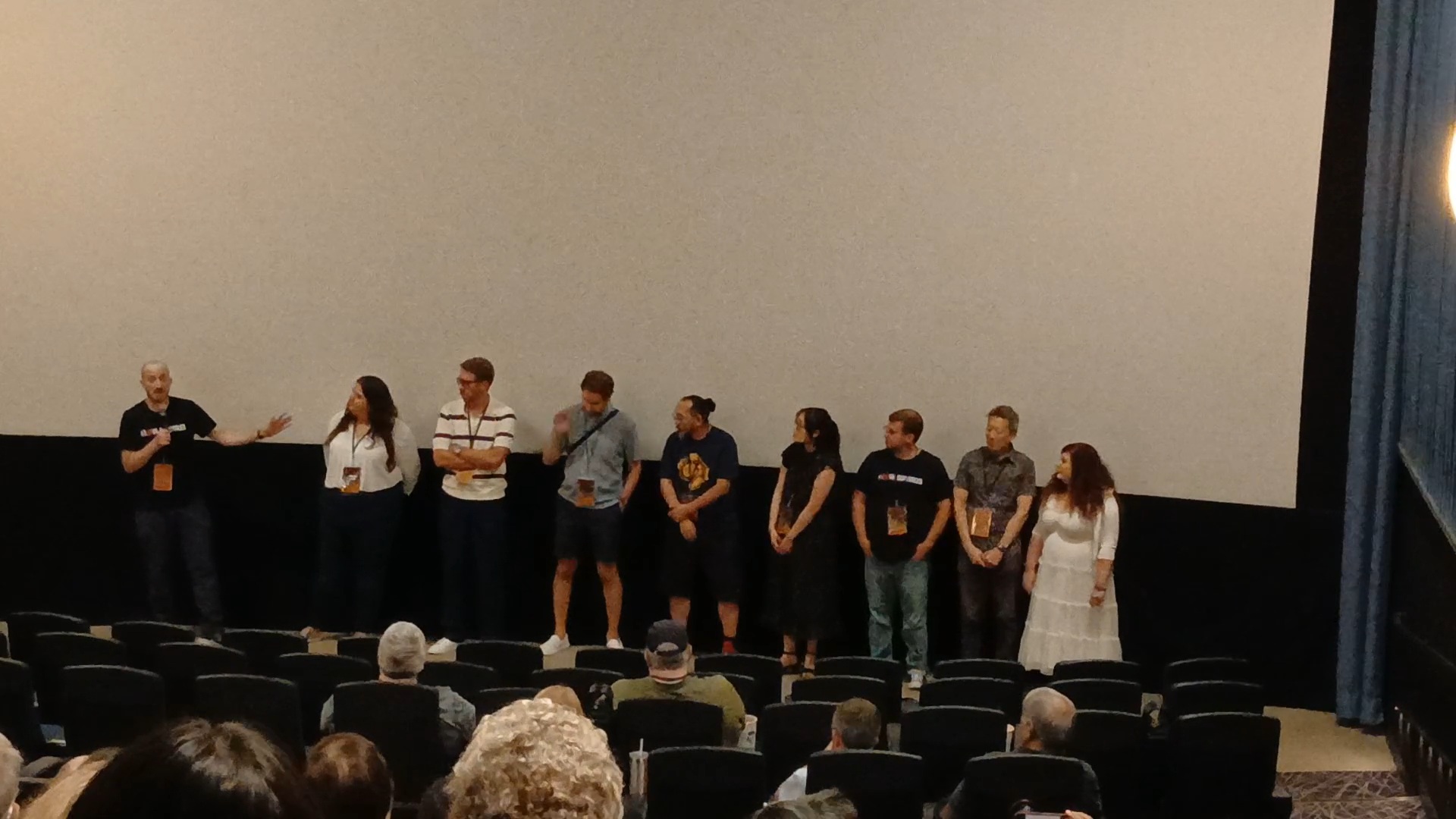
Do you feel like you have to represent what you think is going on in Asian film production versus what you think of the Dallas audience might like?
I do want to bring important works to the city to the extent I can. But there’s kind of a limit sometimes. There was a movie we showed a couple of years ago from a director who’s very important. I really wanted to show it. It was a very weird movie. And people walked out of the movie because it was so weird. Would I do that again? Yes, I would absolutely show it again. And I would show others like it again. There are certain filmmakers out there when they release a new movie, I’m going to show it regardless.
Asian Film Festival of Dallas is a geographical survey at the end of the day. You’re showing movies from a certain area of the world. Which means that if you pick one Japanese, you might not be able to pick another one. Because there’s only one so much room. What brought the question to my mind is the Rose and Samurai film, which I enjoyed, but in my mind I’m thinking, this is entertaining but is it representative of what’s happening in Japanese cinema? I know that particular series is very popular with Dallas audiences, but that was the origin of my question – are you always going to try and lean more toward the stuff you think your Dallas audience would like versus something else that might be important?
When we do a movie like Rose and Samurai, it is something we know our audience is going to love. One of the neat things is that you can see movies like that that you can’t see anywhere. There’s literally no other screening of that movie in North America. I would say it is representative of what is going in Japan in the industry because those movies are wildly popular in Japan. They’re not a niche thing in Japan. They have huge audiences, huge followings. So I don’t know that that would be the best example of that. But there’s nothing that I could’ve programmed that was more significant. If it’s that significant, I would’ve programmed it somewhere else. It would already be in there.
What do you hope your audience takes away from the festival?
Our mission is to introduce to folks in DFW to Asian culture through film. That is our mission, that is my mission. I want people to experience things that they wouldn’t otherwise experience, except through film. The opportunity to see these movies on the big screen. It’s why I try my best to get movies from the widest range of countries that I can, so that they’re seeing these different perspectives. We had a film from Iran this year, we’ve had films from Iran in the past. Everybody expects movies from China, Japan, South Korea. But can we show movies from Cambodia, from Malaysia, the Philippines, etc.? The experience in those countries are going to be different. And a lot of these movies people will not have a chance to see them anywhere other than our festival. I take that very seriously and I want people to have the opportunity to see different perspectives. You’re introduced to issues that you don’t think about on a day-to-day basis because they’re not part of your life because we live in the United States. Granted, it’s the perspective of a particular filmmaker, a writer, a producer. But it’s an important perspective and one that helps to open our eyes to different cultures and different issues that people are experiencing. And to have fun! These are movies and you have to be able to come and have a good time, enjoy yourself. Not too get philosophical about it, it really is, let’s have a good time, let’s see movies that we like, and let’s learn something in the process.
What does a successful Asian Film Festival of Dallas edition look like to you?
Good audience numbers in terms of turnout and ratings. That’s what it’s about at the end of the day. We want as many people there as we can get, and we want them to love the films. Other board members might have other metrics they’re going by, but as the guy who is responsible for putting the movies up there, I want everybody to like what we’re showing and to have a good time. Our audience numbers were up this year over last year. That’s a great sign for me. That means either more people are hearing about it, or people enjoyed it last year and wanted to come back for more year this. And hopefully that means next year will be even better because they enjoyed this year.
Do you have an ambition for what you want the festival to be going forward?
We’re in a really good spot right now with the festival. We have a really strong group of board members. I would say that what we did in 2024 is what I would like it to be. We do get asked a lot if we can go back to seven days. But the reality is we’re all volunteers and it takes a lot of work to put on a film festival. I have a full-time job, I have a wife and two kids. I have commitments that have nothing to do with films. I couldn’t do a week-long festival. It’s just too many films to watch. If I had to double the number of films I watched, I couldn’t do it. And then we have the operations team which has to be there onsite every day. We have people who take vacation from work for a couple of days to be there. They can’t do that for a whole week. I don’t know that getting longer would ever be the answer for us. Maybe there’s a future where we can go back to having two screens on the weekend. But that’s a financial thing. We have to rent the screen. And is it that important to our audience to have multiple screenings happening at one time, where we’re splitting our audience? But that might be something we explore as a way to grow in the future. But we don’t want to grow for the sake of growing. If it’s natural, because it makes the most sense for the volume of films we’re seeing, the quality of films is there, and the audience is asking for it, then maybe we’ll be there in future. But we’re kind of in the sweet spot right in the length of time, the number of good films that we’re getting to screen, the audience. We had a great turnout this year. Hopefully we can double down that in 2025.
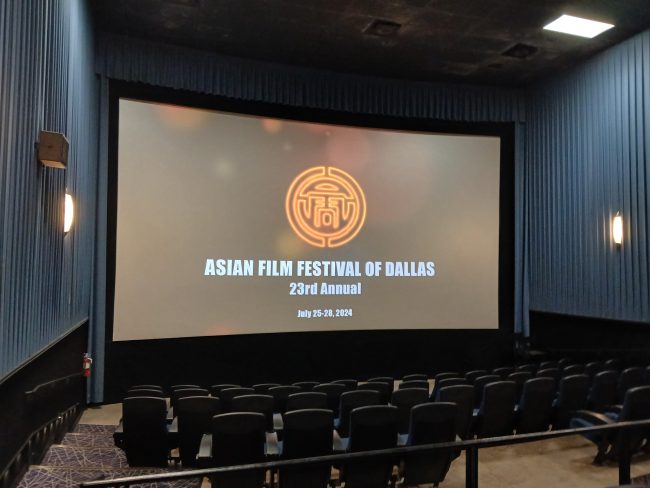
Interview conducted by Jhon Hernandez in August 2024.

 Lucky Star
1 comment