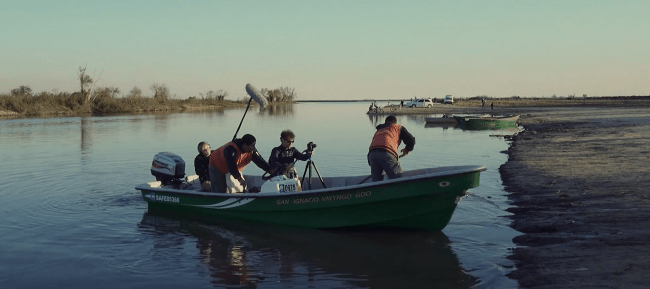
Day 1
After watching the films of Alejo Moguillansky I am wondering how to deal with them, what strategies to use, how to respond to what I see. I have a Word document open with various notes, quotes, articles, translations. I am wondering how to use them.
I have to imagine that Alejo Moguillansky feels something similar when he pulls up his timeline and begins to sift through the various scenes he’s collected. He comes back after shooting, coming up with images, and then tries to make sense them. First, he shoots, then he edits, and finally he writes.
Perhaps after hitting a road block on some project, he will pull up another timeline and work on something else, a short that he’s been commissioned to do, some commercial project that no doubt pays the bills. It is a process, a method, a way of life.
In The Parrot and The Swan an American television producer asks a theater troupe, “Do you really think you should get money for what you do?” This question reverberates throughout Alejo Moguillansky’s work. Each of his films revolves not only around money, but also work.
The chases in Castro are motivated, at their root, in an existential uncertainty about the value of a job in one’s life. The couple in The Little Match Girl juggles various jobs in order to make ends meet, all while trying to find someone to look after their daughter while they work these jobs. What is money to an artist? What is the place of money in art? The journey from Castro to Por el dinero answers this question. But it is not answered in a banal and didactic address – no, everything is subsumed into a game, into comedy, into dance. Film by film he refines his approach.
But to reduce the films to a thesis would be a betrayal of their spirit. The films resist this discourse, this approach, at all times. The theme of money and the artist is a constant in Moguillansky’s films but it is never overbearing – it is simply a fact that must be dealt with and surpassed. The films are more about Moguillansky’s willingness to experiment, to write with images. Each film represents an opportunity to invent a new language. It is this search, crashing head-on against the realities of the film’s production and its materials, that truly consumes Moguillansky and makes up the texture of his films.

Day 16
Because Moguillansky’s debut film from 2005, La Prisionera, a collaboration with Fermín Villanueva, has never been digitized, or really screened much of anywhere, our true introduction to Alejo Moguillansky is 2009’s Castro. This is a film that, at the surface, is quite different from what comes afterward in his career. Indeed it is a sister film to Mariano Llinás’ Historias Extraordinarias: both films shot on MiniDV with largely the same crew; Castro was finished with the prize money that that Historias won at BAFICI; and, most importantly, both films are obsessed with the potential of narrative in fiction, how to play with it, dismantle it, explode it, but approach this obsession from different angles. If the Llinás film explored the fictional possibilities of narration in a search of pure pleasure in its nesting doll narrative device (each story will beget a story, expanding and expanding, going nowhere with a smile), then Castro attacks the same questions not through expansion, but rather a bewildering compression – the questions of fiction and narrative possibility are dealt with using choreography, speed, movement, dance.
Day 23
When Alejo Moguillansky films Castro everything is planned. Right now, you can watch a video on Youtube of Moguillansky and Llinás discussing the production of Castro and why they cut out a certain chase scene that involved the choreography of various city buses starting their movement with very specific timing. It is impossible to arrange these shots without any planning, without a certain method of production. In the future, Moguillansky will take two actors, film them without any plan, discuss what he wants to see, what they want to do, and then figure it out later. What changed?
Day 0
When Moguillansky saw Pierrot le fou he decided to abandon his studies in Architecture and dedicate himself to cinema. When he saw JLG/JLG he burst into tears.
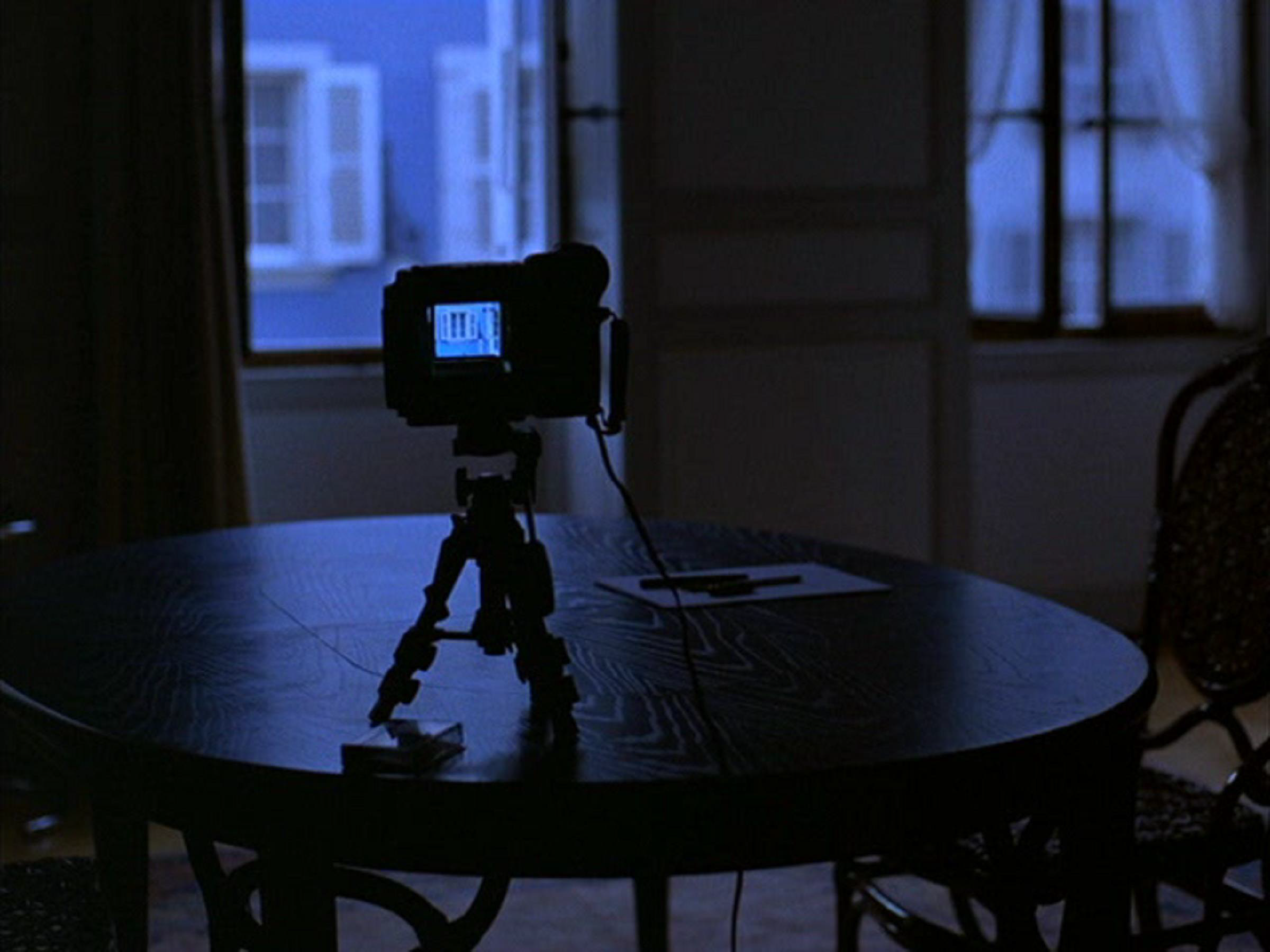
Day 40
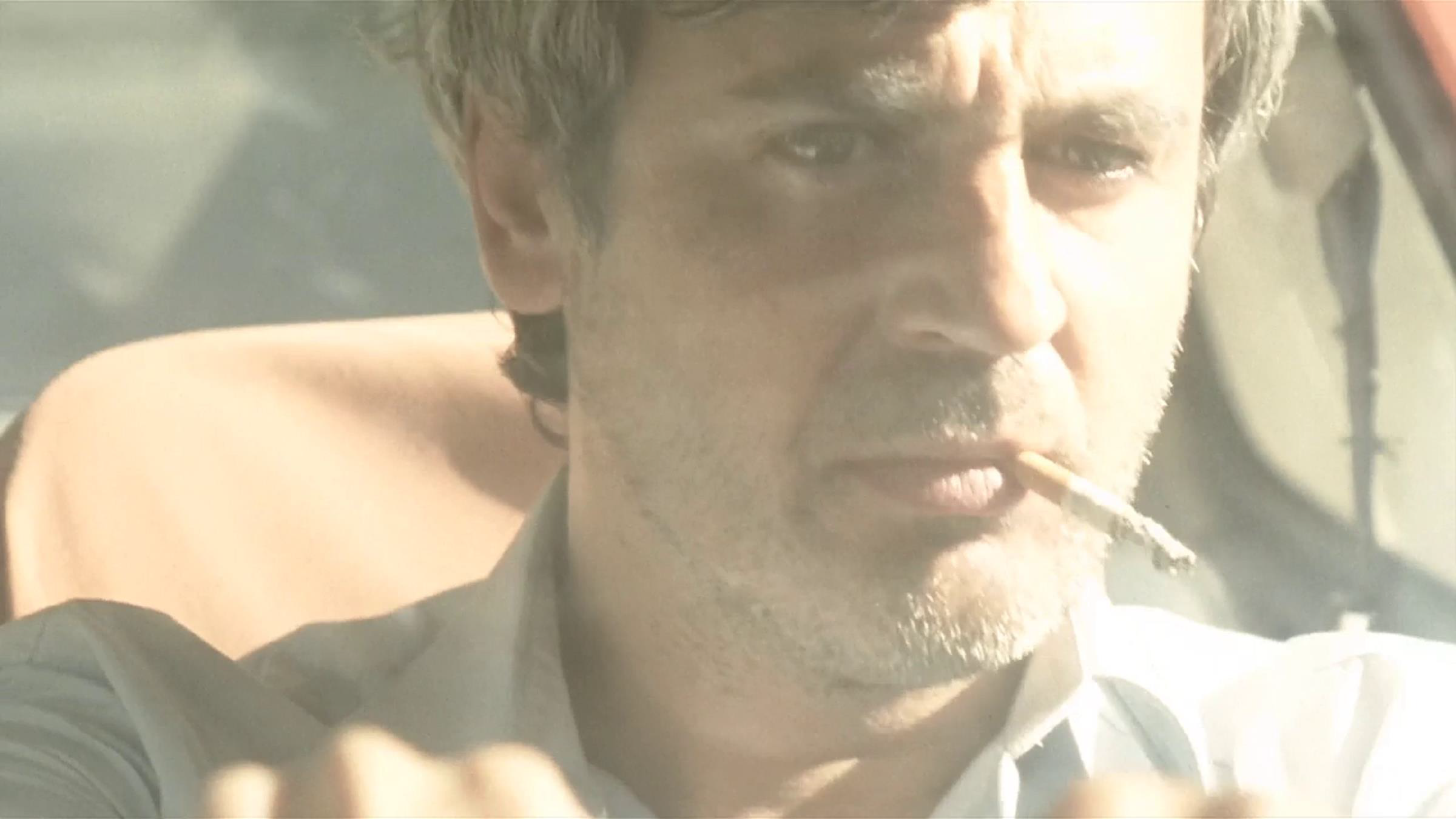
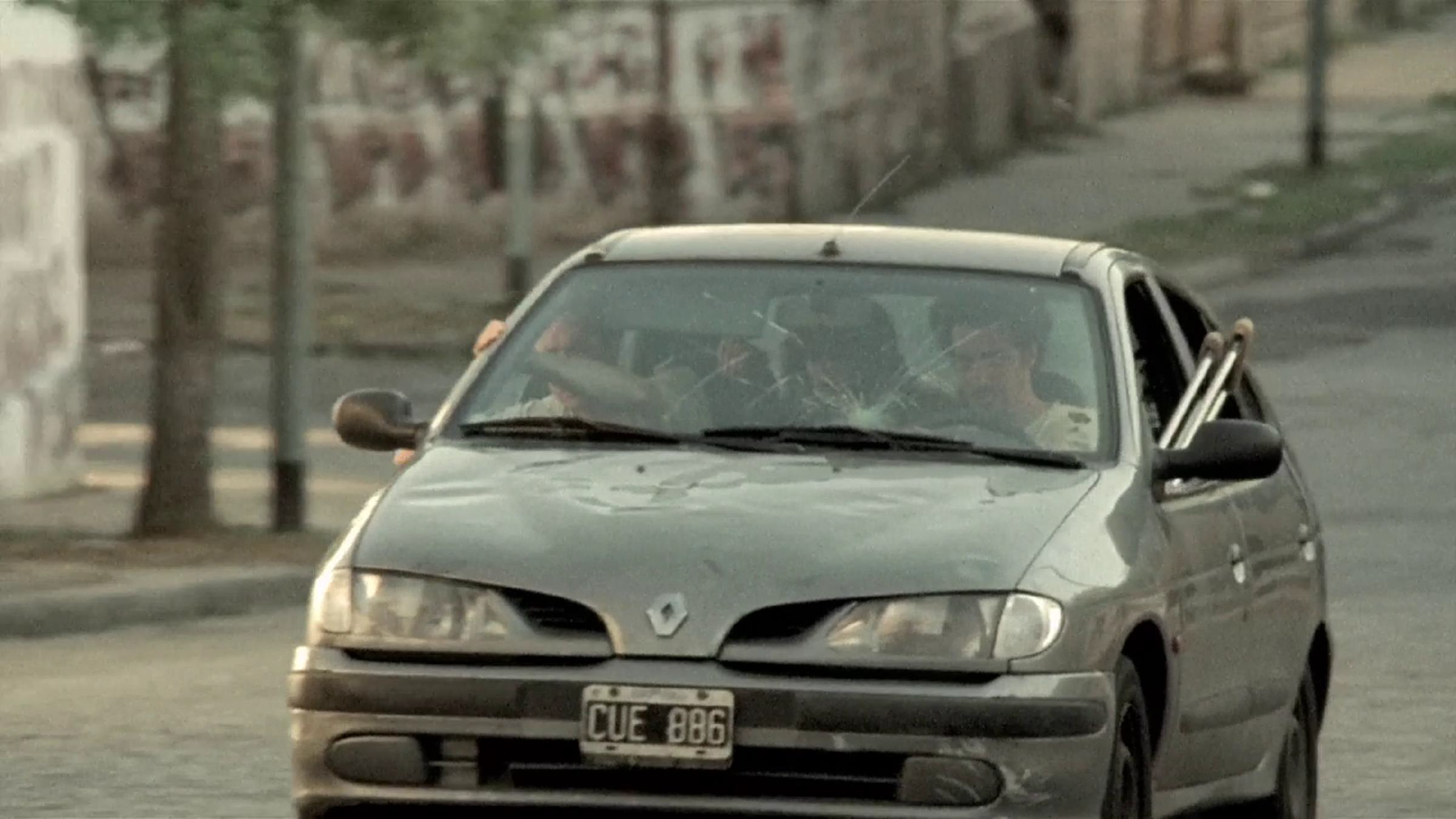
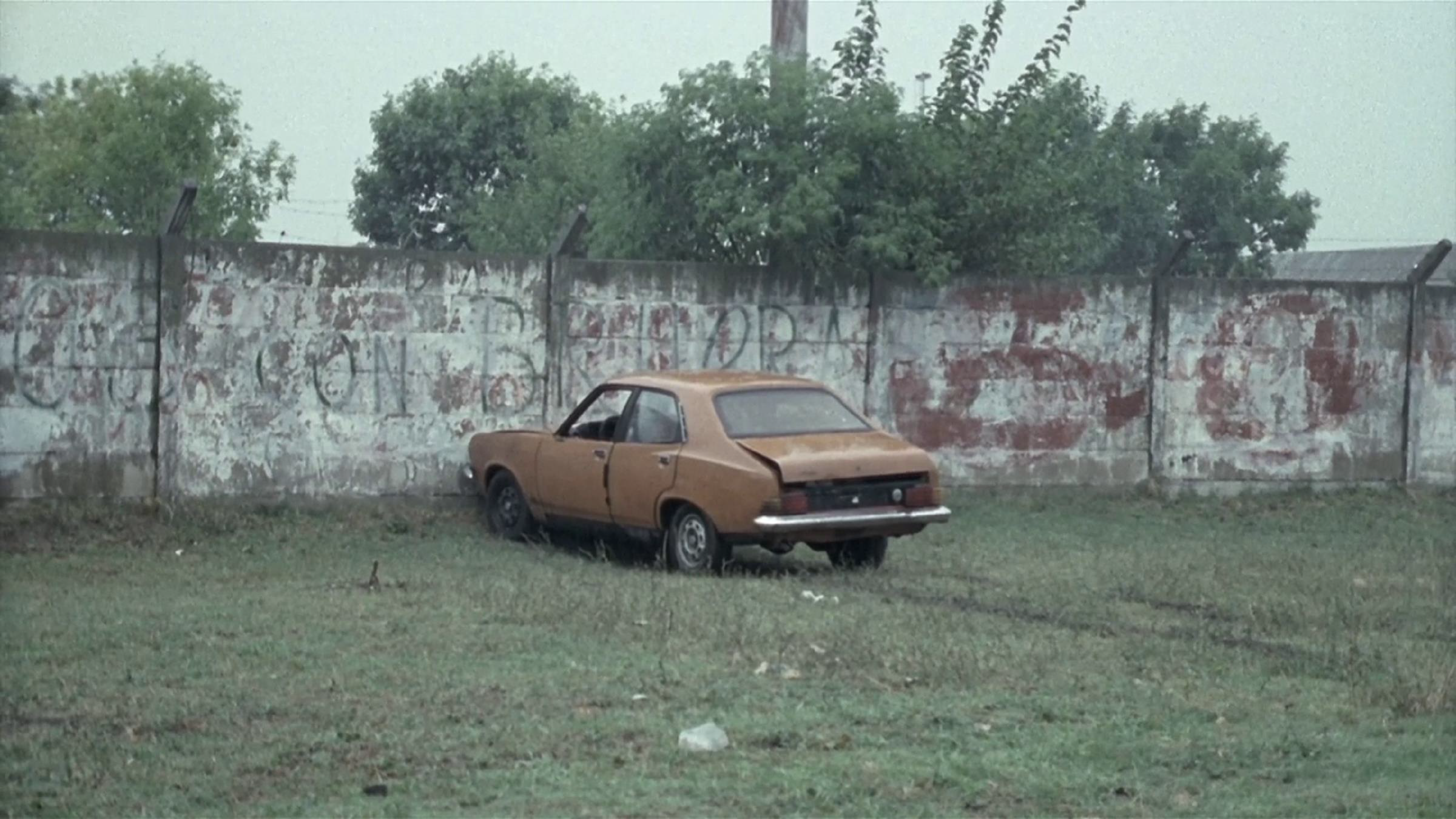
Castro proposes an argument: earning a living is banal, it is boring, soul-sucking. The rules of the workplace are arbitrary. Freedom is only found away from work. What else is there to do but escape? Castro is a chase film. Characters we don’t know chase other characters we don’t know. They cross the street haphazardly, run on to trains, get off the trains, throw themselves and their luggage down the stairs. It is absurd and without apparent meaning. The main character struggles to get away from those who pursue him (an ex-wife and her cronies) while trying to find a job so that his girlfriend won’t leave him (she demands that he get a job even though doing so will be the end of him).
The rhythms and acting style are right out of 80’s Godard, or the early 90’s Hal Hartley riffs on that style. Everything moves quickly, without pause, the actors delivering their dialogue with furious speed, deadpan. The camera follows suit, never handheld, but rather following in quick whip-pans, always maintaining the right distance to capture the movement, the choreography.
Everything emerges from this idea: the movement of the actors across the frame, the interplay between them and their environment, between them and the camera, the cars, the umbrellas, everything, it is all a form of dance. And dance must be choreographed. Castro’s questions of fiction are approached from this position. It is an aesthetic proposition, but also a moral one. Castro turns Buenos Aires into a stage where its actors can bounce around, building up a rhythm, going the long way around to finding its own sense of verisimilitude, documenting the city and the reality of making a living in it by refusing the quotidian. What Moguillansky films is futility: the meaningless of the action, the chases, holding down a job, arbitrary as the rest. He films a trap.
Day 41
There is a pleasure in the chase, of course, in the rhythm, the movement. But it is also an oppressive system without end. The final refusal, the only escape from the various choreographies which bind us to this world, arrives almost without notice, a sudden and abrupt stop to the elaborate rhythm that Moguillansky has achieved. It is a potent and empty image. The only thing that can stop the system once it’s in place is an extreme act – the order of things can be disrupted, you can check out.
ACT II, Scene I
While Castro emerged from a somewhat formal/choreographic idea it never forgot the importance of reality. This is felt in the emphasis on the streets of Buenos Aires, its alleys, its light. It sets its game in a very real place, which gives it a certain weight, escaping academicism. Like Rivette and his phantom ladies over Paris, Moguillansky uses everything in the city around him, imbuing it with a fictional and choreographic possibility.
There is a shift, however, after Castro. Each film after plays by different rules, though it does not cease to be a game. We enter the world of documentary. But if it is a documentary, then it is a failed one. Or, rather, it is one that refuses at all moments to be a documentary – Moguillansky heads always toward fiction.
“As an editor, I have that particular way of thinking. I think in musical terms. I am bad with storytelling, so I feel more comfortable with musical forms and materials; both inside the shot and in the structure as a whole.”
Act II, Scene III
Films can come from anywhere. Moguillansky is contracted to shoot the rehearsals of a staging of Helmut Lachenmann’s opera of The Little Match Girl, an avant-garde rendition of Hans Christian Andersen’s tale. By his own account, he is not a good documentarian so he uses the footage he’s gathered to make something else, to make something for himself.
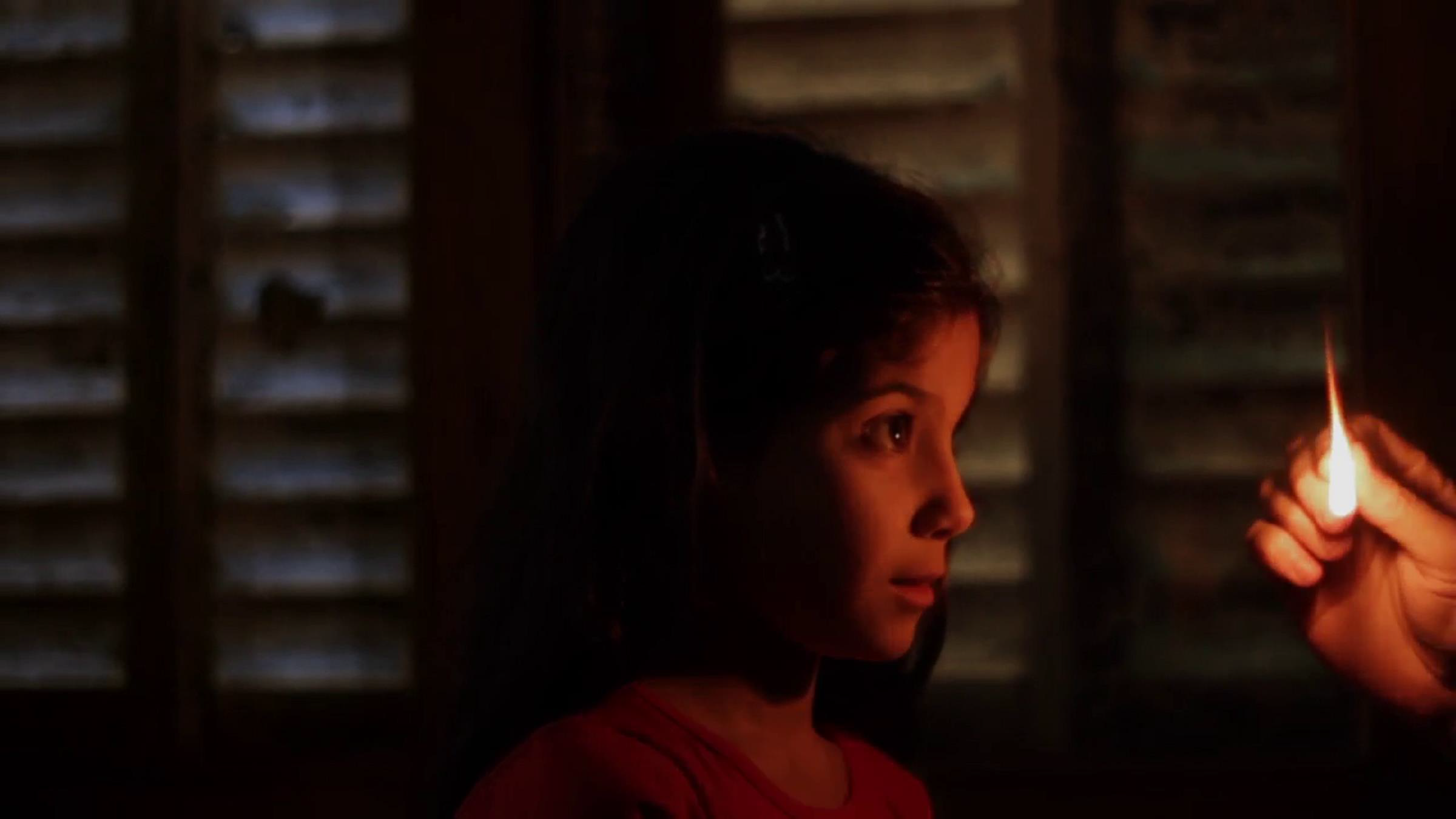
We must establish the elements. First, Helmut Lachenmann’s opera rehearsals, the documentary genesis for the project. Moguillansky films the rehearsals and, more importantly, he films the transportation strike that threatens to derail those rehearsals and the members of the orchestra who debate how to go on. Second, Margarita Fernández, the famous pianist who is one of the few in Argentina who interprets Lachenmann’s work on the piano. Third, Walter Jakob, the man in charge of directing the opera who really has no idea what to do with this strange avant-garde creation. Fourth, Maria Villar, his partner, who assists the pianist in her lessons (and usually takes her daughter, Cleo, along with her because there’s nobody else to watch her).
Each one is related to the other. If we think in terms of music, each one of these strands represents a melodic line developed throughout the film. The strands of the film act in counterpoint to each other – the scenes of Margarita Fernández at the piano, Maria Villar at her side, often seem completely removed from the rest of the film (they can be utterly serene and graceful), but money and politics sneak in anyway, reinforcing what we see in other parts of the film (no one has enough money to pay for a cup of coffee). Moguillansky, as an editor, focuses on the rhythm of his scenes, their interplay, their cadences – everything is up in the air, but somehow interconnected, part of an accomplished whole.
Act II, Scene V
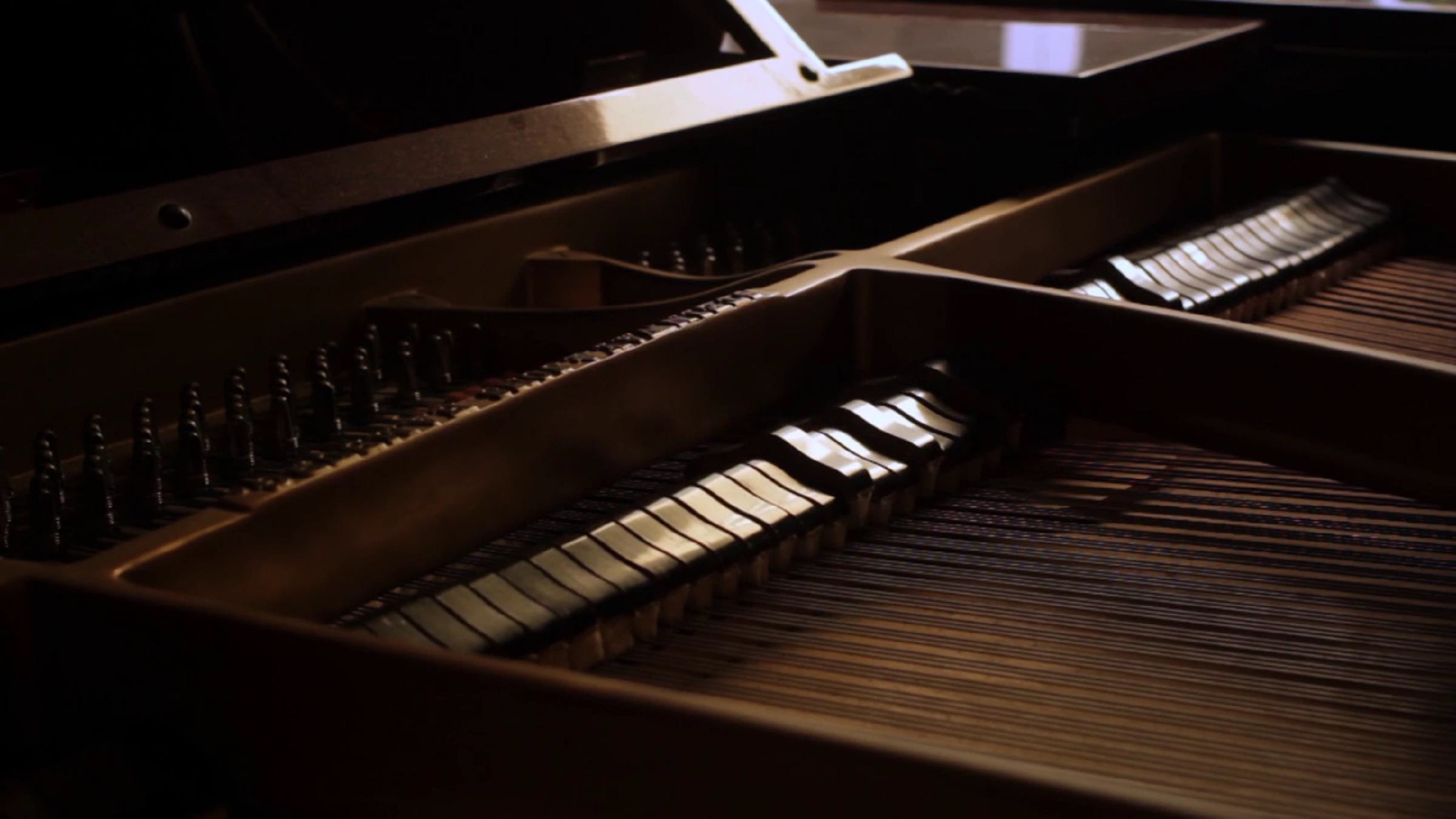
Moguillansky goes further in discussing the politics of his country, in a Godardian discourse, where the bass instruments in the orchestra (represented by the keys on the left of the piano) are owned by the same dangerous people who own the treble instruments (the keys on the right of the piano), people who don’t actually play music, but rather own a wood company, where they manufacture chairs, tables, etc. The same people who would walk past the little match girl as she freezes in the night.
The letter from the RAF member to the elderly pianist, about the rejection of avant-garde music as ultimately meant to please the tastes of the bourgeoisie, circles back to the situation of Walter Jakob (who has no idea if Lachenmann’s work would even qualify as an opera) and struggles to make sense of his job; as well as those orchestra players who only care about how they’re going to get home from the rehearsals. Every element speaks to each other and yet remains independent. Everything apart and yet part of the same universe.
The final moments of the film, a meeting between Fernández and Lachenmann, where the German composer indulges in his love of Morricone, are the most beautiful that Moguillansky has yet produced. Lachenmann confesses that in his youth he wanted to be serious and provoke the bourgeoisie. The final gentle pat from Fernández sums up the entire movie (and Moguillansky’s ethos) in a beautiful and moving way. Always playful.
Timeline_01
Moguillansky stays busy. There is always a new project. Each year brings something new, a short, a documentary, a commissioned project coming from god knows where. In 2018, Moguillansky makes a documentary short about Ai Wei Wei coming to Buenos Aires in order to stage an exhibition. There are three things at play. First, Ai Wei Wei visits the museum, goes sightseeing, etc. Second, the Instagram posts from the trip. Third, the workers putting together the pieces in the museum for the exhibition. Moguillansky turns this assignment into an opportunity to see the artist at work, a successful artist, and far from his own world. It is hard to read Moguillansky’s position in this material, but I think it is telling the images we see from Human Flow are seen from someone’s phone. The relationship to cinema is tangential.

Timeline_02
The assignment can come from a film festival. While Moguillansky is in Santiago, Chile, he films a small letter regarding his relationship to Michelangelo Antonioni. It is not the sentimental ramblings of a fan, however. He questions what Antonioni means to cinema today, and the changes in cinema since his films from the 60’s. Moguillansky’s voiceover remains committed to the idea of beauty in cinema, always.
The films can come from his obsessive reworking of old or discarded material. New films are created from this material. He takes discarded scenes from The Parrot and the Swan and turns it into 2019’s Diario de loro y el cisne. In 2000, he films inside of a submarine for three days. The footage sits unused for 20 years until Moguillansky finally edits it and turns it into a new feature (The Submarine Night). He does not sit around for years on end waiting for permission to film. He will return obsessively to new materials, to old materials, giving them shape, new life. The act of filming becomes the first step in his process. The images can become anything, a new fiction.

Chapter 4
In The Parrot and the Swan Alejo Moguillansky films the rehearsals of Grupo Krapp, an alternative dance/theater troupe, without any clear purpose in mind. And from those shoots he begins to gather material. Like a painter in front of a canvas, he carefully weighs the elements, adding shade and depth here and there. He looks for things to balance his material, to give it purpose. So he goes to film a ballet troupe, those who belong to the union, get benefits, vacation days, etc. He films the act of creation, those without a net who experiment, flail wildly, compared to those who work with the classics and whose job is to interpret them – the independent versus the institution.
From reality to romance. These images are the starting point into the material, into the world. Moguillansky seeks elements that connect one to other – he recasts the people around him into the leads of a romantic comedy (his sound guy who wanders into the frame and becomes the romantic lead, the leader dancer of Grupo Krapp becomes his love interest). But when I speak of romance I do not speak solely of the romantic content of the film (which culminates with a chaste kiss), but rather the pleasure derived from the search of fiction. When reality throws curveballs (such as the unexpected pregnancy of one the main characters) how do we adapt this into the work? And how can we make this search exciting and beautiful?

The Parrot and the Swan can accurately be described as a man filming a woman he loves, the people around him, his own environment, and sharing that with us. Moguillansky himself has described making the film as the same as a “painter who tries to paint a portrait of someone they admire.” But it is not just Grupo Krapp who he admires, but rather what they represent – the act of creation. In the final images of the film, during the credits, we see a solitary figure against a mirror, they dance and flail awkwardly, like an abstract painter on a blank canvas, in an act of pure creation, unedited, imperfect, far away from the outside world, with its attendant pressures, criticism, money, etc.
The American producer is baffled at their rehearsals, and he is right to be. Because for Moguillansky the people he films, those he admires, exist outside the logic of money. The search for romance in The Parrot and the Swan exists in order to make this true. But, of course, this is a fantasy. And the film knows it. Which is why we start with the ballet companies and the institutions. The film doesn’t forget money, but rather it makes a conscious decision to set it aside, at least for a while. In its place, Moguillansky gives outsized importance to his character’s dreams, to silly jokes and gags (the parrot making himself disappear, the missing audio), to his romanticized portrait. Let us dream a while.
Day 100
Alejo Moguillansky occupies an interesting space in Argentine cinema. He is a member of El Pampero Cine, a collective of filmmakers who dare to exist totally outside of the system, making films without support from INCAA (National Institute of Cinema and Audiovisual Arts). They do not sit around waiting for years to make films, submitting scripts and waiting for funding; they go out into the provinces and make films on their own terms. They refuse all the bureaucratic elements which surround filmmaking, anything that could weigh them down – could La Flor be made under the logic of state funding? Freedom is also a rejection, an ideological position which determines under what conditions films will be made. It is one thing to make The Parrot and the Swan privately, beholden to nothing and no one, rather than submit to producers and end up with The Secret in Their Eyes. Abel Ferrara once said that “every dollar has a certain nervousness attached to it.” But El Pampero also needs money…


Day 115
To be a South American filmmaker means to deal with Europe, their labs and funds. Moguillansky and El Pampero are no stranger to them. Earlier in the decade Moguillansky entered FIDlab works in progress competitions for a project that will remain unrealized (The Submarine War). La Flor received money from Visions Sud and Hubert Bals. The filmmaker is forced to pitch to the European producers, putting together a package of materials and boiling down art to a presentation.

The Gold Bug is the film of Moguillansky’s that deals most explicitly with filmmaking. It was born from an initiative of the Danish film festival CPH:DOX which seeks to pair an European filmmaker with one from a non-European country with the goal producing a film from this meeting. Moguillansky explains he accepted this because “it’s not often that someone comes along and gives you money for a film.” The other director, Fia-Stina Sandlund, is a Swedish playwright who occasionally makes films. What does Moguillansky have in common with her? What unites them? Money.

Day 116
The film emerges from this logic. The film dramatizes its own creation, the meeting between the Argentine filmmakers and the European producers (the ones who call the shots), the need to serve multiple masters (the film must address Sandlund’s idee fixe, Victoria Benedictsson, a proto-feminist Swedish author who committed suicide, above all else), and, ultimately the hope to actually make a good movie. Thus The Gold Bug becomes a self-portrait of El Pampero and their own situation. We can see their production offices, we can see their cars, everyone plays themselves (Moguillansky, Llinas, Citarella, Jakob, etc.) The film stakes out a position – us against the world. Of course, it isn’t true because the film is made in collaboration with Sandlund, not against her, and she is on the joke as well.
Part of the problem of talking about Moguillansky’s films is that the films themselves put everything on the table and address it head on. What does it mean to make a film with European money? What does it mean for a South American filmmaker to refuse to film misery and poverty because that is what everyone expects? If the Argentine filmmakers are pirates, scrambling around for the hidden treasure, hijacking the CPH:DOX’s ship to their own purpose, then perhaps the true story of the film is the mercenary and back-handed ways that the Europeans use to take what they believe is theirs.
We must keep in mind where the gold eventually ends up. Moguillansky is clear – he owns 49% of the film, Sandlund owes 51%. And why exactly is that? The film addresses all of this head-on. But such a discourse sounds like it belongs on a festival panel, talking about the colonialist enterprise of film production in Latin American countries, with directors pandering to European programmers and financiers. It would be quite unbearable and boring. And so we return to El Pampero. As we can see, the financial arrangements necessary to make a film can make for uneasy bedfellows and ridiculous situations. But the important thing is humor and the people around you. What The Gold Bug gets at is the pleasure of making movies with your friends. What Mariano Llinas spoke about when making La Flor is evident here: “everything happened in cars and on the road, in service stations and province hotels.” With this film, El Pampero reasserts filmmaking as a collective act, made between like-minded friends, not something that springs Athena-like from the auteur godhead. Because of our friends, we can enjoy filming under less than ideal situations. That is why jokes are necessary, the taste for frames which include four or five people, the group portrait – it is a political position and a moral one. This is how we make films. This is who we are.
Day 117
“My strongest references were Jean Renoir and Ernst Lubitsch. The last films of Renoir, above all. The Golden Coach, for example, which is like a documentary on its cast, about its actors.”

Act III, Scene II
We thought that Moguillansky could not go further. The Gold Bug seemed an end point. This is how we make films and this is what it looks like. And then there is a film like Por el dinero. Some background is necessary. Moguillansky’s involvement with Grupo Krapp must be understood. Obviously, they were featured heavily in The Parrot and the Swan (Luciana Acuña is the female lead in that film and she’s Moguillansky’s wife and has appeared in most of his films, also choreographed Castro), but the collaboration goes further. Moguillansky has done the video elements in some of their work, such as in the early 2010’s diptych “Where do the Dead Go”, and in 2019 he made a short film with them (Un día de caza) that was shown at the end of their play “Los rubios.” And in 2013 he actually appeared in a play himself. That play was called Por el dinero.
There are clips on Youtube of this play (and we get an idea of it from the actual movie), but it largely consists of the members of the troupe (Gabriel Chwojnik, Matthieu Perpoint, Acuña and Moguillansky) reading aloud from their bank statements, their income, their expenses, all while wearing silly costumes, performing songs in French, and doing various dances. Money and the lack of it is the focus. Money and the lack of it is the play. What to do if you are an artist and you do not get paid for your work? How do you live?
Act III, Scene IV
The film version of Por el dinero is not a recreation of the play, but rather it takes those same concerns to the world of cinema. We go into detail regarding how each member of the troupe earns their money, one of them teaches dancing, another teaches French, one makes institutional films, and the last one makes music for advertising. None of them make any money from their theater work; instead, they invest the money they do make into their productions. It is a precarious situation, but they persist.
The crux of the film has to do with the troupe being offered to go to a theater festival in Colombia to perform the Por el dinero play, but only if they can pay for their own plane tickets. Since that’s too expensive for the troupe, they help to finance it by selling a documentary to a TV station about their trip (supposedly about being Argentine being invited to perform in another country) which of course means taking a camera and sound person as well. More money to be spent. Once at the festival, they realize that there’s a cash prize for the winning play.
We know things will end badly because the film is told in flashback (two of the characters will end up dead on some Colombian beach). The voiceover is in French, and this is crucial. The perspective belongs to the French émigré Matthieu Perpoint who bemoans the fact that in Europe he enjoyed the applause of audiences three times a week, ate at restaurants every night and more. He was an artist. And now in Buenos Aires he has to hurry on his bicycle to beat traffic so he can give his French lessons just for the privilege of putting all his money into his theater productions that can barely pay for everyone’s dinner after the show. The life of the artist is quite different in Latin America after all.

Act III, Scene VI
The film bills itself as a tragedy in three acts, but it never acts like one (Moguillansky loves to play around too much for that). The film is always playful and humorous, like a defense mechanism against the hostility of the world around them. The situations that come up follow always the logic of money; after all, when you don’t have it it’s the most important thing in the world. One character desperately tries to borrow money from another one to pay their credit card bill (so that they can pay the costs they incurred when some European film producers did not pay him on time!). While another one does not need money himself, but will do anything to get his hands on more.
Is this what artists are reduced to? Scrounging around for money in order to survive? The film is clear on the position. Because there is a lack of money, they must turn the gaze on themselves. They will be Don Quixote and Cervantes. And whatever comes before them will therefore be a part of their art. Thus Moguillansky films Colombia because he is there. Just like the previous Krapp rehearsals and German avant-garde opera become a part of the constellation of his cinema, so will the beaches of Guajiran coast (although he cannot resist a joke saying that filming the mountains and volcanos of Colombia will add production value to their documentary). But what’s important is that this is a not a defeatist position, just the opposite. It is an invitation. Moguillansky will work with whatever elements are put in front of him and search for poetry, always.
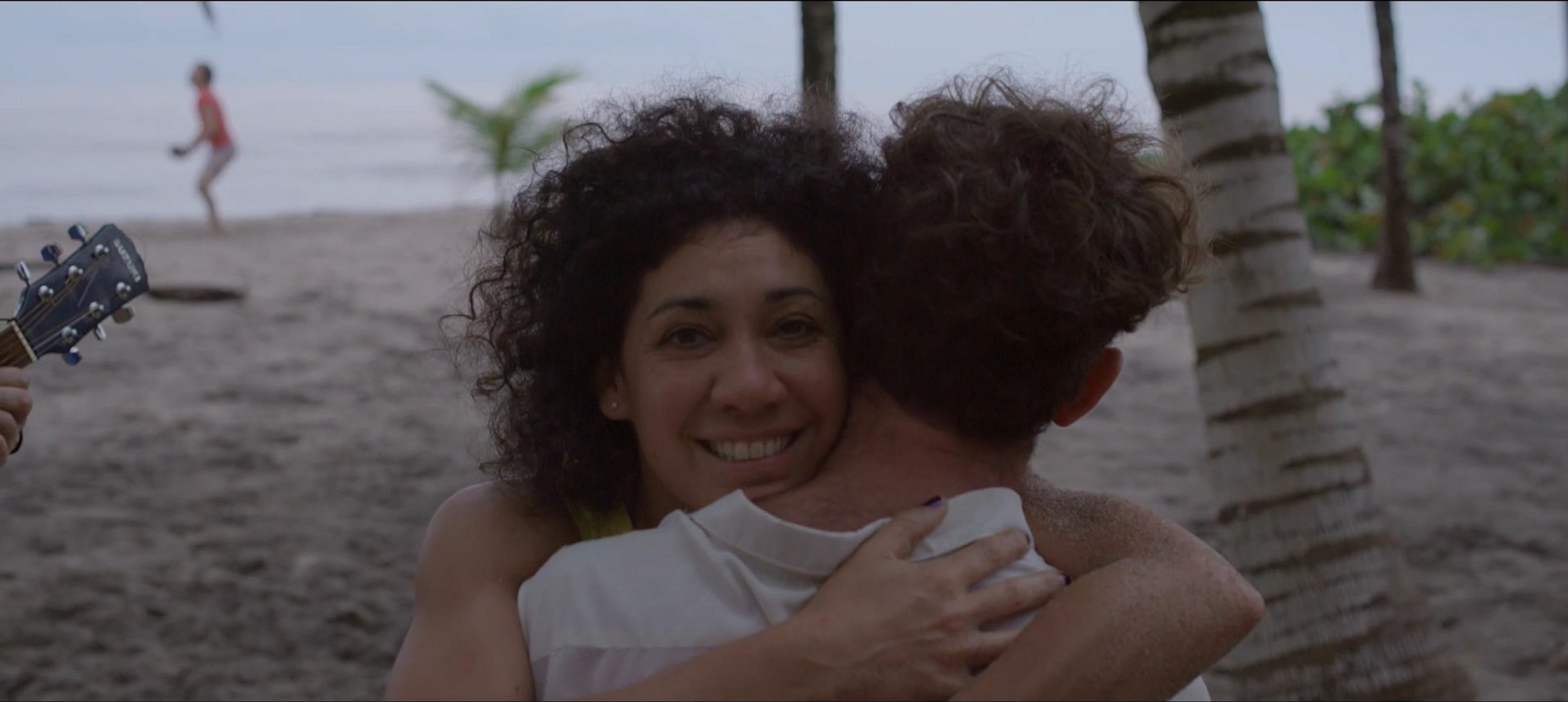
The most beautiful sections of the movie take place in that Colombian beach. We are reminded of the scenes in Pierrot le fou where Belmondo and Karina drop out of society to read books and sing songs by the ocean. Moguillansky’s characters make up stories in order to amuse his daughter, throwing coconuts around, waiting for nothing. Here Moguillansky finds inspiration: the low definition images of the beach at night with artifacts dotting the frame; the overlapping dissolves of the characters against the beach as they figure out where they’re going to go; the lightning. Godard’s influence is felt not just in these images, but also in the frequent play with sound, where all sound will drop out suddenly for a snatch of voiceover or music. And in the final shots, where the blood of the characters never quite feels real (it’s not blood, it’s the color red). The tragedy of the film isn’t the deaths, but rather that these characters are unable to make their life work on their own terms (they abandon their daughter because they think their money will run out and will not be able to take care of her). It is not economic success that they’re after, but simply something sustainable, some sort of balance. The death of his characters is a romantic and fatalistic gesture, which gives a fictional anchor to the film. There’s no real logical explanation for why they die; in the end, we are left with the lyrics from one of the songs from their play, “quelle horreur l’argent.”
Por el dinero goes further and answers everything you might wish to know about its own existence. It erases the distance between the artist and viewer. It removes all mystique. In essence, the journey from Castro to Por el dinero is the journey to erase this distance. Moguillansky ends up speaking in very concrete terms – everything is simplified and addressed head-on, with humor and a light touch. Because this distance has been erased, then it comes naturally that the artist should address their own situation, their own world, which would include money, or lack of it. This concreteness, the reality of the images and of the filmmaker’s world, does not mean forsaking poetry or freedom. It is not submission to something banal or unimaginative. But rather turning the material reality of the filmmaker into its own source of art. The lack of money does not stop him from creating. Instead, he puts money into his films, as a subject, as a joke. Why not? To separate money and film would be dishonest. It affects what you can film, how much you can pay the people who help you, etc.
Epilogue, 2023
Moguillansky often cites Chaplin as a model. Chaplin, of course, was the most popular star of his time, and so he could film every day for years, perfecting scenes, gags, throwing things away, recasting, etc. He had the economic and artistic power to do as he pleased. Moguillansky does the same. He films, edits, writes, and films some more, until he’s pleased with the result. There is no market force dictating his choice of subjects, his production timeline, anything. Sometimes he will even go back and reuse discarded footage and fashion entirely new projects out of them (2019’s Diario de loro y el cisne and 2023’s Un andantino). Could a director in the industry treat their upcoming films as a series of private sketches, doodles, tossed-off ideas, dedicated to the single idea of filming someone they love and nothing else? Sometimes the most radical act is sharing the images of those one loves. In Moguillansky we return to something very primal and moving – we understand deeply, in all his films, the humanity behind the camera, the intelligence which animates and structures what we see and what we hear, the same as when we can see the individual brushstrokes of an artist in a painting. Even the pandemic did not stop him. What to do? Turn the camera on his family, his own apartment, his own condition, dramatize it, make it funny, like all his other films. The comedic power of The Middle Ages draws from, not exactly from the pandemic, but rather the bodies of its performers, cooped up, ridiculous and flailing. It is another portrait of artists, but this time in a context when they’re not allowed to do their work.
Ultimately, Moguillansky is not Chaplin – he has no money and no power so the gesture is quite different. A desire for freedom, of course, but something else quite beautiful. When we see Moguillansky’s films we realize something very simple – films are still possible.

 Lucky Star